
Lower Back Pain: Causes and Treatment in Canberra
Of all the regions of the spine, the lumbar area works hardest and bends most often, which is exactly why so many of us feel our pain there. This page digs into lower back pain specifically as part of our wider back pain treatment: what causes it, why it can settle on one side, how it ties in with the hips, why it sometimes seizes into a spasm, and how we assess and treat it with a proper look before any hands-on work.
Assessment-first care · (02) 6288 6711
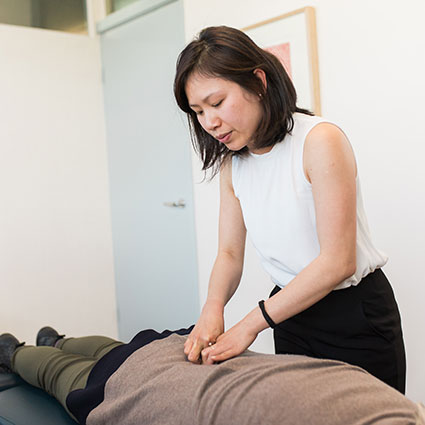
What Causes Lower Back Pain?
Most lower back pain is mechanical, coming from the muscles, joints and discs of the lumbar spine rather than disease. Common drivers include lifting and bending, long hours sitting, weak core and hip muscles, and sudden strain. It is very common and usually treatable.
The lower back, or lumbar spine, is the workhorse of the whole structure. It supports the weight of everything above it, flexes and rotates constantly, and takes the strain every time you lift, carry, sit or stand. Given that workload, it is little wonder the lumbar spine tops the list for where people develop pain, and that most of us will experience some version of it during our lives. The reassuring part is that the great majority of lower back pain is mechanical, arising from the ordinary working parts rather than from anything sinister.
Those working parts are the muscles and their attachments, the small facet joints at the back of each spinal level, the discs that cushion between the vertebrae, and the ligaments that tie it all together. Pain can come from any of them, often from several at once, and it does not always announce which. A muscle can be strained, a joint can become irritated and restricted, a disc can be provoked, and the surrounding muscles then tighten protectively around the whole area. Untangling which structures are involved is part of what a careful assessment is for.
The triggers are usually the ordinary events of life rather than dramatic injuries. Lifting something heavy or awkward, especially with a twist, a long stint bent over in the garden, hours held in a slouched sitting position, or simply a movement that caught the back cold can all set it off. Underlying vulnerabilities such as weak core and hip muscles, low general fitness, extra weight, high stress and poor sleep quietly raise the odds. None of this means your back is damaged or fragile; it means it is a hardworking, adaptable structure that occasionally protests, and usually recovers well when treated sensibly.
Lower Back Pain on One Side: What It Usually Means
One-sided lower back pain is very common and usually mechanical, reflecting the fact that we rarely load our backs evenly. A joint, muscle or the way you move on that side is often the culprit. It is not automatically serious, though pain that spreads down the leg deserves assessment.
A lot of people are surprised, and sometimes worried, when their lower back pain sits clearly on one side. In fact it is one of the most common patterns we see, and there is usually nothing mysterious about it. We simply do not use our backs symmetrically. We favour one hand, carry bags on one shoulder, sit twisted toward a screen, sleep in a preferred position and drive with one leg working the pedals, and over time that asymmetry loads one side more than the other. When something there becomes irritated, the pain naturally shows up on that side.
Most one-sided lower back pain traces back to a mechanical source on that side: an irritated facet joint, a strained or tight muscle, or the way the pelvis and hip on that side are moving. Left-sided and right-sided pain are equally common, and which side it is does not, on its own, signal anything specific about seriousness. What matters far more is how the pain behaves: whether it stays local, what eases or aggravates it, and crucially whether it travels anywhere. Our blog on one-sided lower back pain guide walks through the common patterns in more detail.
The main thing worth watching is whether one-sided back pain begins to refer down into the buttock and leg, or comes with numbness, pins and needles or weakness, because that shifts the picture toward possible nerve involvement, which we cover further down. Steady, one-sided lower back pain that stays in the back, without those leg symptoms, is usually a straightforward mechanical problem, and it tends to respond well to assessment and hands-on care aimed at the structures and movement patterns on that side.
Lower Back and Hip Pain Together: The Connection
The lower back and hips work as a team, sharing muscles and movement, so a problem in one often shows up in the other. Tight or stiff hips can throw extra strain onto the lower back, and back problems can change how the hips move. Assessing both together usually gives the clearest picture.
It is very common for lower back and hip pain to arrive together, or for people to be genuinely unsure which one is really the problem. That is because the two are deeply linked. The muscles of the hips, buttocks and pelvis blend into those of the lower back, and the joints work as a coordinated unit every time you walk, bend, sit or stand. When one part of that system is not moving well, the rest has to compensate, and the strain often surfaces as pain somewhere along the chain.
In practice this works both ways. Stiff, tight hips can force the lower back to move more than it should to make up the difference, gradually overloading it. Equally, a sore lower back can change how you walk and stand, loading the hips unevenly and leaving them aching too. Muscles like the glutes and the hip flexors sit right at this crossroads, and when they are weak or tight they can drive discomfort in both areas at once. Sorting out which is cause and which is effect is exactly the kind of thing a proper assessment untangles.
Because of this close relationship, we always consider the hips when we assess a lower back, and the back when we assess a hip. Treating only half of a linked problem tends to give only half a result. If your hips are a significant part of the picture, our dedicated hip pain treatment page goes into that side in more depth, and where both are involved we simply treat them as the connected system they are.

Lower Back Spasms: Why They Happen
A lower back spasm is a sudden, involuntary tightening of the muscles, often a protective reaction to strain, an irritated joint or overload. It can be intense and frightening but is usually not dangerous, and it typically eases as the underlying irritation settles.
Few things are as alarming as a lower back that suddenly seizes. One moment you are bending to pick something up or turning to reach behind you, and the next the muscles clamp down so hard you can barely move, sometimes leaving you stuck bent over or frozen in place. It can be intensely painful and genuinely frightening, and people often assume they have done something serious. Reassuringly, a muscle spasm itself is usually not a sign of damage; it is the body slamming on the brakes.
That is really what a spasm is: a protective reflex. When the back senses a threat, whether from a sudden strain, an irritated joint, an overloaded muscle or even just an awkward movement at the wrong moment, it can respond by locking the surrounding muscles rigid to guard the area. The problem is that the spasm itself then becomes a major source of pain, and the tightness can linger and feed on itself well after the original trigger. It is a well-meaning response that rather overdoes it.
The good news is that most acute spasms settle over a few days, particularly with the right approach: gentle movement within comfort rather than total rest, warmth, and calm reassurance, since fear and tension only wind the muscles tighter. Hands-on care can help ease the guarding and settle the joint or muscle that set it off, often speeding things along and, importantly, helping reduce the chance of it happening again. If spasms keep recurring, that is a signal to look for the underlying pattern driving them rather than just riding out each episode.
In the first day or two of a bad spasm, a few simple measures help most people. Keep gently mobile within whatever range is comfortable rather than lying rigid for hours, use heat to encourage the muscles to relax, and avoid the temptation to test the back with big, brave movements too soon. Simple over-the-counter pain relief, used sensibly and in line with the pharmacist's advice, can take enough of the edge off to let you keep moving, which is itself part of the recovery. If the grip has not started to ease within a few days, that is the point to have it assessed.
How We Assess Lower Back Pain
We start every case with a proper assessment: your history and how the pain behaves, followed by a physical examination of how your lower back, hips and surrounding muscles move. This is how we work out what is driving your pain, rule out anything needing a doctor, and build a treatment plan that fits you.
Good treatment begins with understanding the problem, so we never launch straight into hands-on work. The first part of any assessment is simply listening. We want to know when and how the pain started, where exactly you feel it, what makes it better or worse, how it affects your sleep and daily life, whether it travels anywhere, and what you are hoping to get back to. That story alone often points strongly toward what is going on and flags anything that needs closer attention.
From there we examine you physically. We look at how you stand and move, test how your lower back and hips bend and rotate, check the muscles for tightness and tenderness, and where relevant carry out simple neurological checks of things like reflexes, strength and sensation in the legs. Those checks matter, because they help us tell ordinary mechanical back pain from the smaller number of cases where a nerve is involved and a different approach is needed. It is a careful, structured look rather than a quick prod.
The point of all this is threefold: to identify the likely source of your pain, to make sure there is nothing that should be seen by a doctor first, and to build a treatment plan tailored to you rather than a generic protocol. We will explain what we find in plain language, tell you honestly what we think is going on and what we can and cannot help with, and only then move on to treatment. If anything about your presentation suggests it belongs with your GP or another practitioner, we will say so and help point you in the right direction.
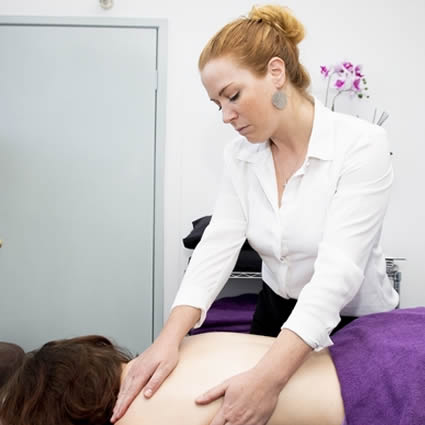
Treatment Options: Adjusting, Massage and Exercise
We combine chiropractic adjusting to restore easier joint movement, remedial massage to release tight, guarded muscles, and simple exercise and movement advice to rebuild strength and confidence. The blend follows what your assessment shows, and the goal is to calm the pain down and stop it coming back.
Once we understand what is driving your lower back pain, treatment usually draws on three complementary tools. Chiropractic adjusting works on the joints of the lumbar spine and pelvis, helping to restore easier, less restricted movement where things have stiffened up, with gentle low-force options such as Activator adjusting available for those who prefer or need them. It is not about forcing anything; it is about helping a stuck, guarded region move more freely and comfortably again.
Alongside that, remedial massage and soft-tissue work address the muscular side, which is almost always part of lower back pain. Releasing the tight, protective muscles around the area tends to ease a good deal of the discomfort in its own right and tends to make the adjusting side both more comfortable and more durable. The two approaches complement each other well, which is a real advantage of having both under one roof rather than chasing them separately.
The third piece, and the one that does the most for the long term, is movement and exercise. As your pain settles, we guide you through simple, back-friendly exercises to rebuild the strength and control that protect the lower back, along with practical advice on sitting, lifting and staying active. This is what turns short-term relief into a lasting result, and we tailor it to your life rather than handing you a generic sheet and hoping for the best.
Exercises That Help (and Ones That Do Not)
Exercise is one of the best things for lower back pain, but not all of it is helpful, and some popular moves do more harm than good in a sore back. Here is the honest split, though the right mix always depends on your assessment.
Tend to help
- Gentle walking, building up as comfort allows
- Simple core and gluteal strengthening, done well
- Hip and hamstring mobility within a comfortable range
- Gentle movement through the day rather than sitting still
- Graded return to the activities you enjoy
Tend to aggravate
- Heavy, loaded exercise pushed too hard, too soon
- Repeated end-range bending and twisting while acutely sore
- Aggressive stretching in the hope of forcing a release
- Long, static positions, including prolonged sitting
- Any move that sharply spikes your pain or leg symptoms
The broad principle is that lower backs like gradual, controlled movement and strengthening, and dislike being either forced or frozen. Gentle walking, some sensible core and glute work, and easy mobility for the hips and hamstrings tend to help most people, especially when built up patiently rather than attacked all at once. The single most important habit is simply to keep moving in an easy way, because prolonged rest and long static positions usually make a sore lower back stiffer and slower to recover.
On the other side, a few common instincts backfire. Cranking hard into stretches to try to force a tight back loose, loading up with heavy exercise before the back is ready, or repeatedly bending and twisting to the limit while things are still acutely irritated all tend to stir the problem up. The honest truth is that the right exercises depend heavily on your particular presentation and stage of recovery, which is why we prescribe them individually. Our blog on back stretches and exercises is a sensible general starting point, but tailored guidance always beats a one-size-fits-all routine.
When Lower Back Pain Points to Sciatica or a Disc Issue
Lower back pain that shoots down a leg, or comes with numbness, pins and needles or weakness, may involve a nerve, as in sciatica or a disc problem. That pattern needs proper assessment, and we will examine you carefully and refer on if needed.
Most lower back pain stays in the lower back, but sometimes it does not, and that change in pattern is worth understanding. When pain begins to travel from the back down into the buttock and leg, particularly below the knee, or when it comes with numbness, pins and needles, or weakness in the leg or foot, it suggests a nerve may be involved rather than just muscles and joints. This is the territory of sciatica and disc-related problems, and it calls for a more careful look.
Sciatica is not itself a diagnosis so much as a description of that leg-travelling nerve pain, and it can stem from an irritated or bulging disc pressing on or inflaming a nerve, or from other structures narrowing the space a nerve passes through. It sounds frightening, and it can certainly be painful, but the majority of cases still settle with time and conservative care, and surgery is the exception rather than the rule. What matters is recognising the pattern and assessing it properly rather than treating it as ordinary back pain. You can read more on our dedicated sciatica treatment page.
Our role here is to assess carefully, including those neurological checks of reflexes, strength and sensation, to work out whether a nerve is genuinely involved and how significantly. In many cases we can help with conservative care, and where the picture calls for it, we will co-ordinate with your GP or refer you on for further investigation. The red flags mentioned across our back pain pages, such as loss of bladder or bowel control or rapidly progressing weakness, always take priority and need urgent medical attention rather than hands-on treatment.
Book a Lower Back Assessment and Know What You Are Dealing With
If your lower back has been aching, seizing or slowing you down, start with a proper assessment so you understand exactly what is going on. Reserve a time online, or call our team on (02) 6288 6711, Saturday mornings included.
1/43 Brierly St, Weston ACT 2611 · an easy trip from across Canberra's south