
Family Chiropractic in Canberra
Being able to book the whole family in one trusted place is genuinely useful, and it is part of what our chiropractic services have offered Canberra households for decades. We welcome parents, teenagers and children aged six and above, assess each carefully, use gentle techniques where they suit, and refer honestly to your GP or paediatrician whenever chiropractic is not the right answer. That last point matters, so it is stated plainly throughout this page.
For children, we suggest a chat first · (02) 6288 6711
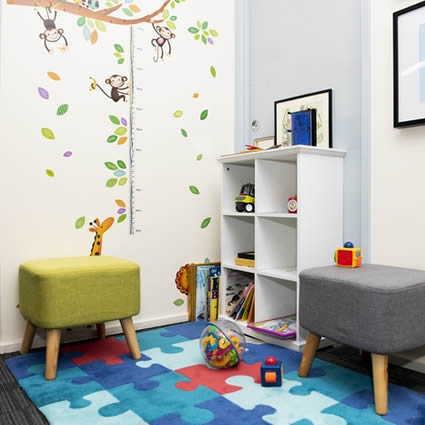
A Practice That Welcomes the Whole Family
We care for adults, teenagers and children aged six and above under one roof. Family care is about convenience and continuity, one trusted clinic that knows your whole household, delivered with careful assessment for every age and honest referral to your GP or paediatrician when chiropractic is not appropriate.
The appeal of family care is straightforward and practical. Instead of chasing different clinics across town for different members of the household, you have one familiar place that already knows your family's history, the same trusted chiropractic care for every member, and the ability to stack appointments into a single visit when life allows. For a busy Canberra household, that convenience is worth a great deal, and it is a large part of why families have stayed with this practice across generations. Some of the parents we see today first came here as children themselves, brought in by their own parents decades ago, and that kind of continuity is only possible for a clinic that has stayed put and stayed honest for a very long time.
What family care is not, at this practice, is a promise to treat childhood illness or to deliver health benefits chiropractic cannot support. We are careful and deliberate about this. For children we offer careful assessment and, where appropriate and with a parent fully informed, gentle care for musculoskeletal complaints, and we refer to your GP or paediatrician for anything outside that scope. If you are looking for a clinic that makes broad health claims about adjusting children, this is honestly not it, and we think that is exactly as it should be.
It is worth being clear about why we take this line so firmly. Australia's health regulator sets careful limits on what chiropractors may claim, particularly for children, and beyond the regulation we simply believe in it: a family clinic earns lasting trust by being honest about what it can and cannot do, not by promising the world. Parents are, quite rightly, cautious about care for their children, and that caution deserves a straight answer rather than a sales pitch. Everything on this page is written in that spirit, and if any line of it reads as a promise about your child's health, we have failed our own standard and would want to know. The whole intent is to inform a parent's decision, never to pressure it.
In practice, the household we most often care for looks like this: parents with the desk-strain, sport and life aches of adulthood, a teenager with posture or a sporting niggle, and, occasionally, a younger child with a specific musculoskeletal complaint that a parent would like assessed by someone they already trust. The adults are the bulk of it, the teens a natural extension, and the younger children a careful, case-by-case matter handled with a conversation first. That balance is deliberate and honest, and it is what family care at this practice genuinely means.
How We Assess Children and Teens
Assessment for a younger patient starts with a thorough conversation with the parent, a history, and a gentle age-appropriate physical examination. The findings are talked through with you in everyday terms, and if a complaint sits outside chiropractic scope, we say so and refer rather than treat. The parent stays fully involved throughout.
For any patient under our care, the examination comes first, and for children it is gentler, slower and more conversational than an adult's. We talk with you as the parent about what you have noticed, take a proper history, and examine your child carefully and age-appropriately, always with you present. Nothing is done without explaining it to you first, and nothing is done that a child is not comfortable with.
The purpose of that assessment is as much to decide whether we are the right people as it is to plan any care. Children's complaints are frequently self-limiting or better managed elsewhere, and a good assessment sorts the musculoskeletal aches we can genuinely help with from the many things that belong with a GP, a paediatrician or simply time. If your child's concern is not one for a chiropractor, you will leave knowing that clearly, which is a useful outcome in itself.
We would honestly rather you left with a referral and no treatment than with a plan you did not need, and we mean that. A parent who arrives worried and leaves reassured, or pointed clearly towards the right professional, has had a good visit even if we never lay a hand on their child. That framing keeps everyone honest: the assessment is there to answer a question, not to recruit a patient, and the answer is sometimes simply that a chiropractor is not what your child needs, and hearing that clearly from us is worth as much as any treatment we could offer. A parent who leaves pointed towards the right help has been served well.

What Gentle Techniques Are Used for Younger Patients?
For younger patients we use markedly lower forces than for adults, favouring the low-force Activator instrument and gentle mobilisation over firm manual adjusting. Technique is always scaled to the age and comfort of the child, and nothing proceeds without the child's ease and the parent's fully informed agreement.
Where care is appropriate for a younger patient, the guiding word is gentle. Forces are a fraction of those used for an adult, and the Activator Methods instrument, which delivers a small, light impulse with no twisting or cracking, does most of the work precisely because it is so easy to scale down. Gentle mobilisation, slow and comfortable movement of a joint, is often preferred over any adjustment at all. There is no place for force in a child's care, and there is none in ours. The instrument's great advantage here is that its light impulse is the same whether the patient is a grandparent with fragile bones or a young person, so scaling down to a level appropriate for a younger patient is simply a matter of the setting, not of a practitioner trying to hold back by hand.
Comfort leads everything. A child who is uneasy is not treated until they are comfortable, and often the first visit is as much about making the experience unthreatening as anything else. Parents are always in the room, always able to ask questions, and always the ones who decide. If a child does not want to proceed on a given day, that is completely fine and we simply do not; a treatment nobody is comfortable with is not a treatment worth giving.
Consent runs through all of it, and for a child that means the parent's fully informed agreement at every step, plus the child's own willingness in the moment. We explain what we propose, why, and what the alternatives are, including doing nothing, and we answer every question before anything happens. Parents never have to feel rushed into a decision about their child, and a considered no is always respected as readily as a yes. This is how care for a young person should feel: unhurried, transparent, and entirely under the parent's control.
None of this is unique to children, incidentally; it is simply how the practice works, dialled up for our youngest patients. The same honesty about scope, the same preference for the gentlest effective technique, and the same insistence on informed consent apply to every patient who walks in. Children just make the stakes of getting it right feel higher, which is exactly why we spell it out so carefully here.
When We Refer to Your GP or Paediatrician
Whenever a child's concern falls outside musculoskeletal chiropractic care, we refer. Fevers, infections, developmental questions, persistent unexplained symptoms and anything medical belong with your GP or paediatrician, not with a chiropractor, and we will say so directly and help you get to the right person.
This is the promise that sits at the centre of how we care for children, and we would rather over-state it than leave any doubt. A chiropractor's scope is the musculoskeletal system, the joints and muscles, and childhood throws up a great many concerns that sit well outside it. When a parent brings a worry that is really a question for a doctor, the responsible and honest thing is to say so, and that is what we do, every time.
Your GP and, where involved, your paediatrician remain the centre of your child's healthcare. We see ourselves as one small, clearly-bounded part of that picture, useful for specific musculoskeletal complaints and silent on everything else. We are glad to communicate with your child's doctors, we encourage you to keep them informed, and we will never position chiropractic as an alternative to the medical care a child needs. If that honesty costs us the occasional booking, it is a price we are entirely happy to pay.
A few concrete examples make the boundary real. Recurrent ear infections, bed-wetting, colic, behavioural or developmental concerns, asthma, allergies: these are not chiropractic matters, we make no claims about them, and we will point you firmly back to your GP or paediatrician if they come up. Where a child has a genuine musculoskeletal complaint, a specific sport injury, a persistent posture-related ache, we may be able to help, carefully and gently. The difference between those two lists is the difference between honest care and overreach, and we stay on the right side of it deliberately, every time, without exception. Parents can rely on that line being held whether or not they know to ask about it.
Teen Posture, School Bags and Screens
Teenagers carry real postural load: heavy school bags, long hours hunched over screens and devices, and growth spurts that outpace their coordination. Where this produces genuine musculoskeletal aches, careful assessment and gentle care can help, alongside simple, practical advice on bags, desks and screen habits.
The teenage years put a particular strain on a spine. Bags loaded like a hiking expedition and slung over one shoulder, hours folded over a phone, gaming and study postures held long past comfort, and growth spurts that leave coordination scrambling to catch up: it is a genuinely demanding time for a young body, and the neck, upper back and shoulders often carry the cost. When that turns into real, persistent musculoskeletal ache, it is worth assessing properly rather than dismissing as growing pains.
Much of what helps, though, is not treatment at all but sensible change. Wearing the backpack on both shoulders and lightening it; setting up a study space that does not fold a teenager in half; building in breaks from the screen; a bit of genuine movement built back into a life that screens have made very still. We coach all of this openly with the teenager and the parent together, because a habit changed at fifteen is worth more than any amount of treatment, and we are honest that the boring advice often matters more than the appointment. For the aches that persist despite it, gentle care has its place.
Teenagers also sit in an easier zone than younger children for straightforward musculoskeletal care, being closer to adult-sized and well able to describe what hurts and give their own feedback. A teen with a nagging sport injury or a genuinely sore neck from study posture can usually be assessed and, where appropriate, gently treated much as a young adult would be, always with a parent's involvement for those under eighteen. It is a practical, low-drama kind of care, and for an active Canberra teenager it can be the difference between playing through a season and sitting it out. As with everything on this page, though, the same rule holds: careful assessment first, gentle and appropriate care only where it genuinely fits, and an honest pointer elsewhere the moment the problem turns out to be something a chiropractor should not be treating.

Booking Family Appointments Together
You can book several family members into one visit, often on a Saturday morning, so a single trip covers the household. Tell the front desk who is coming and roughly what for, and they will arrange sensible back-to-back appointments, with the shared file meaning each family member's history is already known.
The logistics are deliberately easy, because a family that can be seen together is a family more likely to keep up its care. The front desk is well practised at stacking appointments, a parent and a teenager back to back, a Saturday slot that suits the whole household, and the free parking directly opposite the door means arriving with several people in tow is genuinely manageable. Continuity is the other quiet benefit: because it is one shared file, nobody re-explains the family history, and a practitioner who has looked after the parents brings that context to the children. It is a small efficiency that adds up to a real one over the years, and it removes the low-grade friction of managing several people's healthcare across several unconnected places.
The Saturday hours deserve a specific mention for families, because a weekend appointment is often the only realistic option once school, work and activities have swallowed the weekdays. Being able to bring the household in on a Saturday morning, park free directly opposite, and see everyone who needs seeing in one visit turns care from a logistical headache into something genuinely doable. That practicality is not a small thing; it is frequently what decides whether a family keeps up its care at all.
This is where the picture joins up across the practice. The same clinic offers pregnancy chiropractic for expecting parents and gentle chiropractic for seniors for grandparents, so a household really can be looked after across its generations in one familiar place. For children specifically, though, we will always come back to the same principle: careful assessment, gentle care only where it genuinely suits, honest referral everywhere else, and a parent making every decision. Call us to talk it through, and we will give you a straight answer about whether an assessment makes sense for your child.
For the adults and teenagers of the family, booking could not be simpler: straight online or a quick phone call, with the same gentle, honest approach the rest of the practice is known for. For younger children we genuinely do prefer that conversation first, not as a hurdle but as a courtesy, so that you know precisely what an assessment would and would not involve before you decide anything. There is no cost and no obligation in asking, and the front desk is entirely used to parents ringing simply to find out whether we are the right people. Often the single most useful thing we do for a family is tell a parent, honestly and without any agenda, exactly where the right help for their child actually lies, even when that help is somewhere other than here.
Call to Discuss Whether an Assessment Suits Your Child
For children we genuinely prefer a conversation first, so you know exactly what to expect and whether we are the right people to help. Reach the front desk on (02) 6288 6711, or book an adult assessment online any time.
1/43 Brierly St, Weston ACT 2611 · Saturdays available, free parking opposite