
Myofascial Release Therapy in Canberra
Some tightness does not sit in a single muscle but in the connective tissue that wraps and links everything together. Myofascial release is among the treatments we offer for precisely this kind of restriction, using slow, sustained pressure rather than brisk strokes. It is delivered here by Darlene, our massage therapist with a special interest in fascia work, and it suits stubborn, whole-region tightness that a quicker massage never quite settles.
Not sure if it suits you? Just ask · (02) 6288 6711
What Is Fascia, and What Is Myofascial Release?
Fascia is the thin, tough web of connective tissue that wraps around every muscle, bone and organ and links them together. Myofascial release is a hands-on technique that uses slow, sustained pressure and stretch to help ease tightness and restriction in that fascial web.
We tend to think of the body as a collection of separate muscles, but they do not float around on their own. Every one of them is wrapped in fascia, a continuous web of connective tissue that surrounds and links muscles, bones and organs into one connected whole. Picture the fine, silvery membrane you see running through a cut of meat and you have the idea. When it is healthy, fascia is supple and glides freely; when it becomes tight, thickened or stuck, it can pull on the structures around it and create tension that seems to have no single source.
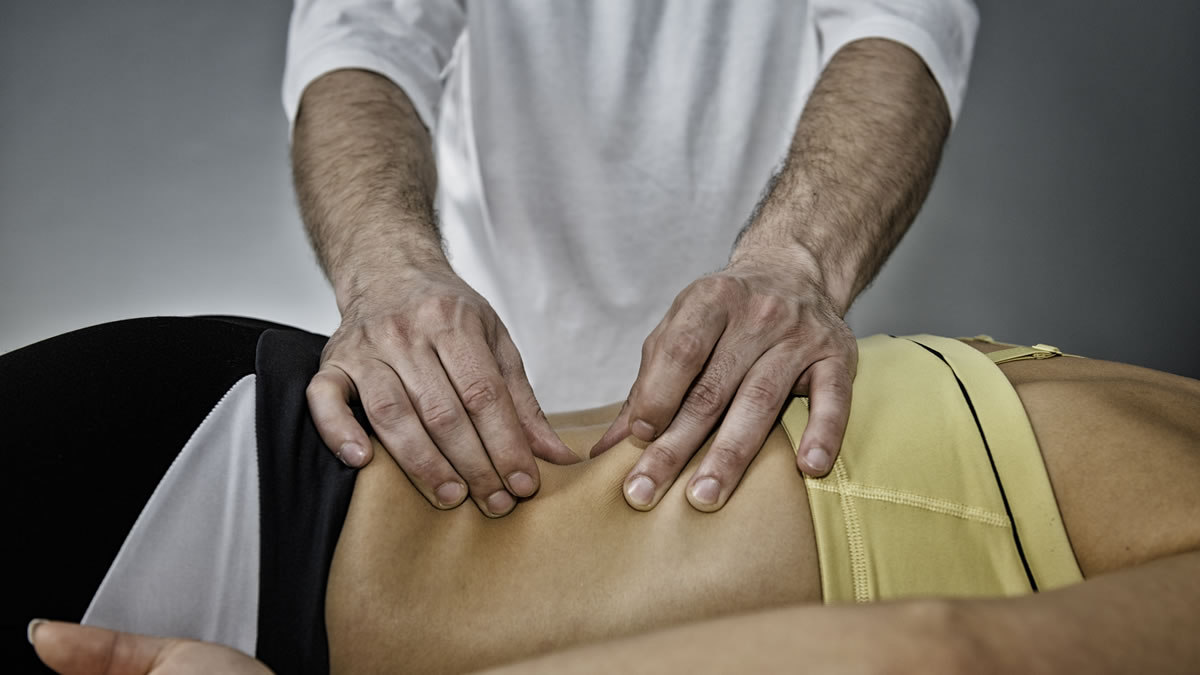
Myofascial release is the hands-on technique aimed at that layer. Rather than the brisk, rhythmic strokes of a typical massage, it uses slow, sustained pressure held on a restricted area, often combined with a gentle stretch, giving the fascia time to soften and lengthen under patient, unhurried contact. The word simply combines myo, meaning muscle, with fascial, the connective tissue, so myofascial release means easing restriction in the muscle-and-fascia system together.
Interest in fascia has grown a great deal in recent years, both among therapists and in research, as people have come to appreciate how much of the body's tension and movement runs through this connective network rather than through isolated muscles. We try to stay measured about it rather than swept up in the enthusiasm: the science is still developing, and we would not make grand claims. What we can say plainly is that slow, sustained hands-on work on tight tissue helps a great many people feel looser and move more freely, and that is reason enough to offer it thoughtfully.
Why fascia gets tight in the first place is worth a word, because it demystifies the whole thing. Long hours held in one position, repeated movements, old injuries, and simply not moving through a full range very often can all leave the fascia less supple and more prone to sticking. Where a muscle can knot in a fairly local way, fascial tightness tends to spread, which is why a restriction in one area can quietly tug on another some distance away and leave you feeling generally bound-up rather than sore in one clear spot.
At our clinic, this is Darlene's area. She is one of our qualified massage therapists and has a particular interest in fascia work, so if slow, sustained release is what your body needs, she is the person to see. It is a more specialised, patient style than a general massage, and it rewards a therapist who enjoys working carefully and reading the tissue rather than rushing, which is exactly how Darlene likes to work.
How Myofascial Release Differs From Standard Massage
The main difference is pace and intent. A standard massage uses flowing strokes and kneading across muscles; myofascial release holds slow, sustained pressure on one restricted area until the fascia softens. It is usually done on dry skin, without oil, so the hands can catch and stretch the tissue.
If you have had a remedial massage, you will know the feel of it: firm strokes, kneading, the therapist moving fairly steadily around an area and working the muscle. Myofascial release feels quite different. The therapist finds a restricted spot and simply stays there, applying slow, low-load pressure and holding it, sometimes for a couple of minutes, waiting for the tissue to release rather than forcing it. There is far less movement and far more patience, and to an onlooker it can look like the therapist is barely doing anything at all.
A practical difference you will notice is that myofascial release is usually done on dry skin, without the oils or lotions used in a flowing massage. That is deliberate: the hands need to grip and gently drag the tissue rather than glide over it, which is how the stretch on the fascia is created. It can involve broad contact with a forearm or a softer, more specific pressure with the hands, but the common thread is that slow, held quality rather than brisk back-and-forth strokes.
The other difference is how it works with your nervous system rather than against it. Because the pressure is slow and sustained rather than forceful, the body has time to stop guarding and let the tissue soften of its own accord, instead of tensing up against a fast, deep push. That is why patience matters so much here, and why rushing a fascial release tends to be counterproductive; the tissue lets go on its own timeline, and the therapist's job is largely to wait with it at the right depth.
None of this makes one better than the other; they are simply tools for different jobs. A flowing massage is wonderful for general tension and relaxation, while myofascial release is aimed at stubborn, specific restriction that has not budged with ordinary work. In practice the two often live in the same session, with Darlene shifting into slow fascial work on a particular stuck area before returning to more general massage around it.
What Conditions Benefit From Fascia Work?
Myofascial release may help with chronic, widespread tightness, areas of restriction that limit movement, and stubborn tension that has not responded to ordinary massage. It is often useful for long-standing back, neck and shoulder tightness, and for the whole-region stiffness that comes with posture and overuse.
Fascia work tends to come into its own with tightness that is chronic and diffuse rather than a single, obvious knot. If your whole back feels bound-up and stiff, if your neck and shoulders carry a restriction that never fully lets go, or if a region simply will not loosen no matter how much it is massaged, that is often a sign the fascia itself has become tight and less mobile. Slow, sustained release gives that layer the time it needs to change, which quicker techniques rarely allow.
It can also be helpful where restriction is limiting how freely you move, the sense that an area is not just sore but somehow tethered or short. People carrying long-standing tension from posture, repetitive work or old patterns of overuse often fall into this group, and myofascial release is a considered option for that kind of deep-seated muscle tension treatment. It is patient work, and stubborn, long-held restriction usually responds gradually rather than overnight.
Desk workers are a group we see a lot for this, and it is easy to understand why. Hour after hour rounded over a keyboard leaves the chest and the front of the shoulders shortened and the upper back straining to hold you up, and over months that pattern settles into the fascia as much as the muscles. Slow release work across those bound-up regions, paired with a few changes to how you sit, can make a real difference to how free and upright the whole area feels.
As always, we keep the claims grounded. Myofascial release is a soft-tissue technique for muscular and fascial restriction, not a treatment for medical conditions, and Darlene will be honest if your problem looks like it needs something else. If a complaint points to a joint or something beyond a therapist's remit, our chiropractors sit just across the clinic, ready to take a look and steer you toward whatever genuinely fits.

What a Myofascial Session Feels Like
A myofascial session is slow and deliberate. You may feel a deep, sustained stretch or a strong but tolerable pressure as the therapist holds a restricted area, often described as an intense yet oddly satisfying sensation. It should never be sharply painful, and the pressure is always kept within your comfort.
The first thing people notice is the pace. Where a massage keeps moving, myofascial release slows right down, and the therapist may settle on one area and simply hold it while the tissue gradually gives way. The sensation is often a deep, spreading stretch or a firm, sustained pressure, and many people describe it as intense but strangely satisfying, the feeling of something that has been tight for a long time slowly starting to let go. There can be moments where an area feels quite tender as it releases, but it should always stay on the right side of comfortable.
Because the work is slow and specific, a session can feel quite different from the pleasant drift of a relaxation massage. It asks a little more of you, in the sense that you may be aware of the areas being worked, but Darlene keeps a constant check on how it feels and adjusts the pressure to stay within what you can happily tolerate. Sharp, bright or nervy pain is never the aim, and if anything ever tips that way, you say so and it changes immediately.
Sessions are usually a little longer and less frequent than a quick massage, simply because the work cannot be hurried and each area needs time. Darlene will talk with you first about where the tightness sits and how it affects you, then work methodically through the priority areas rather than trying to cover everything at once. It is common to focus on one or two regions properly rather than skimming the whole body, since deep restriction responds far better to thorough, unhurried attention than to a rushed once-over.
Afterwards, it is common to feel looser and more mobile, sometimes straight away and sometimes over the following day as the tissue settles. A little tenderness in the treated areas for a day is normal, much as after a firm massage, and gentle movement and water help it along. Many people are surprised how much lighter a long-tight region can feel once the fascia around it has been given the time to release.
Foam Rolling at Home vs Clinical Myofascial Release
Foam rolling is often described as self-myofascial release, and it is genuinely useful, but it is not quite the same as skilled hands-on work. Here is an honest comparison so you can get the most from both.
Foam rolling at home
- Cheap, convenient and easy to do most days
- Great for general maintenance and warming up
- Uses your body weight over a broad roller
- Hard to target deep or awkward spots precisely
- No one reading the tissue or adjusting for you
Clinical myofascial release
- A trained therapist locates the real restriction
- Slow, specific, sustained pressure where it counts
- Pressure and angle adjusted to your tissue in real time
- Reaches areas a roller simply cannot
- Fits into a wider treatment and care plan
The honest picture is that the two work best together rather than in competition. Foam rolling is a genuinely good habit, cheap and convenient, ideal for general upkeep, loosening off before exercise and keeping on top of everyday tightness between treatments. What it cannot do is match a trained pair of hands for finding the precise spot that matters, applying exactly the right sustained pressure, and reaching the deeper or more awkward areas your own body weight on a roller will always struggle with.
There is also a knack to foam rolling that many people never learn, which limits how much good it does them. Rolling quickly back and forth over a sore spot is closer to a warm-up than true release; the more useful approach borrows from the clinic, pausing and holding gentle sustained pressure on a tight area and breathing while it eases, much as a therapist would. A quick demonstration of that difference often makes people's home rolling far more worthwhile than it was.
A sensible approach for most people is to keep foam rolling at home for maintenance and to use clinical myofascial release for the stubborn restriction that rolling never quite shifts. Darlene is happy to show you a few simple rolling techniques to carry on between sessions, so the work you do in the clinic keeps paying off at home. Used that way, the roller and the therapist are partners, not rivals.

Combining Myofascial Release With Dry Needling
Myofascial release and dry needling approach tight tissue from different angles, one with slow sustained pressure, the other with a fine needle into a trigger point. Because both are available here, they can be used together as part of your care, coordinated across our therapists on one shared plan.
Slow fascial work and needling are natural companions because they tackle stubborn tightness in complementary ways. Myofascial release works broadly and patiently, easing restriction across a whole region, while dry needling targets a specific, contracted trigger point with a fine needle. For a knotty area that has both a diffuse, bound-up quality and one or two hard, focal points, drawing on both approaches can cover more of the picture than either does alone.
It is worth being clear about who does what, because we never like to blur it. Myofascial release here is Darlene's technique, and dry needling is performed by Colleen; they are different therapists with different skills. What makes combining them straightforward is that it all happens under one roof on one shared record, so your care is coordinated rather than scattered. If Darlene feels a particular knot might respond well to needling, she can suggest a session with Colleen, and the notes follow you between them.
Timing between the two is easy to manage as well. Some people have a myofascial session, then follow up with needling on a specific point a week or so later; others find one approach does the job on its own and never need the second. There is no set package and no pressure to try everything, and Darlene and Colleen would far rather use the least that gets you a good result than layer on treatments for their own sake.
None of this is about upselling you into more treatment than you need. Plenty of people do very well with myofascial release alone, and the suggestion to add needling only comes up when it genuinely looks like it would help. The advantage of a clinic that offers both, alongside massage and chiropractic, is simply that the right tool is always close at hand, and honest advice about which to use comes with it.
Ask Whether Fascia Work Suits Your Pattern of Tightness
If a region of stubborn, whole-area tightness has never quite settled with ordinary massage, myofascial release may be worth a try. Book a session with Darlene online, or have a quick word with our team on (02) 6288 6711 and we will help you decide whether it suits your pattern of tightness.
1/43 Brierly St, Weston ACT 2611 · an easy trip from right across the southside