
Muscle Tension and Spasm Treatment in Canberra
A back that suddenly seizes, a neck that locks overnight, or a knot that simply will not release: muscle tension and spasm are among the most common and most miserable complaints we see. They are one of the conditions we help with, and the good news is that most settle well with the right care and rarely signal anything sinister. On this page we explain what a spasm actually is, why backs are so prone to them, how to get fast relief, and how we break the tension cycle for good.
Spasm struck? Ask about same-week care · (02) 6288 6711
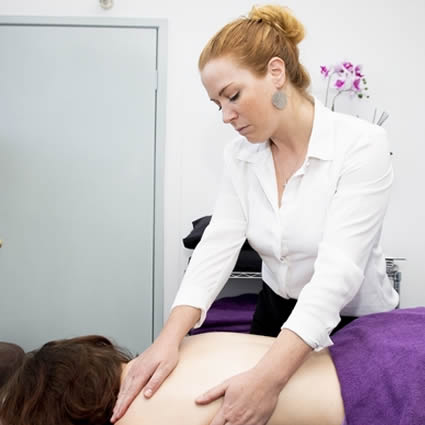
What Is a Muscle Spasm?
A muscle spasm is a sudden, involuntary contraction of a muscle that will not release. It can range from a small twitch to a powerful, painful clench that locks up an area. Most spasms are protective and settle as the underlying irritation calms.
At its simplest, a muscle spasm is a muscle contracting when you have not told it to and refusing to let go. Muscles are meant to contract and relax under your control, but in a spasm one seizes involuntarily and stays switched on, which is both painful and, when it locks up your back or neck, genuinely disabling. The severity varies enormously, from the harmless little eyelid or calf twitch everyone gets, to a full, gripping clench that can leave you stuck bent over and afraid to move.
Muscle tension, spasm and knots sit on a spectrum of the same underlying theme: muscles that are holding on when they should be letting go. Ongoing low-grade tension is a muscle that never fully switches off; a knot, or trigger point, is a small patch stuck in that contracted state; and a spasm is the dramatic, acute end of the scale where a whole muscle clamps down hard. Understanding them as variations on one problem helps make sense of why the same kinds of treatment help across the board.
The most reassuring thing to know from the outset is that the great majority of muscle spasms, however alarming they feel, are not a sign of serious damage. They are usually the body overreacting protectively rather than something being torn or broken, and they typically settle as whatever provoked them calms down. That does not make them any less painful in the moment, but it does change how you approach them, with sensible care and patience rather than panic.
It is worth naming where these problems tend to strike, because certain areas are far more prone than others. The lower back is the classic site for a dramatic seizing spasm, thanks to the load it carries and the constant demands placed on it. The neck and the muscles across the top of the shoulders are the usual home of nagging tension and stubborn knots, driven largely by posture and stress. The calf and other limb muscles get the acute cramping variety, often at night or during exercise. Wherever yours sit, the underlying story of a muscle holding on when it should let go is the same.
Why Backs Go Into Spasm
Backs go into spasm as a protective reflex, clamping the muscles to guard an area the body senses is threatened, often by a strained joint or muscle, an awkward movement, or overload. The spasm then becomes painful in its own right, but it usually settles.
Backs are especially prone to spasm, and the reason is essentially protective. When the back perceives a threat to one of its structures, whether from a strained muscle, an irritated joint, a sudden awkward movement or simply asking too much of a cold, unprepared spine, it can respond by throwing the surrounding muscles into a rigid clench to splint and guard the area. In evolutionary terms it is a sensible alarm response, an attempt to immobilise something that might be injured. The trouble is that it tends to be a wild overreaction.
What makes it so painful is that the guarding muscle quickly becomes a problem in its own right. A muscle held in a hard, sustained clench starts to ache and burn, it squeezes the tissues and small blood vessels within it, and it can pull on the very joints it was trying to protect. Worse, pain and tension feed each other in a loop: the pain triggers more guarding, the guarding causes more pain, and the spasm can outlast the original trigger by days. Breaking that loop is a big part of what treatment does.
Certain things make a back more likely to spasm. Long hours of sitting and general deconditioning leave the muscles less resilient, a sudden lift or twist provides the trigger, and stress keeps the whole system wound tight and primed to react. Dehydration and tiredness can contribute as well. None of this makes your back fragile; it simply describes the conditions in which an alarm-prone back is most likely to hit the brakes. Our blog offering a back spasm guide goes into the common triggers in more detail.

Fast Relief When a Spasm Strikes
For fast relief from a spasm, gently move within comfort rather than freezing up, apply heat to relax the muscle, and try simple pain relief as advised. Calm, slow breathing helps too, since tension only feeds the spasm.
When a spasm hits, the instinct is to freeze completely and brace against it, but total rigidity usually prolongs things. The better approach is to keep gently moving within whatever small range is comfortable, even if that is just shifting position, taking a few slow steps, or easing carefully in and out of a comfortable posture. Gentle movement signals to the nervous system that the area is safe, which is exactly the message a spasming muscle needs to start standing down.
Warmth is your friend in the acute stage. A heat pack, a warm shower or a hot water bottle over the clenched muscle helps it relax and eases the pain, and it is generally more soothing than ice for a muscular spasm. A short course of simple pain relief, used as your pharmacist suggests, can take the sharp edge off enough to let you keep gently moving, which itself helps things settle. Between them, heat, gentle movement and a little pain relief get most people through the worst of it.
Perhaps the most underrated tool is calm. Because fear and tension physically wind the muscles tighter, deliberately slowing your breathing and reminding yourself that a spasm, while horrible, is usually not dangerous genuinely helps it release. Panicking and tensing against the pain does the opposite. And if a spasm is severe, keeps coming back, or has not eased within several days, it is worth getting assessed rather than simply enduring it, which is where same-week care comes in.
Muscle Knots and Ongoing Tension: What Keeps Them There
Muscle knots and ongoing tension persist because the things that created them, poor posture, repetitive strain, stress and lack of movement, are usually still present. The muscle stays partly contracted, becomes tender and less elastic, and settles into a self-sustaining pattern until those underlying drivers are addressed.
Not all muscle trouble is a dramatic acute spasm. Far more common is the nagging, ongoing tension and the stubborn knots that sit in the shoulders, neck and back for weeks or months, easing briefly after a massage only to creep back. The reason they are so persistent is usually simple: the conditions that created them have not changed. If you spend every day in the same slumped desk posture, under the same stress, moving just as little, the muscle is being reloaded into the same tension pattern faster than it can recover.
A knot, or trigger point, is a small section of muscle stuck in a contracted, tender state, and left to its own devices it becomes a self-sustaining little problem. It stays partly switched on, which reduces blood flow to the area and makes it tender and less elastic, and that discomfort encourages you to hold the area stiffly, which feeds the knot further. It is the same pain-and-guarding loop as a spasm, just quieter and more chronic, which is exactly why these knots can outlast whatever first caused them.
This is why simply attacking the knot itself, while it feels great in the moment, often gives only temporary relief. Releasing the tight tissue is genuinely useful and part of the answer, but if the posture, workstation, stress and movement habits feeding it are left unchanged, the tension reliably returns. Lasting relief comes from combining hands-on release with changing the drivers behind it, which is the approach we take rather than offering a pleasant but short-lived quick fix.
Stress deserves a special mention here, because for a lot of people it is the invisible hand behind their chronic tension. When we are under pressure, we unconsciously hold ourselves braced, jaws tight, shoulders raised, everything a little clenched, and if that pressure is more or less constant, so is the bracing. No amount of massage will fully win against a body that spends its days tensed, which is why, for stress-driven tension, part of the real answer lies in the nervous system settling as much as in the muscle releasing. We are honest about that, and we factor it into the plan rather than pretending hands-on work alone can override it.
How Massage, Dry Needling and Cupping Release Tension
Massage eases tight muscles and improves blood flow, dry needling targets stubborn trigger points with a fine needle, and cupping uses gentle suction to lift and free the tissue. Used alongside adjusting and movement, they are effective ways to release muscle tension and help it stay released.
We are fortunate to have several complementary ways to release muscle tension under one roof, and the right one, or combination, depends on the muscle and the person. For most muscle tension the mainstay is remedial massage, skilled hands-on work that eases tight, guarded muscles, releases knots, and improves blood flow to areas that have been held in a state of contraction, leaving the whole region looser and more comfortable.
For particularly stubborn trigger points that hands alone are not shifting, dry needling can be a genuinely useful addition. A fine needle placed precisely into a knotted trigger point can prompt it to release in a way that reaches a little deeper and more specifically than pressure, and it is provided by our trained massage therapist within a wider treatment session. Cupping offers another angle again, using gentle suction to lift and decompress the tissue rather than pressing into it, which many people find a comfortable way to ease broad areas of tightness.
None of these is a magic wand on its own, and we choose among them based on what suits your particular problem. Just as importantly, we pair them with chiropractic care, where a stiff joint is part of the picture, and with the movement and habit changes that stop the tension simply rebuilding. It is that combination, releasing the muscle and addressing why it tightened, that turns short-lived relief into a genuine result. Having all of these options together also means we can adapt as we go, reaching for whichever is helping most rather than being limited to a single technique.
When Spasm Is a Symptom of Something Else
Sometimes a spasm is not the whole story but a reaction to an underlying problem, such as an irritated joint, a disc issue or a nerve. Persistent, recurring or severe spasm, or spasm with leg pain, numbness or weakness, is worth assessing to find and treat the real driver beneath it.
Most muscle spasms are straightforward, self-limiting events, but sometimes a spasm is the messenger rather than the message. When a muscle keeps clamping down, it can be reacting to an underlying problem it is trying to protect, such as an irritated spinal joint, a disc issue, or a nerve being aggravated. In these cases, chasing the spasm alone will only ever give temporary relief, because the thing driving it is still there. It is exactly the reason we assess the whole picture rather than only working the tight muscle.
Certain patterns are the cue to look deeper. A spasm that keeps recurring in the same place, one that is unusually severe or simply will not settle, or muscle symptoms that come alongside pain travelling down a leg or arm, numbness, pins and needles or weakness, all suggest there may be more going on than a simple muscular event. That is not cause for alarm, but it is a clear signal to assess properly and find the real driver rather than treating the surface, since getting to the underlying cause is what finally stops the spasms returning.
Stopping the Spasm Cycle for Good
Stopping the spasm cycle means going beyond relief to address why the muscles keep tensing: building strength and resilience, moving more, improving posture and workstation setup, and managing stress. Combined with hands-on care when needed, these habits make spasms and stubborn tension far less likely to keep returning.
Getting a spasm to settle is one thing; stopping the next one is what really changes people's lives, and it is where we put a lot of our focus. If your muscles keep tensing and seizing, the aim is to work out why and to change it, rather than simply treating each flare as it arrives. That means looking honestly at the conditions your muscles live in day to day, because those are what decide how prone you are to the whole pattern.
The ingredients of prevention are reassuringly ordinary. Keeping generally active and building some strength makes muscles more resilient and less likely to be overwhelmed into spasm. Moving regularly rather than sitting frozen for hours, and arranging your desk and screen to keep you out of a strained, held position all day, take a huge amount of load off the muscles that tend to complain. And because stress is such a powerful driver of muscle tension, finding ways to manage it genuinely helps the body let go.
A little self-awareness goes a long way too. Most people who are prone to tension have particular warning signs, the shoulders starting to creep up, a familiar tightness returning to one spot, the first hint of stiffness after a stressful week. Learning to notice those early and respond with movement, a break, some heat or a few minutes of deliberate relaxation, rather than pushing on until things seize, can head off a lot of flares before they take hold. We are glad to help you recognise your own early signals and what to do about them.
Our role is to help with both halves: settling the current spasm or tension with the right hands-on care, and then working with you on the strength, movement and habits that make the next one far less likely. We would much rather help you need us less over time than see you back in the same crisis every few months. If muscle tension and spasm are a recurring theme for you, that is exactly the pattern we aim to break.
Back Seized Up? Ask About Same-Week Care
When a spasm strikes, getting seen sooner rather than later helps it settle faster and stops it dragging on. Ask us about same-week appointments whenever your back or neck locks up on you. Book online, or phone the clinic on (02) 6288 6711.
1/43 Brierly St, Weston ACT 2611 · same-week help when your back locks up