
Activator Methods: Gentle, Low-Force Adjusting in Canberra
Of all our chiropractic services, this is the one patients drive across Canberra for, because only two practices in the city offer it and ours is one. Activator Methods replaces the twist-and-crack of traditional adjusting with a small instrument and a precisely measured impulse, opening chiropractic to the people manual techniques leave out: seniors, mums-to-be, anyone whose bones or nerves argue against force, the simply apprehensive. This page explains the method, the mechanics, the evidence and exactly what a session feels like, so you can decide from your chair rather than on the table.
Prefer to ask a human first? Call (02) 6288 6711
What Is the Activator Method?
The Activator Method is a chiropractic technique that uses a small, spring-loaded handheld instrument to deliver a controlled, low-force impulse to a specific joint. It pursues the same goals as manual adjusting while removing the twisting, cracking and higher forces involved.
Developed in the late 1960s and refined across half a century, the technique pairs the instrument with its own assessment protocol: the chiropractor works through a structured sequence of leg-length checks and muscle tests to locate the joints that need attention, then treats each one individually with the instrument. The result is adjusting that is targeted rather than regional, repeatable rather than dependent on the day's form, and gentle enough that watching a session is genuinely unremarkable.
The name deserves untangling, because patients arrive with three versions of it. Activator is the instrument itself, the small spring-loaded tool. Activator Methods is the complete clinical technique built around that instrument, the assessment protocol included, taught through formal certification levels. And Activator Methods International is the organisation that develops both, trains practitioners worldwide and funds the research base the technique stands on. When this page says we offer Activator Methods, it means the full protocol delivered by trained hands, not merely a clinic that owns the tool.
And what of the famous crack? Nothing is missing when it is absent. The sound in manual adjusting is gas releasing within a joint as it moves, a side effect rather than the treatment itself, so an instrument that moves the joint without producing it has skipped the noise, not the work. Patients weaned on the pop sometimes take a visit or two to trust the quiet; the follow-up examination findings usually settle the argument.
Patients often reach this page searching for body alignment, and the phrase is a fair plain-English shorthand for what the technique pursues: joints restored to their proper motion so the structures around them stop compensating. We prefer the mechanical language because it promises only what it can deliver, but if "getting your alignment sorted, gently" is what brought you here, you have found the right room.
Within our clinic, Activator work sits alongside manual technique as an equal citizen of chiropractic care, not a novelty act. Some patients use it exclusively, some only for their neck, and some switch to it for a season, during pregnancy, after a flare-up, while trust is still being built, then drift back to hands-on work. Every combination is legitimate, and the choice stays yours at every single visit.
How Does the Activator Instrument Work?
The instrument stores energy in a spring and releases it as a brief, precisely calibrated thrust, faster than the body's protective muscle reflex. Because the joint receives the impulse before surrounding muscles can brace, less force achieves the same movement.
Speed is the whole trick. When a chiropractor's hands move a joint, muscles sense the stretch and tighten defensively, so part of the applied force goes into overcoming the body's own resistance. The instrument's impulse arrives and finishes in a few milliseconds, inside the gap before that reflex fires, which is why a push you could barely feel through a fingertip can still restore motion to a restricted segment. It is the same principle that lets a small hammer tap drive a nail a steady push never would: brevity substitutes for brawn.
Calibration does the rest. Force settings are selected for the joint and the patient, a bird-boned ninety-year-old and a front-row forward do not receive the same impulse, and the setting is recorded so your next visit reproduces it exactly. Nothing about the delivery depends on positioning strength, body mechanics or a practitioner's mood, and that mechanical consistency is precisely what many of our patients value most about it.
Cost and claiming work exactly as they do for any chiropractic visit here: individually priced appointments quoted up front, HICAPS rebates processed at the desk where your extras cover applies, and no premium charged for the instrument. Choosing gentle never costs extra.
The other half of the method never touches you at all: knowing where to aim. The protocol's leg-length and muscle-testing sequence walks the spine joint by joint, asking the body a series of small mechanical questions and reading the answers before any impulse is delivered. It looks understated from the table, a few gentle movements of your feet, some light pressure tests, but it is the map the instrument follows, and it is the part that separates a certified Activator practitioner from someone improvising with a clicking tool.

Activator vs Manual Adjustment: What Is the Difference?
Both aim to restore motion in restricted joints. Manual adjusting uses the chiropractor's hands, higher forces and often produces the audible crack; Activator uses an instrument, far lower force, no rotation and no sound. Effectiveness is comparable for most presentations; comfort and suitability differ by patient.
| Aspect | Manual adjustment | Activator Methods |
|---|---|---|
| Force applied | Higher, delivered by hand through positioning | Low, delivered by calibrated spring instrument |
| Neck rotation | Often involves positioning and turning | None; the neck stays neutral throughout |
| The popping sound | Common, and harmless despite its reputation | Absent; sessions are quiet |
| Repeatability | Varies with positioning and technique | Identical force at every visit, by design |
| Best suited to | Patients who like decisive hands-on work | Seniors, pregnancy, anxiety, fragile bone concerns |
| During pregnancy | Limited by positioning as the bump grows | Comfortable throughout, minimal repositioning |
Neither column wins outright, which is exactly why we keep both in the building. Plenty of our patients find manual adjusting satisfying in a way the instrument never replicates, and plenty of others tried chiropractic at all only because the instrument existed. For a deeper, evidence-by-evidence walk through the two approaches, our guide Activator vs manual adjusting compared goes several layers further than this table.
There are also days when hands win on clinical grounds. Larger, solidly built patients sometimes respond better to manual work through heavily muscled regions, and certain joint patterns simply move more readily under a traditional adjustment. Your chiropractor will say so when that is true of you, the same way they will steer a fragile frame towards the instrument. Mixing the two within one plan, or even one appointment, is common here and entirely unremarkable.
One question the table cannot answer: does choosing the gentler option mean settling for less? No. Lower force is not lower ambition; the instrument pursues exactly the same joint changes with the same clinical goals, and switching between approaches costs you nothing in either direction. The right comparison is not stronger versus weaker but suited versus unsuited, and that is a per-patient verdict the examination hands down, not the marketing.
Who Is Low-Force Adjusting Best For?
Low-force adjusting suits anyone, but it particularly serves seniors and patients with osteoporosis concerns, pregnant patients, and people who dislike the twisting and cracking of manual adjusting. For these groups it is often the difference between receiving chiropractic care and going without.
Seniors and patients with osteoporosis concerns
Ageing joints and thinning bone demand a technique that respects them. The instrument's measured impulse removes the twisting and rotation that make manual adjusting inappropriate for fragile frames, and it follows the screening we do first: bone health history and, thanks to Dr Teoh's pharmacist training, a proper look at medications. Much of our work in chiropractic for seniors runs on this instrument, keeping older patients mobile without asking their skeletons to tolerate force. For families weighing up care for an ageing parent, this is usually the page that settles the conversation.
Pregnancy
A growing bump changes what positions are comfortable and what forces are sensible, and the Activator handles both changes gracefully: no rotation, no pressure through the abdomen, minimal repositioning on the table. Combined with pregnancy-specific positioning support, it lets pregnancy chiropractic continue comfortably from early weeks to due date, and it is the technique most of our expecting mums nominate without being asked. Partners are welcome in the room, which tends to convert the sceptical ones on the spot.
Patients who dislike manual cracking
For some people the sound and sensation of manual adjusting is simply a dealbreaker, and no amount of reassurance changes that. Fair enough; preferences do not need defending here. The instrument delivers the clinical goal with none of the theatre: no wind-up, no twist, no pop. A striking number of our longest-standing patients first walked in announcing they would never be cracked, and are still here decades later, un-cracked and well adjusted.
Screening still comes first for every group above. Low force does not mean no assessment; bone health, medications and red flags are checked with the same rigour as for manual care, which is exactly why the fragile-frame groups can be treated confidently at all. Beyond those three groups, the instrument quietly serves a fourth: children and teenagers, whose growing frames get the same benefit from lower forces, and anyone returning to care after a rough experience elsewhere. If a previous clinic put you off chiropractic entirely, this technique is the most common road back, and nobody here will ask you to relive the story before offering the alternative.
Is Activator Methods Backed by Research?
Yes, within honest limits. Activator Methods is among the most studied instrument-adjusting techniques, with published clinical trials and use in university teaching clinics worldwide. Research support is strongest for spinal pain presentations, and we apply it within that evidence base.
The technique's developer, Activator Methods International, has maintained an unusual habit for the profession: funding and publishing peer-reviewed research for decades, including trials comparing instrument adjusting with manual technique for back and neck pain. The short version of that literature is reassuring rather than miraculous: for common spinal pain, instrument adjusting performs comparably to manual adjusting, with lower forces involved. Full protocol details and the research library live on the Activator Methods International website for anyone who enjoys reading trials as much as we do.
Being honest about limits is part of respecting the research. Instrument adjusting has not been studied for every condition under the sun, and where evidence thins out, our claims thin out with it. What the literature does support, and what fifty-plus years of clinical use here confirms, is a gentler route to the outcomes chiropractic already pursues for spinal pain, with a comfort and safety profile that suits the patients who need gentleness most.
Our own standard is the same one we apply to every technique in the building: use it where the evidence and the examination support it, measure whether it is working against your plan's goals, and change course when it is not. An instrument does not get a free pass here just because we invested in mastering it.
Why Are We One of Only Two Canberra Practices Offering It?
Because proficiency costs what most clinics will not spend: proprietary instruments, formal training in the Activator assessment protocol, and years of daily repetition. We committed to that investment decades ago, and Canberra has seen little reason to catch up since.
There is no conspiracy behind the scarcity, just economics. A clinic can buy the instrument in an afternoon; competence with the protocol behind it, the assessment sequence, the contact points, the calibration judgement, takes structured training and a steady caseload to maintain. Certification through Activator Methods International runs in levels, each earned through coursework and practical examination, and staying sharp afterwards means using the protocol daily rather than dusting it off when a nervous patient asks. Most practices reasonably decide their manual technique serves well enough and leave it there.
We went the other way because our patient base kept asking for it: a practice serving this many seniors, families and pregnant patients across fifty-plus years accumulates exactly the people manual adjusting suits least. Offering the gentle alternative properly, not as a dusty backup, became part of who this clinic is, and being one of two providers in the city is simply what maintaining that standard looks like from the outside.
What scarcity means for you is mostly practical. Patients travel from every district of Canberra, and occasionally from over the border, specifically for this technique, so if a low-force approach is the reason you are reading this page, mention it when booking and your file is flagged from visit one. And if you are comparing the two clinics that offer it, good; ask each about certification, protocol use and caseload, and choose on the answers. We are comfortable with that comparison, which is rather the point of publishing this page.
What Does an Activator Session Feel Like?
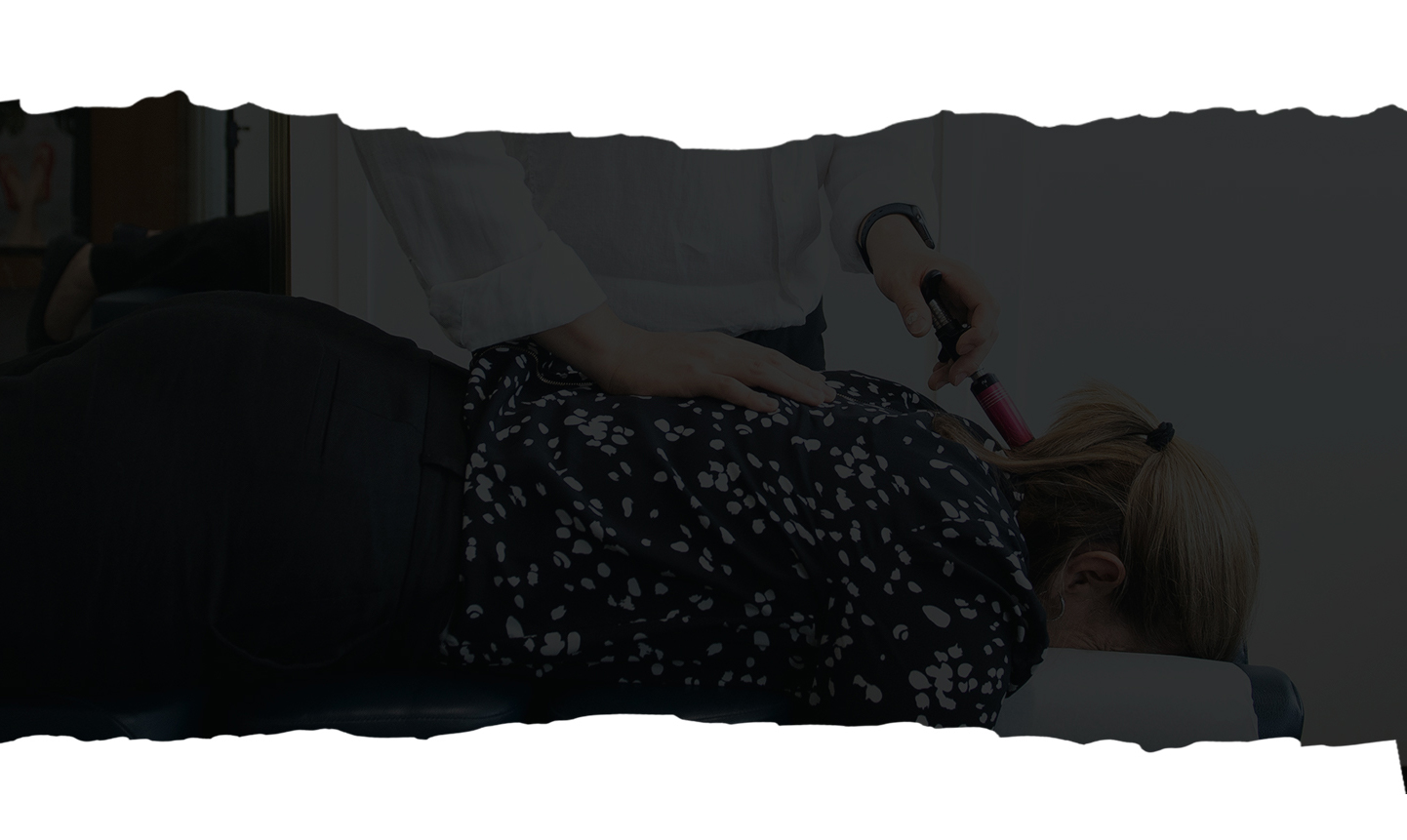
Underwhelming, in the best way. You lie comfortably clothed while the chiropractor works through checks, places the instrument against specific points and triggers a light, springy pulse at each. Most patients compare it to a firm tap; sessions take minutes per region.
The first appointment usually rewrites expectations. There is no dramatic positioning, no bracing for a big movement, no moment where you are asked to relax while clearly being set up for something. The leg-length checks feel like gentle repositioning of your feet; the instrument itself clicks more than it thumps; and patients who arrived rigid with apprehension routinely ask "was that it?" at the end, in a tone somewhere between relief and mild disappointment.
You stay fully clothed for the entire session, face down or side-lying on the table depending on the regions being checked, and nothing requires you to do anything beyond lying still and answering the occasional question. That passivity is part of why anxious patients settle so quickly: there is no moment of participation to dread, no breath to time, no instruction to relax on command. The work happens quietly around you, and most regulars are back in the waiting room before their parking meter has noticed. Children old enough for care tolerate it easily for the same reason: nothing about the experience asks courage of anyone.
A full first appointment with the instrument still includes everything a first appointment should: the history, the examination, the explanation and the written plan, with the Activator protocol woven through the treatment portion. Follow-up visits move faster, often comfortably inside a lunch break, because the assessment sequence doubles as the day's progress check; the same tests that find the joints needing attention also show which previous ones now pass clean.
Afterwards, expect at most the mild, short-lived awareness that follows any adjustment as joints and muscles renegotiate. Many patients notice nothing beyond easier movement. If you are weighing up whether this is finally the way into care you have been avoiding for years, book an assessment and say the word Activator; the front desk hears it daily and knows exactly what to do with it.

Ask for Activator When Booking if You Prefer a Gentle Approach
Every appointment can be an Activator appointment; just say so when you book online or mention it to the front desk on (02) 6288 6711. Your preference goes on your file and follows you to every visit after, no reminder required and no debate entered into.
1/43 Brierly St, Weston ACT 2611 · one of two Activator clinics in the city