
Lower Back Pain on One Side: Causes and When to Worry
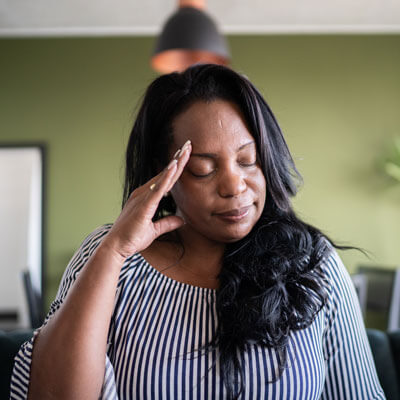
Pain in just one side of your lower back, whether left or right, is extremely common and, most of the time, mechanical: a muscle, joint or nerve on that side is unhappy. Occasionally, though, one-sided back pain has a cause that is not the spine at all, which is exactly why knowing the small handful of warning signs genuinely matters. This guide walks through the usual musculoskeletal causes, how to tell them apart, and, importantly, when to see a doctor, alongside our practical lower back pain treatment in Canberra.
We will keep it honest and practical: most one-sided back pain settles with sensible care, but a small number of cases signal something that needs medical attention, and we would rather you knew the difference than worried unnecessarily, or, worse, missed something important.
Why Back Pain Often Sits on One Side
Back pain frequently affects one side because we rarely load our bodies evenly: we favour one leg, carry bags on one shoulder, twist repeatedly to one direction, or sleep in a fixed position. This asymmetric strain irritates a joint, muscle or nerve on that side. One-sided pain is usually mechanical and does not, on its own, mean anything sinister.
It can feel unnerving when pain settles firmly on one side, as though something is specifically wrong there, but there is usually a very ordinary explanation. Our daily lives are rarely symmetrical. We stand with our weight on one leg, carry a bag or a child on one hip, sit twisted toward a screen, sleep curled to one side, or repeat a work or sporting movement that loads one side more than the other. Over time, that uneven demand tends to irritate the structures on the busier or more restricted side.
The lower back is a stack of joints, discs, muscles and ligaments, with nerves passing through, and pain on one side simply means one of those structures on that side has become irritated or is not moving well. A stiff joint on the left, a strained muscle on the right, a nerve being nudged on one side, any of these produces pain that sits where the problem is. So one-sided pain is not a red flag in itself; it is the norm for mechanical back pain. What matters is the character of the pain and whether any warning features come with it, which is where we are heading.
There is also a knock-on effect worth understanding, because it explains why one-sided pain can seem to spread or shift. When one part of your back hurts, the surrounding muscles instinctively tense up to protect it, a natural guarding response. That protective tightening can itself become a source of ache, and it can pull you subtly out of alignment, throwing more load onto the other side or onto nearby joints. Over a few days a simple, single-structure problem can therefore feel more diffuse, as the body compensates around the original sore spot. This is usually nothing sinister; it is just the reason a tidy one-sided pain sometimes becomes a broader stiffness, and why easing the original irritation tends to settle the whole pattern.
Left-Side Lower Back Pain: Common Causes
Most left-side lower back pain is musculoskeletal: a strained muscle, an irritated facet joint, or a sacroiliac joint problem on the left, often from posture, lifting or uneven loading. Left-sided pain can occasionally relate to non-spinal causes such as the bowel or, rarely, the kidney, so pain with fever, urinary changes or gut symptoms warrants a doctor.
If your pain is on the left, the overwhelming likelihood is a mechanical cause in the structures of your lower back on that side. The usual suspects are a strained or overworked muscle, an irritated facet joint (the small joints at the back of the spine that can become stiff and sore), or a problem with the sacroiliac joint, where the base of the spine meets the pelvis, on the left. These typically come on after lifting, twisting, a long drive, unaccustomed activity, or simply a period of poor postural habits, and the pain is usually related to movement and position.
Because of where certain organs sit, left-sided back pain can, uncommonly, relate to something other than the spine, for example the bowel, or, rarely, a kidney issue on the left. The distinguishing feature is that these tend to bring their own symptoms, fever, changes in urination, or digestive upset, and the pain is often less clearly linked to movement. Mechanical back pain, by contrast, generally changes with how you move and rest. If your left-sided pain is accompanied by those non-mechanical symptoms, that is a cue to see your GP rather than assume it is your back.
It is also worth noting that the sacroiliac joint is a common and under-recognised source of one-sided lower back pain, on either side. This joint, where the sacrum at the base of the spine meets the pelvis, bears a lot of load and can become irritated or move poorly, producing a deep ache low down and slightly to one side, often felt around the dimple above the buttock. It can be aggravated by prolonged sitting, standing on one leg, or activities like getting in and out of a car, and pregnant women are particularly prone to it as the pelvis loosens. If your one-sided pain sits low and toward the pelvis rather than up in the back proper, the sacroiliac joint is a likely candidate, and it responds well to assessment and targeted treatment.
Right-Side Lower Back Pain: Common Causes
Right-side lower back pain is, like the left, most often muscular or joint-related, from the same everyday strains and postural loads. On the right, a few non-spinal causes are worth being aware of, including the appendix, gallbladder, or a right kidney problem. As with the left, spinal pain moves with your posture, while pain with fever, nausea or urinary symptoms needs medical review.
Right-sided lower back pain mirrors the left in its common causes: the same strained muscles, irritated facet joints and sacroiliac joint problems, arising from the same everyday activities and postures. If your right-sided pain is worse with certain movements or positions and eases with others, that mechanical pattern points firmly toward the musculoskeletal structures of your back, which is reassuring and by far the most likely story.
The right side has a couple of extra organs worth a mention, purely so you know when to think beyond the spine. Appendicitis usually causes pain in the lower right abdomen but can be felt in the back, and it typically comes with worsening pain, nausea, loss of appetite and fever. The gallbladder, higher and more toward the right, can refer pain that some feel around the back. And a right kidney infection or stone can cause one-sided back or flank pain, often with urinary symptoms, fever or nausea. None of these behaves like ordinary mechanical back pain, and all of them are reasons to see a doctor rather than a chiropractor first. We flag them not to alarm you, but so you can recognise the difference.
Muscle, Joint or Nerve? How to Tell the Difference
As a rough guide: muscular pain is often a dull ache or tightness that is tender to touch and worse with certain movements; joint pain tends to be a more localised, stiff, achy pain that eases with movement once you get going; nerve pain is sharper, may burn, tingle or shoot, and can travel down the leg. Only an assessment can confirm which, but the pattern gives clues.
People often want to know what is actually causing their one-sided pain, and while a proper assessment is the only way to be sure, the character of the pain offers useful clues. Understanding these can help you describe your problem and know what to expect, though do not over-diagnose yourself; the categories overlap.
- Muscular pain tends to be a dull ache, tightness or soreness, often tender when you press on the spot, and worse with particular movements or after overuse. It usually eases with gentle movement, warmth and time.
- Joint pain, from a facet or sacroiliac joint, is often a more localised, deep ache with stiffness, classically worse after rest (getting up in the morning or from a chair) and easing a little once you are moving.
- Nerve pain has a different quality: sharper, and it may burn, tingle, feel electric or shoot. Crucially, it can travel, radiating from the back into the buttock and down the leg, which is the hallmark of sciatica.
That last pattern, one-sided back pain that travels down the leg, is worth singling out. When a nerve in the lower back is irritated or compressed, the pain can run down the leg on that side, sometimes with pins and needles or numbness. This is sciatica, a symptom rather than a diagnosis in itself, and it has its own considerations, which we cover under our sciatica treatment. If your one-sided pain shoots down your leg, it is worth an assessment to work out what is irritating the nerve and how best to settle it.
One more useful distinction: pay attention to whether the pain is worse when you bend forward or when you lean back. Broadly, pain that worsens with forward bending and sitting can point toward the disc at the front of the spine, while pain that worsens with leaning backward or standing for long periods can point toward the facet joints at the rear. This is only a rough guide, and plenty of problems do not read the textbook, but it is another example of how the behaviour of your pain, not just its location, helps a practitioner work out what is going on. Noticing these patterns before your appointment gives you a genuinely useful head start, and helps you describe the problem clearly.
When One-Sided Pain Needs Prompt Assessment
See a doctor promptly if one-sided back pain comes with fever or feeling unwell, urinary changes (pain, blood or difficulty), abdominal pain or nausea, unexplained weight loss, or pain that is constant and not eased by any position. Seek emergency care for severe pain with numbness in the saddle area, or loss of bladder or bowel control.
This is the most important section, so we will be direct. The great majority of one-sided lower back pain is mechanical and safe to manage with sensible care. But a minority of cases carry warning signs, red flags, that mean you should be assessed by a doctor rather than waiting or self-treating. Please take these seriously.
See your GP or seek urgent care if your one-sided back pain comes with any of these:
Fever, chills or generally feeling unwell; pain, burning, blood or difficulty when passing urine; abdominal pain, nausea or vomiting; unexplained weight loss; pain that is severe, constant and not relieved by any position or by rest; night pain that wakes you; or pain following a significant injury or fall.
Call 000 or go to an emergency department for numbness around the groin, buttocks or inner thighs (the "saddle" area), or any loss of control of your bladder or bowels, as these can signal a rare but serious condition (cauda equina syndrome) that needs immediate care.
To be clear, these situations are very much the exception rather than the rule, and listing them so plainly is not meant to frighten you or to suggest your back pain is likely to be one of them. It is simply that one-sided back pain occasionally has a cause outside the spine, and the features above are the clues that separate "this is your back, and manageable" from "this needs a doctor's eyes". If none of them applies and your pain behaves mechanically, changing with movement and position and unaccompanied by feeling unwell, you are very likely dealing with an ordinary, treatable musculoskeletal problem.
Relief and Treatment Options
For ordinary mechanical one-sided back pain, early relief comes from staying gently active rather than resting in bed, using heat, and avoiding movements that sharply aggravate it. Most cases improve within a few weeks. If pain is persistent, severe or recurring, an assessment can identify the specific structure involved and guide hands-on treatment and targeted exercises.
Assuming your pain is the common, mechanical kind, the good news is that most episodes settle, and there is plenty you can do to help. The single most useful principle is to keep moving. Prolonged bed rest, once advised, is now known to slow recovery; gentle, comfortable movement keeps the area from stiffening and helps it settle. Stay as active as the pain reasonably allows, use gentle heat to relax the tight muscles, and temporarily ease off the specific movements that sharply aggravate it, all without wrapping yourself in cotton wool.
A few gentle, symmetrical movements can help too, precisely because one-sided pain often comes from one-sided loading. Simple things like knee rolls while lying on your back, gentle pelvic tilts, or an easy walk encourage both sides to share the work again and stop the sore side seizing up. Avoid pushing into sharp pain, and favour movements that feel like a relief rather than a strain. Over-the-counter pain relief, used as directed and as you normally would for everyday aches, can help you stay active in the early days, though it treats the symptom rather than the cause. The aim through this early phase is simply to keep gently moving while the irritation settles, not to rest rigidly and wait.
Simple measures aside, if your one-sided pain is persistent, severe, keeps coming back, or is simply not improving as you would expect over a couple of weeks, that is when a professional assessment earns its keep. A chiropractor can examine you to work out which structure, muscle, joint or nerve, on which side is driving the pain, check for any red flags along the way, and tailor treatment accordingly: hands-on work to ease a stiff joint or tight muscle, and, just as importantly, specific exercises and advice to address why one side became overloaded in the first place. Correcting that underlying asymmetry, rather than just chasing the pain, is often the key to stopping the problem from returning again and again.
The overarching message is a reassuring one. One-sided lower back pain, left or right, is usually a straightforward mechanical problem that responds well to staying active and, where needed, targeted treatment. Keep the red flags in mind, see a doctor if any appear, and otherwise treat it as the common, manageable complaint it almost always is. If it is dragging on, keeps returning, or is interfering with your work, sleep or the things you enjoy, an assessment can get to the bottom of it and set you moving in the right direction.
Pinpoint What Is Driving Your One-Sided Back Pain
If your one-sided back pain is persistent or keeps returning, an assessment can identify the structure involved and address the asymmetry behind it. Book with our Canberra team today.
Book an Assessment Lower Back Pain CareDisclaimer: This article is general information and cannot diagnose your pain; only an in-person assessment can. If you have any of the red-flag symptoms described, see your GP or seek urgent care, and call 000 for saddle numbness or loss of bladder or bowel control. Chiropractic in Australia is regulated by AHPRA.