
Hip Flexor Stretches and Exercises
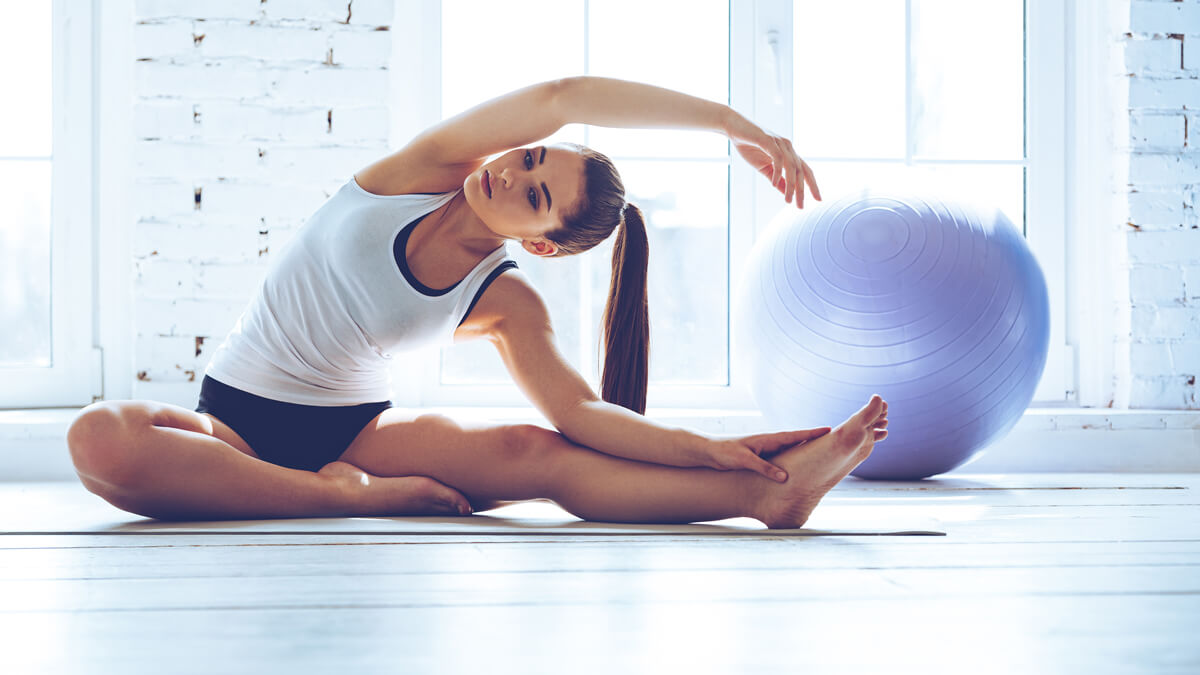
If you sit for a living and feel tight across the front of your hips, you are far from alone, and a little regular attention to your hip flexors can make a real difference to how you move and feel. This guide, which complements our hip pain treatment information, explains what your hip flexors are and why sitting affects them, how to test whether yours are genuinely tight, five well-coached stretches, the strengthening half almost everyone skips, and how to weave it all into a desk-bound day. Because tight hips and a cranky back often travel together, it also pairs with our guide to lower back pain.
A quick word on expectations before we start. Hip flexor tightness is real, but it is also more nuanced than the popular story of a permanently shortened muscle, and the most effective approach combines gentle stretching with, crucially, strengthening. Get both working together and the results tend to last far better than stretching alone.
Meet Your Hip Flexors: Why Sitting Shortens Them
Your hip flexors are the muscles spanning the front of each hip whose job is to draw the thigh up toward the torso, the main ones being the iliopsoas and rectus femoris. When you sit, the hip is held in a bent position for hours, so these muscles rest in a shortened state and the body gradually adapts to that habitual position. Over time this can leave them feeling tight and can reduce how far the hip extends behind you, which affects walking, standing and posture.
Before stretching anything, it helps to know what you are actually working with, because the hip flexors are a small team rather than a single muscle. The star player is the iliopsoas, which is really two muscles, the psoas and the iliacus, that run from the lower spine and pelvis down to the top of the thigh bone deep in the front of the hip. Alongside it, the rectus femoris, one of the quadriceps at the front of the thigh, also crosses the hip and helps flex it. Together this group is what lifts your knee toward your chest and drives the leg forward when you walk or run.
Now for the sitting problem. When you sit, your hip is bent to roughly ninety degrees, which places the hip flexors in a shortened position, and if you spend most of the day like that, at a desk, in a car, on the sofa, those muscles spend most of their time short. The body is efficient and adapts to the positions it holds most, so over months and years the hip flexors can become accustomed to that shortened length and feel tight and reluctant to lengthen. This restricts hip extension, the movement of taking the thigh behind you, which you need for a full walking stride and for standing tall. It can also nudge the pelvis into a forward tilt, which is one of the ways tight hips and lower-back aches become linked. None of this is damage; it is adaptation, and adaptation can be reversed with the right, consistent work.
The Test: Are Your Hip Flexors Actually Tight?
A simple version of the Thomas test checks hip flexor length. Lie on your back at the end of a bed, hug both knees to your chest, then lower one leg while keeping the other hugged in. If the lowered thigh rests flat with the back of the knee reaching toward the bed, your hip flexors are reasonably flexible; if the thigh floats up and cannot lower, they are likely tight. Compare sides, and treat it as a rough guide rather than a precise measurement.
Before pouring effort into stretching, it is worth checking whether your hip flexors are genuinely tight, because assumptions can be wrong and the answer guides how much to focus here. Clinicians use a simple assessment called the Thomas test, and you can try a home version of it safely.
Lie on your back with your bottom near the end of a sturdy bed or bench so your legs can hang off the edge. Draw both knees up and hug them to your chest to flatten your lower back, then keep one knee hugged in while you slowly lower the other leg toward the floor. Watch what the lowering leg does. If the back of that thigh can settle down level with your hip, roughly parallel to the floor, with the knee able to bend and hang, your hip flexors are reasonably supple. If instead the thigh stays lifted and refuses to lower, or the knee straightens out as it drops, that suggests tightness in the hip flexors on that side. Do both sides and compare, since many people are tighter on one. Treat this as a helpful rough guide rather than a laboratory measurement, and if it is hard to judge on yourself, a practitioner can perform it properly and interpret it in the context of how you move.
Five Hip Flexor Stretches, Coached Step by Step
A good hip flexor routine includes the half-kneeling stretch, the couch stretch, a standing lunge stretch, a low lunge with a reach, and a supported bridge to open the front of the hips. Move into each slowly, feel a gentle pull across the front of the hip and thigh rather than any pinch in the joint, hold each for around thirty seconds, and breathe. Keep the pelvis gently tucked to target the hip flexors properly, and never force into pain.
These five stretches cover the front of the hip from slightly different angles. A key coaching point applies to all of them: to actually stretch the hip flexors rather than just leaning into your lower back, gently tuck your tailbone under, as if shortening the gap between your belt buckle and breastbone, which flattens the arch and directs the stretch where you want it.
1. Half-Kneeling Hip Flexor Stretch
Kneel on one knee with the other foot flat in front, making two right angles with your legs, using a cushion under the down knee for comfort. Tuck your tailbone under to flatten your lower back, then gently shift your weight forward until you feel a stretch across the front of the kneeling-side hip. Keep your torso tall rather than leaning forward. Hold for around thirty seconds and swap sides. This is the foundational hip flexor stretch and the one to master first.
2. The Couch Stretch
A stronger version of the above. From half-kneeling near a wall or couch, place the top of your back foot up against the wall or on the couch seat behind you, so the knee is bent and the thigh points down. Tuck the tailbone, keep the torso upright, and ease gently into the stretch, which reaches both the hip flexor and the front of the thigh. This one is intense, so go easy, only as far as a firm but comfortable stretch, and build up over time.
3. Standing Lunge Stretch
If kneeling is uncomfortable, this standing option works well. Step one foot well forward into a lunge, keeping the back leg fairly straight and the back heel lifted. Tuck your pelvis under and press your hips gently forward and down until you feel the front of the back hip lengthen. Keep your chest tall. Hold, breathe, and switch legs. It is convenient enough to do almost anywhere, including at the office.
4. Low Lunge With a Reach
From a lunge with the back knee down on a cushion, raise the arm on the same side as the back leg up overhead and lean gently away from that side. Adding the overhead reach and a slight side bend deepens the stretch along the front of the hip and into the side of the trunk, where the psoas connects upward. Move slowly and keep it comfortable, holding for a few slow breaths before changing sides.
5. Supported Bridge
Lie on your back, knees bent and feet planted, then lift your hips and slide a firm cushion or yoga block under your sacrum, the flat bone at the base of your spine, letting your pelvis rest on the support. Straighten one leg along the floor to gently lengthen the front of that hip while the support holds your pelvis. This is a gentle, restful way to open the hip flexors, and it is a pleasant one to finish on. Hold for thirty seconds or so on each side.
Strengthening: The Half That Everyone Skips
Stretching alone often gives only short-lived relief, because a muscle that feels tight is frequently weak and overworked rather than simply short. Strengthening the hip flexors through their full range, along with the glutes and core that support the pelvis, gives lasting improvement. Useful exercises include controlled leg raises and marches that train the hip flexors, plus glute bridges and hip extension work to balance the front and back of the hip. Combine strength with stretching for the best results.
Here is the part most hip flexor advice leaves out, and it is the part that makes the difference between temporary relief and a real change. A muscle that feels tight is not always a muscle that is short; very often it is a muscle that is weak, overworked or unaccustomed to being challenged, and it registers that as tightness. If you only ever stretch it, you may feel looser for an hour and then find the tightness creeps straight back, because you have not addressed why it felt that way.
The fix is to strengthen the hip flexors through their full range, teaching them to be strong and comfortable in the lengthened positions they usually avoid, while also building the muscles around them. Controlled leg raises, where you lie down and slowly lift and lower a straight or bent leg, train the hip flexors directly, as do standing marches done with control. Just as important is strengthening the muscles on the other side of the equation: the glutes and the deep core. Glute bridges, where you lie on your back and lift your hips by squeezing your buttocks, build the hip extensors that balance the flexors and help the pelvis sit well, while gentle core work steadies the whole region. When the front and back of the hip are both strong and the core supports the pelvis, the hip flexors have far less reason to feel tight, and any gains from stretching actually stick. If you take one idea from this article, let it be that strengthening, not just stretching, is what turns short-term relief into lasting change.
Progression matters here as much as the exercises themselves. Start with a manageable number, perhaps a set of eight to twelve controlled repetitions of each, done a few times a week, and focus on quality of movement rather than quantity: slow, deliberate lifts and lowers with the pelvis kept steady teach the muscles far more than fast, sloppy ones. As an exercise starts to feel easy, make it a little harder, by adding repetitions, slowing the tempo further, or increasing the range, so the muscles keep being gently challenged. If a movement provokes pain rather than the honest effort of working muscles, ease off and check your technique, or have it reviewed. This steady, progressive approach is exactly how strength is built anywhere in the body, and applied to the hips it is what finally convinces those tight-feeling flexors that they are strong, capable and safe throughout their range, which is when the tightness tends to fade for good.
Hip Flexor Pain vs Tightness: Different Problems
Tightness is a feeling of restriction or pulling, usually eased by movement and stretching, whereas hip flexor pain is a distinct, often sharp or aching discomfort at the front of the hip or groin that may point to a strain, tendon irritation or a hip joint issue. Tightness is generally a mobility matter to work on gradually; genuine, persistent or sharp pain, especially with limping or catching in the joint, deserves assessment rather than aggressive stretching.
It is important to separate two things that get lumped together, because they call for different responses. Tightness is that familiar sensation of restriction, a pulling or a sense that the hip will not open up, and it typically eases as you move and stretch. It is a mobility issue, and the gentle, consistent stretch-and-strengthen approach in this article is exactly right for it.
Pain is different. A genuine, definite discomfort at the front of the hip or in the groin, particularly if it is sharp, catches with certain movements, or aches on and off through the day, may signal something more specific, such as a hip flexor strain, irritation of a tendon, or an issue within the hip joint itself. Aggressively stretching into that kind of pain is not the answer and can make matters worse. The rough rule is that a feeling of tightness that improves with gentle movement is usually fine to work on yourself, whereas pain that is sharp, persistent, worsening, or accompanied by limping, clicking or a sense of the joint catching or giving way is a reason to be assessed rather than to stretch harder. An assessment can work out what is actually going on and whether it is a muscle, a tendon or the joint, and tailor the right plan.
Have front-of-hip or groin symptoms checked promptly if you notice
- Sharp or severe pain in the hip or groin, especially after a specific injury or a fall
- A limp, or pain that stops you bearing weight comfortably
- Clicking, catching, locking or a feeling that the hip may give way
- Groin pain with fever or feeling unwell, or pain that steadily worsens rather than easing
These point to a problem that needs assessment rather than more stretching. When in doubt, have it looked at.
Building It Into a Desk-Worker Day
The most powerful change for desk workers is simply sitting less continuously: stand, walk or change position every thirty to sixty minutes so the hip flexors are not held short all day. Add a couple of standing lunge or half-kneeling stretches at natural breaks, a set of glute bridges in the morning or evening, and a short daily walk. Small, frequent movement beats an occasional long session, and it prevents the tightness building up in the first place.
All the stretches and exercises in the world struggle to keep up if you undo them with eight unbroken hours of sitting, so the real difference-maker for desk workers is weaving movement through the day rather than saving it for the gym. The single most effective habit is to interrupt prolonged sitting: aim to stand up, walk about or at least change position every thirty to sixty minutes, which stops the hip flexors settling into their shortened state for hours on end. A standing desk, used part-time, and taking calls on your feet both help.
Around that, you can sprinkle small doses of the work described above into the natural gaps of a working day. A standing lunge stretch by the desk while the kettle boils, a half-kneeling stretch during a phone call, a set of glute bridges before your morning shower or in the evening in front of the television, all of these add up without demanding a dedicated block of time. A brisk walk at lunch, or getting off the bus a stop early, keeps the hips moving through a fuller range. The theme throughout is frequency over intensity: little bouts of movement scattered across the day do more for tight hips than one heroic session, and they gently prevent the problem returning. Build these habits, pair them with the stretch-and-strengthen routine, and the front of your hips will thank you over time, as will your lower back and, indeed, your posture more generally.
Let Us Sort Tightness From a Real Problem
If stretching is not helping, or the front of your hip is genuinely painful, an assessment can pinpoint the cause and build the right plan of movement and strength for your hips. Our friendly Weston clinic is here whenever the timing works for you.
Book an Assessment Hip Pain TreatmentDisclaimer: This article is general information and educational guidance, not personalised advice, and the stretches and exercises are not suitable for everyone. Stop anything that causes sharp or worsening pain, and seek assessment for the symptoms noted above. For a program tailored to you, see a qualified practitioner. Chiropractic in Australia is regulated by AHPRA.