
Dry Needling vs Acupuncture: The Real Difference
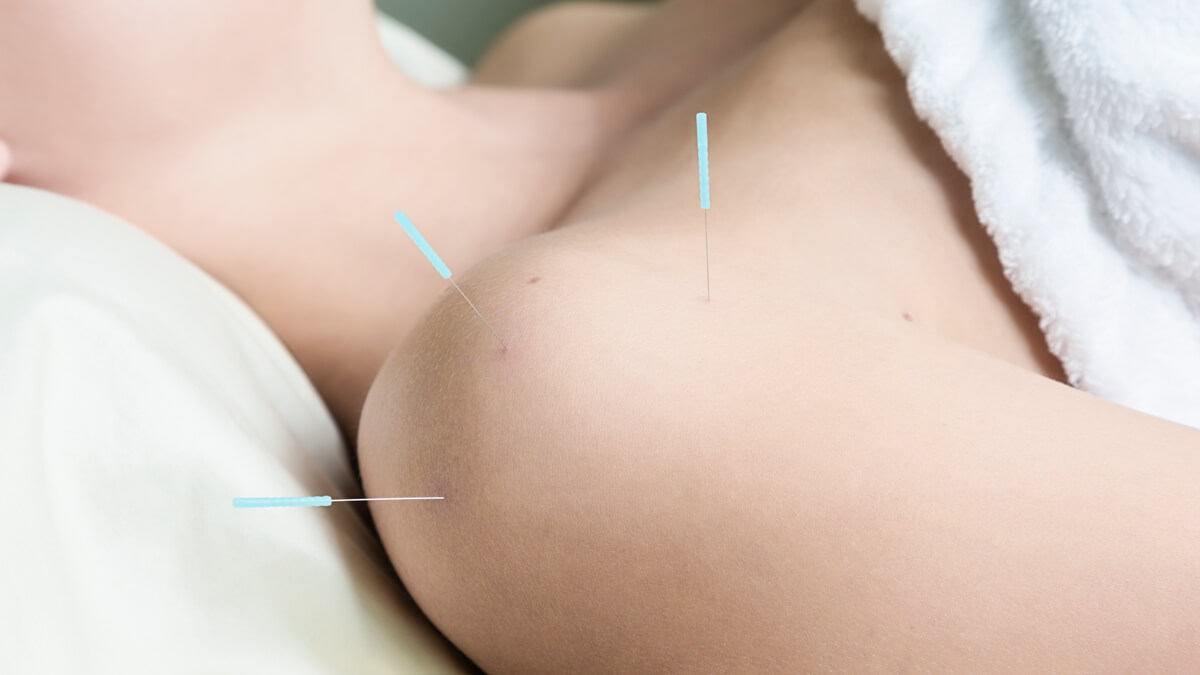
Dry needling and acupuncture both use fine needles, so it is easy to assume they are the same thing, yet they come from completely different traditions and think about the body in different ways. Understanding the distinction helps you choose sensibly. This guide explains how the two compare, what each involves, what the evidence honestly says, and which tends to suit which problem. At our clinic, dry needling is offered by our remedial massage therapist as part of hands-on muscle care, and if you want to know how it feels, our guide to what needling feels like covers that.
To be clear from the outset: the fine needles used look similar, but the reasoning behind where they go and why is where dry needling and acupuncture part ways. That difference in thinking, in the map each one follows, is the heart of the matter, and it is what this guide is really about.
Same Needles, Completely Different Systems
Dry needling and acupuncture both use the same type of fine, solid filament needle, which is why they look alike, but they belong to completely different systems of thought. Dry needling is a modern, Western technique based on anatomy and muscle physiology, targeting tight muscular trigger points. Acupuncture is part of traditional Chinese medicine, placing needles at defined points along energy channels called meridians. Same tool, entirely different maps and reasoning behind where the needles go.
The single fact that causes most of the confusion is that both practices use the same fine, hair-thin needles, quite different from the hollow needles used for injections. Watching either treatment, you would see similar thin needles being inserted into the skin, so the assumption that they are two names for one thing is understandable. The similarity, though, is only skin deep.
Underneath, they are guided by entirely different frameworks. Dry needling grew out of modern Western sports medicine and physical therapy, and it is founded on anatomy, muscle physiology and the concept of the myofascial trigger point, a tight, irritable knot within a muscle. An acupuncturist, by contrast, works within the centuries-old tradition of Chinese medicine, placing needles at specific points along channels called meridians, through which, in that tradition, a vital energy is said to flow. So while the tool in the hand is the same, the map being followed and the reason for choosing each spot could hardly be more different. Recognising that they are two distinct systems that happen to share an instrument is the key to telling them apart.
The confusion is more than academic, because who is trained to do each, and how they are regulated, differs too. Dry needling is typically performed by practitioners such as remedial massage therapists, physiotherapists and chiropractors who have completed specific additional training in the technique, applying it within their existing field of muscle and movement care. Acupuncture, as practised within traditional Chinese medicine, is its own registered profession in Australia with its own extended training and regulation. So the person offering you needling matters as much as the needle itself: it tells you which system, and which body of training, sits behind the treatment. Asking a practitioner what kind of needling they do, and what training they have in it, is a perfectly reasonable question and one a good practitioner welcomes.
Dry Needling: The Western, Trigger-Point Approach
Dry needling is a Western technique in which a fine needle is inserted directly into a tight, tender knot in a muscle, known as a myofascial trigger point, to help it release. The aim is to reduce muscle tension and pain and improve movement, and it is chosen based on a physical assessment of which muscles are involved. It is often used alongside massage and other hands-on therapy for muscular pain and tightness, and it is grounded in anatomy rather than energy channels.
Dry needling takes its name from the use of a needle with nothing injected through it, a dry needle, as opposed to a hollow needle delivering a substance. In this approach, the practitioner assesses your muscles to find the trigger points, those tight, tender bands that can hurt locally and sometimes send pain elsewhere, and inserts the fine needle directly into them.
The goal is straightforwardly mechanical and physiological: to prompt the tight point to release, easing the local tension, reducing pain, and helping the muscle move more freely again. Practitioners often look for a brief, involuntary twitch of the muscle as the needle reaches the trigger point, which is thought to signal that the spot has been engaged. Because it is based on anatomy and the physical state of the muscles, the choice of where to needle follows directly from the physical assessment of what is tight and troublesome, rather than from any traditional point chart. In our clinic, dry needling is delivered by our remedial massage therapist as one tool within broader muscular treatment, sitting naturally alongside massage and soft-tissue work for people with muscular tension and pain. It is a modern, targeted technique for a modern understanding of muscle.
Exactly how a tight point releases when needled is still being worked out, and honesty means saying so. The leading explanations involve local effects in the muscle and connective tissue, changes in blood flow to the area, and effects on the nervous system that dampen pain signals and help the muscle relax, rather than anything mystical. What people tend to notice in practice is a loosening of the treated area and a reduction in that deep, knotted ache, often felt over the following day or two rather than instantly. Because it is aimed squarely at muscle, dry needling is usually most effective when the muscle is genuinely the source of the trouble, which is exactly why a physical assessment comes first: needling the wrong thing, or needling when the real problem lies elsewhere, helps no one, and a good therapist will only reach for it when the muscles are truly the issue.
Acupuncture: The Traditional Chinese Medicine Approach
Acupuncture is a component of traditional Chinese medicine with a history of thousands of years. It involves placing fine needles at defined acupuncture points located along the body's meridians, the channels through which, in Chinese medicine, a vital life energy known as qi is believed to flow. The aim, within that tradition, is to restore balance and the free flow of energy, and it is used for a broad range of complaints. It is a whole traditional system, guided by its own diagnosis and point selection.
Acupuncture comes from an entirely different and far older world. As a core part of traditional Chinese medicine, it rests on a system of thought developed over thousands of years, with its own understanding of health, diagnosis and treatment that is quite separate from Western anatomy.
In this tradition, health is seen as depending on the smooth flow of a vital energy, called qi, through a network of channels known as meridians that run throughout the body. Illness and pain are understood as arising from blockages or imbalances in that flow, and acupuncture aims to restore balance by placing fine needles at specific, named points along these meridians. The points chosen follow the tradition's own diagnostic reasoning rather than a Western muscle assessment, and a single treatment may use points quite distant from where a person feels their symptoms. Acupuncture is used within Chinese medicine for a wide variety of complaints, not only musculoskeletal ones. It is, in short, a complete traditional system in its own right, with its own philosophy and its own way of deciding where the needles go, which is what most fundamentally sets it apart from dry needling.
Evidence Compared, Honestly
Honestly, the evidence for both is mixed and still developing. For dry needling, there is reasonable evidence that it can help with muscular pain and trigger points in the short term, often similar to other manual therapies, though high-quality long-term evidence is limited. Acupuncture has been studied extensively with genuinely mixed results, showing modest benefit for some conditions such as certain kinds of pain, while debate continues about how much is a specific effect. Neither is a miracle cure, and both are best seen as one option among several.
It is only fair to be candid about what the research shows, because both dry needling and acupuncture attract strong claims from enthusiasts and strong scepticism from critics, and the truth sits in a more measured middle. For dry needling, studies suggest it can provide short-term relief of muscular pain and help release trigger points, with effects that are often comparable to other hands-on treatments; the evidence is reasonable for short-term muscular benefit but thinner for large or long-lasting effects, and more good-quality research is still needed.
Acupuncture has been researched more extensively, given its long history and wide use, and the picture there is genuinely mixed. Some studies find modest benefits for certain conditions, particularly some types of chronic pain, while others find little difference from placebo needling, which keeps a lively scientific debate going about how much of the effect is specific to the points chosen. The honest summary for both is the same: they are reasonable options that help some people with certain problems, especially pain, without being guaranteed or dramatic cures. Anyone promising either as a certain fix for a wide range of ailments is going beyond what the evidence supports, and a trustworthy practitioner will always describe them in these realistic terms.
A sensible way to weigh this up as a patient is to judge a treatment by whether it genuinely helps you, over a fair trial, rather than by the strength of the claims made for it. Give it a reasonable go, keep an honest eye on whether your symptoms actually improve, and be willing to stop if it is not making a difference for you, since individual responses vary and no single approach suits everyone. It is also worth remembering that needling of either kind is rarely meant to work in isolation; it tends to do best as one part of a broader plan that includes movement, exercise and the other elements of good care. Treated that way, as a helpful component rather than a magic bullet, both dry needling and acupuncture can earn their place for the people they suit, without anyone having to overstate what they do.
Which Suits Which Problem?
As a rough guide, dry needling is best suited to specific muscular problems, tight, painful muscles, trigger points, and the muscular component of many aches, and it fits neatly within hands-on muscle treatment. Acupuncture, as part of traditional Chinese medicine, is used for a much broader range of complaints within its own system. If your issue is clearly muscular and you are already having massage or physical therapy, dry needling is the natural companion; for other purposes, people seek a qualified acupuncturist.
With the two systems clear, the practical question is which fits which situation, and there is a sensible rule of thumb. Dry needling is at its most useful for specific muscular problems: a tight, painful muscle, an identifiable trigger point, the muscular knots that build up from training, posture or stress. Because it targets muscle directly and is guided by a physical assessment, it slots naturally into a course of hands-on muscle treatment, complementing massage and soft-tissue work for someone whose main issue is muscular tension and pain.
Acupuncture, being a whole traditional system, is sought for a far wider range of reasons within Chinese medicine, extending well beyond muscles, and people who are drawn to that framework, or who want to explore it for a particular complaint, will look for a qualified acupuncturist trained in the tradition. It also helps to think about what you are already doing. If you are in the middle of a course of massage or physical treatment for a muscular problem, adding dry needling is a small, natural step that the same practitioner can weave into your existing sessions, guided by the same assessment. If, on the other hand, you are drawn to a whole-body traditional approach, or you have tried the muscular route without the relief you hoped for and want to explore something different, seeking out acupuncture on its own terms makes more sense. The two are therefore not really competitors for the same job so much as different tools for different purposes that happen to share a needle. If your problem is plainly muscular and you are already receiving physical treatment, dry needling is the obvious, well-matched addition; if you are seeking the broader traditional approach, acupuncture is its own path. Knowing which of the two you are actually after, in the end, makes the whole choice simple.
What We Offer and Why
At our clinic we offer dry needling, provided by our remedial massage therapist as part of hands-on muscular treatment, because it fits our focus on assessing and treating muscles and movement. We do not offer traditional acupuncture, which is a separate discipline requiring specific training in Chinese medicine. So if your problem is muscular, dry needling with our therapist may be a useful part of your care; if you are seeking traditional acupuncture, we would suggest a qualified acupuncturist. We are always upfront about what we do and do not provide.
Let me be clear and open about where our clinic fits into all this, since that is probably why you are reading. The needling we provide is dry needling, delivered by our remedial massage therapist as one component of muscular, hands-on care. It sits comfortably within what we do best, assessing and treating muscles, tension and movement, and it is offered as part of a broader treatment for people with muscular complaints, rather than as a standalone service.
Traditional acupuncture is not something we provide, and we think it is important to say so plainly. Acupuncture is a distinct discipline that requires its own dedicated training in traditional Chinese medicine, and it would be misleading to present our dry needling as the same thing. If your interest is specifically in traditional acupuncture, the right path is a practitioner qualified in that field, and we are happy for you to seek one out. But if you have a muscular problem, tight, sore muscles, trigger points, the muscular side of a nagging ache, and you are already benefiting from hands-on treatment, then dry needling with our therapist can be a genuinely useful addition to your care, chosen and applied on the basis of a proper physical assessment. Being straightforward about exactly what we offer, and why, is simply how we prefer to work, and it means you always know precisely what you are booking and what to expect from it, with no blurred lines between one discipline and another.
Dry Needling as Part of Your Muscle Care
Our remedial massage therapist can assess whether dry needling would help your muscular problem and combine it with hands-on treatment. Reach our Weston clinic to find out more.
Book an Assessment About Dry NeedlingDisclaimer: This article is general information comparing two needling approaches, not health advice or a recommendation of a specific treatment for your condition. Our clinic provides dry needling as part of remedial massage care and does not offer traditional acupuncture. Needling is not suitable for everyone; your therapist will assess suitability. Chiropractic and remedial massage in Australia are provided by regulated and accredited practitioners.