
Can a Disc Injury Heal Without Surgery?
It is the question almost everyone asks after a disc diagnosis, and the answer is genuinely reassuring: yes, the great majority of disc injuries settle without any operation at all. This guide belongs to our disc injury treatment resources and follows on nicely from our explainer on the difference between a bulge vs herniation. Below we look at the encouraging evidence, explain how discs actually shrink back over time, walk through what conservative care involves, and talk honestly about the small group who do need a surgical opinion, plus how to live and track progress while you heal.
Surgery has an important place for the right person at the right time, and nothing here is anti-surgery. It is simply that, for most disc problems, the body does a remarkable amount of the healing itself when given sensible support and a little patience.
The Encouraging Evidence on Natural Disc Recovery
The evidence is genuinely positive: most people with a disc injury, including those with a herniation causing sciatica, recover well with non-surgical care, and studies show that at one to two years the outcomes of conservative management and surgery are broadly similar for many patients. Surgery can speed up early relief in selected cases, but it is not usually necessary for a good long-term result, which is why it is reserved for specific situations.
Let us start with what the research actually shows, because it is more hopeful than the fear around discs would suggest. Study after study has found that the majority of people with disc-related back and leg pain improve substantially with conservative, non-surgical care over weeks to months. Even sizeable herniations pressing on a nerve and causing genuine sciatica tend to settle this way in most cases.
Perhaps the most striking finding comes from trials that compared surgery with non-surgical care for disc-related sciatica. Surgery often provides faster relief in the first weeks and months, which matters if pain is severe, but by around one to two years the two groups tend to end up in a broadly similar place. In other words, for many people the operation buys earlier comfort rather than a better final outcome, and plenty recover just as well without it. That is exactly why guidelines and sensible clinicians treat surgery as a considered option for particular circumstances, not a default, and why a trial of good conservative care almost always comes first.
It is worth being clear about what recovery actually means here, because it is not quite what most people picture. When we say a disc injury heals, we rarely mean the disc returns to a pristine, youthful state on a scan. What typically happens is that the pain and nerve irritation resolve, function returns, and life gets back to normal, even though the disc may still look changed if you imaged it. This matters because it lifts the pressure of chasing a perfect picture. Your goal is to feel well and move freely, and that is entirely achievable without the disc ever looking flawless again, in the same way a healed ankle sprain works perfectly well even if the ligament is never quite identical to how it started.
How Discs Resorb Over Time
Herniated disc material is often gradually broken down and cleared away by the body in a natural process called resorption. The immune system treats the displaced gel as something to be tidied up, and specialised cells slowly reabsorb it, so the herniation can shrink or even disappear over months. Intriguingly, larger herniations are frequently the most likely to resorb, which is one reason a big-sounding scan finding is not the bad news it seems.
The idea that a herniation can genuinely get smaller on its own surprises many people, yet it is one of the best reasons for optimism, so it is worth understanding how it happens. When disc material pushes out beyond its normal border, the body does not simply leave it there. The immune system recognises the displaced tissue as out of place and sets about clearing it, sending in specialised cells that gradually break it down and carry it away, a process known as resorption.
This clean-up unfolds over months rather than days, which is part of why disc recovery asks for patience. As the extruded material is reabsorbed, the pressure on nearby structures eases, and symptoms often improve in step. The genuinely counter-intuitive part, well documented on repeat scans, is that the largest, most alarming-looking herniations are frequently the ones that shrink the most, because there is more exposed material for the body to recognise and remove. So the very finding that sounds most frightening on a report often carries one of the more encouraging natural outlooks, provided the situation is not one of the few that needs urgent attention.
Resorption is not the only way the body helps itself, either. Even where displaced material is slow to clear, the initial inflammation around an irritated nerve tends to subside over the early weeks, and inflammation is a major driver of pain, so symptoms frequently ease well before any scan would show much change. The nerve itself also becomes less sensitive as the angry, acute phase passes. Between the settling of inflammation, the calming of the nerve and the gradual resorption of the herniation, there are several natural processes all working in your favour at once, which is a large part of why so many disc problems quietly resolve when simply given time and sensible support.
Conservative Care: What the First 12 Weeks Look Like
Over the first twelve weeks, conservative care focuses on controlling symptoms and keeping you moving: relative rest without prolonged bed rest, gentle activity and walking, hands-on care and specific exercises, guidance on positions and load, and support to stay at work where possible. The early weeks are usually the most uncomfortable, with gradual improvement after that. The aim is to keep you comfortable and active while the disc settles and resorbs.
Knowing roughly what the journey looks like makes it far easier to travel, so here is a broad picture of a typical non-surgical course. In the earliest phase, often the first week or two, symptoms tend to be at their sharpest, and the priority is simply calming things down: modifying activities that clearly provoke the pain, using comfortable positions, and keeping gently mobile rather than retreating to bed, which is now known to slow recovery rather than help it.
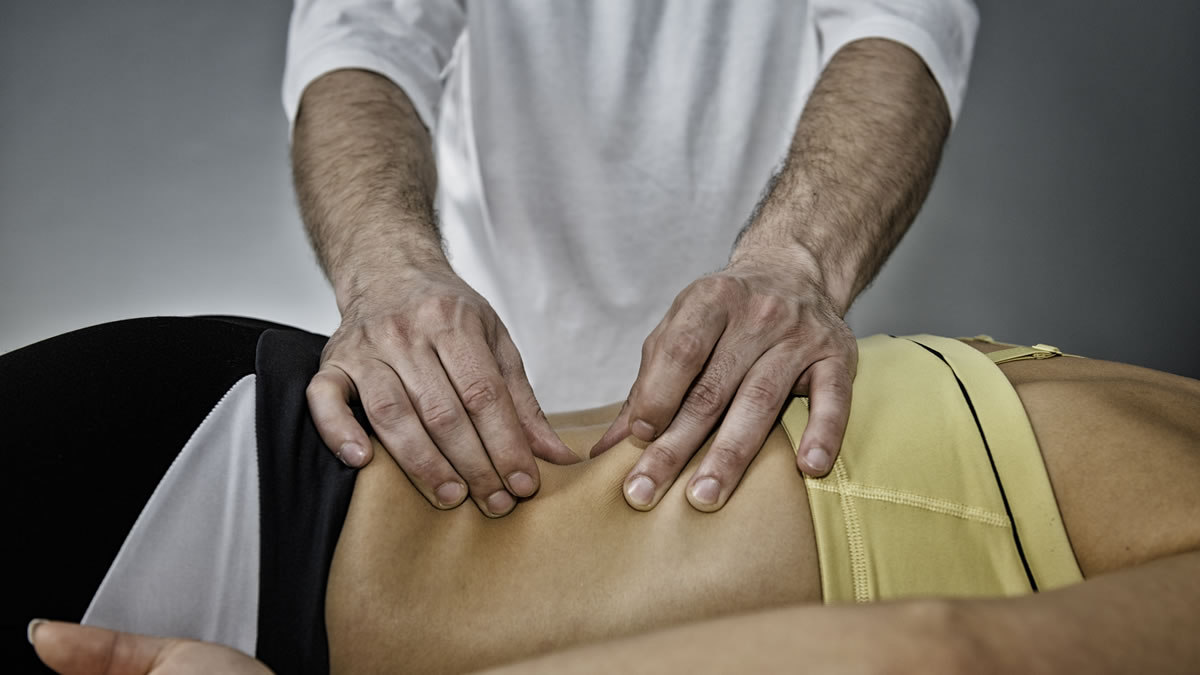
As the initial flare eases, the focus shifts toward restoring movement and confidence. Hands-on care can help relieve muscle guarding and stiffness and keep you comfortable enough to stay active, while carefully chosen exercises rebuild the support around the spine and encourage healthy movement. Alongside the physical work comes practical coaching: how to sit, lift and move with less strain, how to pace your days, and how to stay at or return to work, which is genuinely good for recovery. Progress across these weeks is usually gradual and a little uneven, with the trend heading in the right direction even when individual days disappoint. By around the twelve-week mark, many people are substantially better, though some take longer, and that longer road is still very often a non-surgical one.
It is normal, too, for the pace of improvement to vary between the different symptoms you feel. Often the sharp, dominant pain eases first, while a residual ache, some stiffness, or a lingering patch of numbness takes longer to fade completely. Numbness in particular can be one of the last things to resolve, because nerves recover slowly, and its slow departure is not a sign of trouble as long as it is stable or gradually shrinking. Knowing this in advance saves a lot of needless worry in the middle weeks, when the worst is behind you but the last traces are stubbornly hanging on.
The Small Group Who Do Need a Surgical Opinion
A surgical opinion is warranted for a minority: anyone with the emergency signs of serious nerve compression, those with significant and worsening muscle weakness, and people whose severe, genuine nerve pain has not improved despite a fair trial of good conservative care, usually over six to twelve weeks. For this smaller group, referral to a specialist is the sensible next step. For everyone else, conservative care remains the appropriate first path.
Honesty means being clear that surgery is genuinely the right call for some people, and recognising who they are matters. The most urgent group are those with signs of serious nerve compression, which is a medical emergency and is described in the box below; these situations need immediate assessment, not a wait. Separately, a smaller number of people have significant muscle weakness that is getting worse, such as a progressively weakening or dropping foot, which is a strong reason to seek a specialist opinion promptly.
Then there is the group whose pain, while not an emergency, is severe, clearly nerve-related, and simply not improving despite doing the right things for a reasonable stretch, commonly six to twelve weeks of good conservative care. For them, a referral to discuss surgical options is entirely reasonable, and modern disc surgery for the right candidate can be very effective at relieving that stubborn nerve pain. The key is that these are specific, identifiable situations. For the large majority who do not fall into them, patience with conservative care is not settling for less; it is the approach most likely to give a good result with the least intervention.
Go to an emergency department the same day if you notice
- A sudden inability to control your bladder or bowels, or difficulty passing water
- A numb or dead feeling across the groin, inner thighs and the area you sit on
- Numbness or weakness that is spreading through both legs at the same time
- A leg or foot that is rapidly becoming weaker or harder to control
These point to possible severe nerve compression, which needs emergency care and cannot be left to see how it goes.
Living, Working and Exercising While a Disc Heals
While a disc heals, stay as active and normal as your symptoms allow: keep moving with regular short walks, stay at or return to work with sensible modifications, and avoid both complete rest and heavy provocation such as awkward lifting. Gradually reintroduce exercise, favouring gentle, comfortable movement early and building strength as you improve. Pacing, doing a manageable amount consistently, protects you from the boom-and-bust cycle.
One of the biggest shifts in disc care over recent decades is the recognition that ordinary life, sensibly adapted, is part of the treatment rather than something to be suspended until you are better. Staying active within comfortable limits keeps the tissues healthy, maintains strength and flexibility, and reassures a sensitive nervous system that movement is safe, all of which support recovery.
In practical terms, that means keeping up regular, gentle movement, with short walks being one of the simplest and most effective options, and breaking up long periods of sitting. Where work allows, staying in your job with temporary modifications, or returning to it sooner rather than later, tends to help recovery rather than hinder it, and prolonged time off is associated with poorer outcomes. Exercise can be reintroduced gradually: gentle, comfortable movement in the early weeks, progressing to strengthening for the trunk and hips as things settle, ideally with guidance so it matches your stage. Throughout, the golden rule is pacing, choosing a steady, manageable amount rather than overdoing it on good days and crashing afterwards. Heavy or awkward lifting and sudden, unguarded twisting are worth avoiding for now, but the overall message is to keep living, gently and wisely, not to wrap yourself in cotton wool.
A word too on the mental side of a disc injury, which is easy to overlook but genuinely part of recovery. Pain that shoots down the leg is frightening, and it is natural to worry that every twinge is doing fresh damage. Understanding that hurt does not equal harm here, that a sensitised nerve can produce real pain without anything being torn or broken, tends to lower the fear, and lower fear usually means less guarding, better sleep and easier movement, all of which help. Keeping in touch with people, staying engaged with work and hobbies in whatever modified form you can manage, and resisting the urge to catastrophise a bad day are not soft extras; they measurably support physical recovery and are worth taking as seriously as any exercise.
Tracking Progress Honestly
Track progress by watching function and the location of your symptoms rather than day-to-day pain alone. Encouraging signs include leg symptoms retreating back toward the spine, longer comfortable sitting and walking, better sleep, and steadier daily function over a fortnight. Expect a bumpy line rather than a straight one. If, instead, you see steady worsening or new weakness, that is the signal to be reviewed rather than to keep waiting.
Because recovery is gradual and uneven, it helps to judge it by the right yardsticks, or a run of ordinary bad days can convince you nothing is working when in fact you are on track. The most reliable measures are about function and the pattern of your symptoms rather than the raw pain score on a single morning. Ask yourself whether you can sit, stand and walk for longer than a fortnight ago, whether sleep is improving, and whether daily tasks are becoming more manageable.
A particularly telling sign with disc-related leg pain is the symptoms withdrawing back toward the spine over time, so that pain which once reached the calf now stops at the thigh, then only nags in the back. That inward retreat is a strong marker of progress even if the back itself grumbles. Expect the overall line to be uneven, good stretches interleaved with poorer ones, and weigh the trend over weeks rather than hours. The one pattern that should prompt action rather than patience is the reverse: steady worsening, symptoms spreading further down the leg, or new or increasing weakness, any of which is a reason to be reassessed. Short of that, honest, patient tracking usually reveals the quiet, steady progress that conservative disc recovery is known for. Keeping a brief weekly note of what you can do more easily than the week before is a simple way to see that progress on paper when the day-to-day feels discouraging.
Explore the Non-Surgical Path First
We can assess your disc problem, match any scan to your symptoms, and build a conservative plan to keep you comfortable and moving while it heals. Book with our Canberra team when it suits.
Book an Assessment Bulge vs HerniationDisclaimer: This article offers general information about non-surgical disc recovery and is not medical advice for your situation. Decisions about surgery belong with you and the appropriate specialists. Seek emergency care for the warning signs above. Chiropractic is a nationally regulated profession in Australia, with practitioners registered through the Chiropractic Board and AHPRA.