
Remedial Massage in Canberra
Remedial massage is the treatment to book when something specific hurts. Part of our massage therapy in Canberra, it starts with assessment rather than a generic rub, targets the muscle patterns actually causing your pain, and is delivered by three qualified therapists you can choose between. Add HICAPS rebates claimed on the spot, Saturday appointments and free parking directly at the door, and it is clinical massage with none of the clinical hassle, which is a large part of why remedial is comfortably the most-booked treatment on our list.
Choose your therapist when you book · (02) 6288 6711
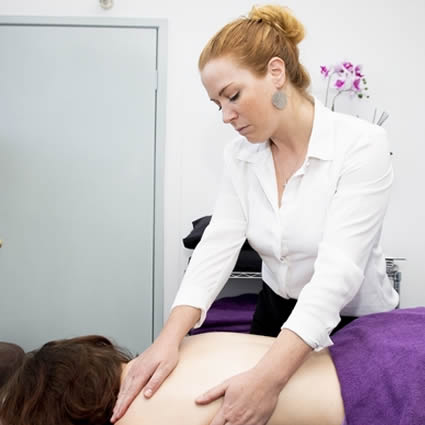
What Is Remedial Massage?
Remedial massage is a clinical form of massage that assesses and treats specific muscle and soft tissue problems. Rather than a general relaxation rub, it uses targeted techniques, trigger point work, deep pressure, stretching and mobilisation, to address the muscles causing your pain, based on an assessment of what is actually going on.
If you have searched for what remedial massage is or wondered about its meaning, the simplest definition is this: massage with a diagnosis. Where a relaxation massage aims to help you unwind, a remedial massage aims to fix a specific problem, and it begins by working out what that problem is. Your therapist looks at how you move, where it hurts, what makes it worse, and which muscles are actually driving the pain, then treats accordingly. It is the difference between a pleasant hour and a targeted treatment, and it is why remedial is the style most people book when something is genuinely bothering them.
The techniques are chosen to match the problem rather than applied to a script. A stubborn knot might call for trigger point work, sustained pressure on the exact spot until it releases; a chronically tight muscle might need slow, deep strokes; a restricted area might benefit from assisted stretching or mobilisation. A good remedial therapist moves between these tools within a single session as your body responds, which is exactly the sort of judgement that separates clinical remedial massage therapy from a one-size-fits-all treatment. It is also why remedial work attracts private health rebates where recreational massage does not.
The word remedial itself is worth pausing on, because it is doing real work. It means corrective, aimed at remedying a problem, and that intent shows up in everything from the assessment at the start to the self-care advice at the end. A remedial therapist is thinking, throughout the hour, about why a muscle is behaving the way it is and what will actually change it, not simply about covering the body evenly with pleasant strokes. That thinking is the value, and it is what people are really booking when they choose remedial over a generic massage.
Qualifications sit behind that. A remedial massage therapist completes accredited training in anatomy, assessment and clinical technique well beyond an introductory massage course, which is exactly what health funds recognise when they rebate the treatment. All three of our therapists hold those qualifications, and working inside a chiropractic clinic keeps their clinical habits sharp, because their notes may be read by a chiropractor and their trickier cases discussed with one. It is massage held to a genuinely clinical standard.
What Does Remedial Massage Treat?
Remedial massage helps with muscular pain and tension: sore necks and shoulders, tight lower backs, headaches that begin in the neck, the strains of desk work, sport and physical labour, and the general muscle tightness that builds up over time. It works on soft tissue problems; anything beyond that, we assess and refer honestly.
The most common reasons Canberra patients book a remedial session:
- Neck and shoulder tension
- Lower back tightness
- Desk and posture strain
- Recurring knots and trigger points
- Sport and training tightness
- Tension headaches
- Hip and glute tightness
- General stress-held tension
The through-line in that list is soft tissue: muscles, tendons and the fascia around them, held tight, knotted or overworked. Canberra's working life supplies a steady stream of it, the public servant with a screen-strained neck, the tradie with a lower back that never fully lets go, the runner whose calves stay tight through a training block. Remedial massage is genuinely useful for all of it, and for the stubborn, recurring knots in particular our muscle tension treatment guide explains why some tightness keeps returning and how targeted work breaks the cycle. Often the relief is both immediate and, with a sensible rhythm of care, lasting.
What remedial massage does not do is treat medical conditions, and an honest therapist will tell you when your problem is not one for their table. Pain with numbness or pins and needles, a joint that gives way, symptoms that appeared for no clear reason, or anything that feels beyond ordinary muscular ache all warrant assessment before massage, and possibly a chiropractor or your GP instead. Working inside a chiropractic clinic makes that referral easy: a second professional opinion is quite literally down the corridor, which is part of what makes remedial massage here more than a standalone rub.
The Canberra pattern is worth spelling out because recognising yourself in it shortens the assessment. The public service town runs on keyboards, and the classic screen posture, head forward, shoulders rounded, upper back locked, produces a reliable stream of stiff necks and the headaches that climb out of them. Tradies and physical workers bring the opposite load, heavy and repetitive, that settles into forearms and lower backs. New parents arrive one-sided from carrying. Weekend athletes bring the tightness of training blocks. Mention which of these is you when you book and the therapist can get hands on the real problem sooner. None of these patterns is a life sentence, incidentally; most respond well to a combination of targeted treatment and a small change to the daily habit driving them, and the therapist will point out that habit as readily as they work the muscle. Treating the tightness without mentioning the workstation, the one-sided carry or the training spike behind it would only be half the job.
What Happens in a Remedial Massage Session?
A remedial session opens with a short assessment: what hurts, what sets it off, and a brief observation of your movement and posture. Targeted treatment follows, working the muscles involved at a pressure agreed with you and adjusted as needed. You leave with the area treated and usually a little self-care advice to take home.
Your first remedial appointment opens with a brief health form and a conversation. The therapist asks where the trouble is, when it started, what aggravates and eases it, and observes a little of how you carry and move yourself, because the sore spot and its true source are so often in different places. This assessment is what makes the session remedial rather than generic, and it need only take a few minutes before hands go to work.
From there the treatment is targeted and collaborative. You undress only as far as you wish and remain covered by towelling the whole time, while the depth of work is agreed with you at the start and revisited throughout, because massage does its job at the pressure your body accepts rather than the most you can endure. Speak up freely at any point; adjusting the pressure part-way through a session is entirely normal, expected and genuinely welcomed by every therapist here. Many sessions finish with a little self-care advice, a stretch worth doing, a work-setup tweak, a heat-versus-movement suggestion, because what you do between visits shapes how well the results hold.
Frequency follows the problem rather than a calendar. A fresh, acute complaint may justify two or three sessions close together to settle it, after which you may need nothing at all. People whose work or training keeps reloading the same muscles often settle into a gentler maintenance interval that stops the tightness climbing back to where it began. Whatever suits you, the therapist recommends it openly and adjusts it as your body changes, and there is no prepaid package to buy your way into a reasonable rate. The genuine goal is to see you as often as your body warrants and no more.
A few practical notes make the first session smoother. Arrive a little early to fill in the short health form; wear or bring easy clothing; mention any injuries, surgery, medications or health conditions, because they genuinely shape what is safe and sensible. Afterwards, drink some water, keep moving gently, and give a firm session the rest of the day to settle rather than heading straight to the gym. None of it is complicated, and the therapist will guide you through all of it on the day.

Remedial vs Deep Tissue vs Relaxation: Which Do You Need?
Choose by goal. Remedial treats a specific problem after assessment. Deep tissue applies firm, sustained pressure to chronic tightness. Relaxation is lighter, flowing and about unwinding rather than fixing. They overlap, and a remedial session can include deep or relaxing work; the label is really about the session's main purpose.
| Style | Main goal | Best when |
|---|---|---|
| Remedial | Assess and treat a specific problem | Something particular hurts and you want it addressed |
| Deep tissue | Firm pressure into chronic tightness | You carry deep, long-standing tension and want more pressure |
| Relaxation | Unwind the nervous system | Stress relief is the goal, not a specific sore spot |
In practice the lines blur, which is a feature rather than a flaw. A remedial session for a tight lower back might use plenty of deep pressure, and it might finish with some flowing, relaxing work once the problem area is treated. What matters is booking the right main purpose: if something specific hurts, book remedial and let the therapist adapt. Our deep tissue massage page covers the firmer end in detail, and our guide comparing remedial vs relaxation compared is worth a read if you are genuinely torn.
The one distinction with practical consequences is the health rebate. Remedial massage, as a clinically delivered treatment, attracts private health fund rebates where recreational relaxation massage generally does not, so if claiming matters to you, remedial is usually the right booking. Beyond that, do not overthink it; tell your therapist what you want from the hour and they will shape the session around it, whichever label the booking carries.
One honest myth to retire while we are comparing styles: harder is not better. There is a persistent belief that a good massage should hurt, and that bruising is proof it worked. It is not. Effective remedial work happens at the pressure your tissue accepts and responds to; push past that and the muscle simply braces harder, which is the opposite of release. Firm and productive, yes; punishing as a badge of honour, no. A skilled therapist reads your tissue and finds the pressure that changes it, and that is a very different thing from leaning in as hard as possible.
How Much Does Remedial Massage Cost in Canberra?
Remedial massage is priced by session length, and the gap you actually pay depends on your private health cover. As a guide, a standard session at our clinic is priced for 60 and 90 minute options, with HICAPS claiming your rebate on the spot so you pay only the difference. Current prices are always confirmed at booking.
Cost is a fair thing to ask about before booking, and we would rather answer it plainly than make you ring to find out. Remedial massage is charged by the length of the session, with a 60-minute treatment suiting most single-area problems and a 90-minute session better for more than one area or a first, assessment-heavy visit. As a rough guide, a 60 minute remedial session is [XX] and a 90 minute session is [XX] before any rebate; these figures are indicative only, the current rates are confirmed at the time you book, and a quick phone call will get them read to you before you commit to anything.
What most people actually want to know is the gap, the amount left after their health fund pays its part, and that depends entirely on your level of extras cover. With HICAPS processing your claim at the desk, you pay only that gap on the day rather than the full fee, and a quick call to your fund beforehand tells you what your rebate and annual limit are. Full details, including how HICAPS and any DVA arrangements work, live on our massage fees and rebates page. And for anyone without extras cover, remedial massage needs no health fund at all; you simply pay the standard rate and keep the receipt. A good number of our regulars carry no extras cover and simply treat massage as routine upkeep they pay for out of pocket, no differently from any other regular self-care, and they are every bit as welcome as anyone swiping a fund card. Value, in the end, is about whether the treatment solves your problem, and a well-targeted remedial session that fixes a nagging complaint in a visit or two is rarely the expensive option once you weigh it against weeks of putting up with the pain.
Can You Claim Remedial Massage With HICAPS?
Yes. With most Australian funds that include massage in extras cover, remedial treatment earns a private health rebate, and our HICAPS terminal settles the claim at the desk so only the gap is left to pay. Bring your fund card each visit, and confirm your inclusions and annual limit with your insurer.
HICAPS is the little terminal that swipes your health fund card and claims your rebate instantly, the same way many dentists and physios do it, so you never pay the full fee up front and wait for a refund. For remedial massage specifically, most funds that include massage in their extras cover will rebate a portion, and our terminal handles it at the desk on the day. It genuinely takes seconds at the desk and removes the claim paperwork from your life entirely, which is one small friction fewer between you and looking after yourself.
Two things worth knowing. First, whether massage is covered, and how much, depends on your specific policy and extras level, so it pays to phone your insurer briefly beforehand and ask three things: is remedial massage included, how much comes back per visit, and what is your yearly cap. Second, funds rebate clinically delivered remedial treatment, not purely recreational rubbing, which is one more practical reason to book remedial specifically when you intend to claim. If it helps, the reception team can give you the service item numbers your insurer may request before you ring them.
Meet Your Remedial Massage Therapists
Patients here book Colleen, Darlene or Tracy by name. Each is a qualified therapist with a distinct style and a loyal following of her own, each writes notes our chiropractors can read, and you are free to name your preferred practitioner whenever you book online or ring the clinic.

Colleen Gould
Therapeutic Massage TherapistOne of the clinic's most requested remedial therapists, Colleen also holds dry needling qualifications, making her the practitioner to see when a knot needs more than thumbs alone. Patients with complicated, long-running muscular problems tend to gravitate to her table.

Darlene Bergener
Massage TherapistIf firm, methodical work is what your muscles respond to, Darlene is the name to request. She is also the clinic's myofascial release specialist, using slow sustained loading through the fascia to reach restrictions that brisk massage strokes glide straight over.

Tracy Thuy Hoang
Massage TherapistTracy has an easy, reassuring manner that puts nervous first-timers at ease within minutes, and she moves fluidly between focused remedial work and gentler, flowing treatment depending on what the body in front of her needs that day.
Between the three of them the diary runs six days, including Saturday mornings, and the team page carries fuller profiles. Should your preferred therapist be fully booked, the team knows precisely whose approach resembles whose and will steer you to a well-matched alternative instead of merely the earliest opening.
How Remedial Massage Supports Chiropractic Care
Remedial massage and chiropractic work together on one shared file. Massage releases the tight muscles guarding a joint; chiropractic restores the joint's movement. Sequenced together, releasing muscle before an adjustment or settling tissue after, the two achieve more than either alone, with both practitioners reading the same notes.
The advantage of getting your massage inside a chiropractic clinic is coordination that a standalone massage studio simply cannot offer. Muscles and joints misbehave together: a restricted joint leaves the muscles around it working overtime to protect it, and tight muscles in turn pull on the joints. Treating only one half leaves the other half pulling it back out, which is why the two disciplines are genuinely better as a pair for the right problems.
Here that pairing is deliberate. Your therapist might release a guarding muscle before your chiropractic adjustment so the joint moves with less force, or your chiropractor might flag a restricted joint for your therapist to work around. Because it is one shared file, the timing is planned rather than accidental, and nobody re-explains their history. Many people come purely for massage and never see a chiropractor, which is completely fine; nobody here will talk you into an adjustment you did not come seeking. But where an adjustment would genuinely move your result along, the reasoning is shared with you honestly, and that discussion happens across a corridor rather than by posted referral.
For patients who do use both, the joined-up approach tends to shorten the whole story. A recurring lower back is the classic example: the chiropractor frees the restricted joints, the therapist releases the muscles that were guarding them, a review checks what held, and the problem that used to return every few weeks starts to stay away. Neither discipline achieves that alone as reliably, and arranging the same coordination across two separate businesses in different suburbs is exactly the kind of thing nobody has the energy to organise. Here it simply happens, on one file, in one place. That, more than anything, is what a remedial massage at a chiropractic clinic offers over the same hour at a standalone studio: not a better set of hands necessarily, but a better-connected one, with a second professional opinion available the moment your muscle problem turns out to be a joint problem in disguise.

Book Remedial Massage Online; Choose Your Therapist
Name your therapist, take a slot from the live online diary, and let HICAPS settle the rebate at reception on your way out. Booking takes under a minute, or call (02) 6288 6711 and we will happily match you to the right therapist if you would rather ask before choosing.
1/43 Brierly St, Weston ACT 2611 · upstairs beside the cafe, free parking opposite