
Mobility and Joint Stiffness Care in Canberra
Stiff joints and a shrinking range of movement creep up so gradually that many people accept them as simply part of getting older or working at a desk. Often, they need not be. Helping people move more freely is a big part of what we do, and mobility sits firmly within the conditions we help with: a great deal of lost movement can be restored or protected with the right mix of hands-on care and, above all, the right movement. On this page we look at why mobility declines, why the stiff mid-back matters more than most people realise, and how to move more freely again.
Reclaim comfortable movement · (02) 6288 6711

Why Does Mobility Decline?
Mobility usually declines less from age itself than from what we do, or fail to do, with our bodies: long hours sitting, repetitive positions, past injuries and simply not taking our joints through their full range often enough. The good news is that much of this is modifiable, because joints and tissues respond to how we use them.
It is tempting to blame stiffening joints entirely on age, and while the years do play a part, they are usually a smaller factor than people assume. Far more of our lost mobility comes down to disuse. The old principle holds true here: joints and soft tissues largely adapt to the demands we place on them, so a body that spends its days in a narrow range of positions gradually loses the movement it never uses. Sit hunched at a desk for years and the spine and hips quietly forget how to move fully, not because they have worn out, but because nothing has asked them to.
The specific culprits are familiar. Long hours sitting, repetitive work and hobby positions, and the general modern habit of moving through only a fraction of our available range all leave certain areas stiff and restricted. Past injuries leave their mark too, as areas that were once painful often stay guarded and under-used long after they have healed. And a lack of general activity lets the whole system tighten. Each of these narrows the range a little, and over time the losses add up into a body that feels stiff and restricted.
The genuinely encouraging part is that most of this is changeable. Because tissues adapt to use, they can adapt back, and mobility that has been lost to disuse can very often be regained by asking the body to move fully and regularly again. It rarely happens overnight, and some age-related change is real, but the common assumption that stiffness is a one-way street you simply have to accept is, for most people, wrong. That is a genuinely hopeful message, and it is the foundation of everything else on this page.
It is worth being clear about why mobility matters in the first place, because it is easy to treat it as a vanity metric. Good mobility is not about being able to do the splits; it is about your body having the freedom of movement it needs for ordinary life without strain. When a joint loses range, the movements that used to be easy start borrowing from somewhere else, loading tissues that were not designed for the job, and that is how restriction in one place quietly becomes pain in another. Mobility, in other words, is not a luxury; it is a large part of what keeps you moving comfortably and without injury.
Stiff Mid-Back: Why Thoracic Mobility Matters Most
The mid-back, or thoracic spine, is designed to rotate and extend, but desk life leaves it stiff and rounded. A stiff mid-back forces the neck, shoulders and lower back to compensate, so restoring thoracic mobility often eases problems well beyond the mid-back itself.
If we had to nominate one region whose mobility matters most, it would be the mid-back, the thoracic spine. It is a large section of the spine designed for a good deal of rotation and extension, yet it is precisely the area that desk life and screen posture stiffen the most, leaving it rounded, rigid and under-used. Because we rarely ask it to rotate or extend fully, it quietly seizes up, and most people have no idea how much movement they have lost there until it is tested.
The reason a stiff mid-back matters so much is that the body is a chain, and when one link stops moving, the links above and below have to pick up the slack. A rigid thoracic spine forces the neck and shoulders to overwork and the lower back to rotate more than it should, and that compensation is behind a surprising amount of neck, shoulder and lower back trouble. It is a classic case of the squeaky wheel not being the real problem: the pain shows up elsewhere, but a big part of the cause is the stiff mid-back sitting quietly in the middle.
This is why we pay so much attention to thoracic mobility, and why restoring it so often helps complaints well beyond the mid-back. Freeing up the thoracic spine takes strain off the neck and lower back and lets the shoulders move more freely, which is also central to good posture correction, since a stiff, rounded mid-back is the anchor of the whole slumped pattern. Get the mid-back moving again and a lot of other things tend to improve in its wake.
There is also a breathing dimension that people rarely connect to their mid-back, and it is worth knowing. The ribs attach to the thoracic spine, so when that region is stiff and rounded, the ribcage cannot expand as freely, and breathing becomes shallower and more restricted than it should be. Restoring thoracic mobility often lets the ribcage move more fully again, which people frequently notice as simply feeling like they can take a fuller, easier breath. It is a small illustration of how much rides on this one under-appreciated region.
How We Assess Your Range of Motion
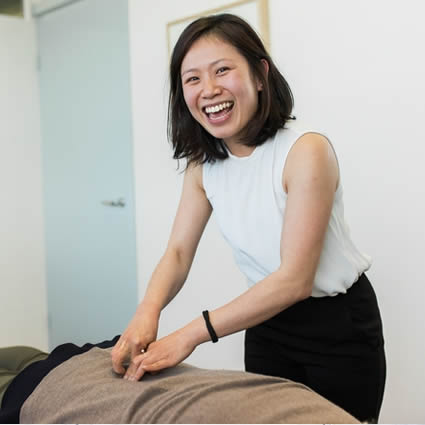
We assess your mobility by looking at how you actually move, testing the range of your spine, hips, shoulders and other key joints, and spotting where movement is restricted and why. This shows us which areas to free up, which to strengthen, and how they are affecting one another.
You cannot restore mobility well without first understanding where it has been lost, so a movement assessment is where we begin. Rather than looking only at a sore spot, we watch how you move as a whole, then test the range of motion of the key players: the different regions of the spine, the hips and the shoulders, along with other joints relevant to your situation. We are looking not just for what hurts, but for where movement is genuinely restricted, and often the two are in different places.
Just as importantly, we try to understand why a given area is restricted. Stiffness can come from tight, shortened muscles, from joints that have become genuinely restricted, from old guarding habits after an injury, or from a combination of these, and the right approach depends on which it is. We also look at how the regions are influencing one another, because as we have seen a stiff mid-back or hip commonly drives compensation and symptoms elsewhere in the chain.
From this we build a clear picture of your mobility: which areas need freeing up, which need strengthening to support and control the range you have, and how it all fits together. That understanding is what turns mobility work from a generic set of stretches into a targeted plan aimed at the areas that will actually make a difference for you. We explain what we find plainly, so you understand your own body and why the plan is what it is.
A point worth stressing is that mobility and strength go hand in hand, and range without control is not the goal. It is possible to be very flexible yet weak and poorly controlled through that range, which can actually leave a joint less stable rather than more. So a good assessment is not simply hunting for the stiffest area to stretch; it is judging where you genuinely need more range, and where you instead need better strength and control of the range you already have. That distinction is what separates sensible mobility work from the endless, aimless stretching many people do without much to show for it.
Restoring Mobility: Adjusting, Movement and Pilates
Restoring mobility pairs hands-on care that eases stiff joints and tight muscles with the movement and exercise that make the gains stick. Chiropractic care opens the door; regular movement, targeted mobility work and approaches like Pilates keep it open. Movement, done consistently, is what truly restores and protects range.
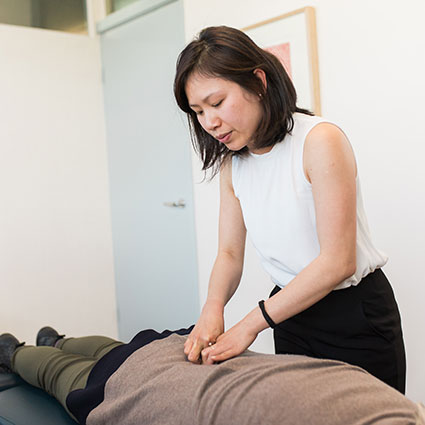
Restoring lost mobility works best as a partnership between hands-on care and your own movement. Hands-on care has a valuable role in getting things started: chiropractic care and soft-tissue work can free up joints that have become genuinely stiff and release the tight muscles restricting them, which often creates an immediate sense of more room to move. Think of it as opening a door that had rusted shut. But opening the door is only the beginning, and what matters far more for lasting mobility is what you do with that new range.
This is where movement is king. Range that is freed up but then not used simply tightens again, whereas range that is regularly moved through and gently loaded is retained and built upon. So the heart of restoring mobility is consistent movement: targeted mobility exercises for your stiff areas, staying generally active, and asking your body to move through its full range often rather than living in a narrow band. We prescribe specific mobility work to suit your assessment and, just as importantly, help you weave more movement into ordinary daily life.
That last point is the one that quietly does the heavy lifting. Formal mobility exercises matter, but the biggest wins often come from simply moving more through the day: standing and stretching regularly, taking the stairs, walking, gardening, reaching and twisting in the course of normal life rather than sitting motionless for hours. A body that moves in varied ways all day rarely stiffens up the way a sedentary one does, which is why the goal is less about adding a rigid exercise regime and more about becoming a person who moves more, in more ways, more often.
Structured movement approaches like Pilates can be a genuinely excellent complement here, building controlled mobility, strength and body awareness that support everything else. It is worth being clear that Pilates is not something we offer in-house; rather, we are happy to recommend it as a helpful adjunct and can point you toward a good local studio such as Elysium. The principle across all of it is the same, though: hands-on care can open up movement, but it is consistent, varied movement that truly restores and protects it.
Thoracic Mobility Exercises to Do at Home
A few simple thoracic mobility movements, done little and often, counter the stiff, rounded mid-back that desk life creates. They fall into three easy jobs: restoring rotation, restoring extension, and opening the chest and shoulders. These are a general starting point; the ideal mix always follows your assessment.
Seated or all-fours rotations
Gentle rotations of the mid-back, turning to look over each shoulder, restore the twisting movement desk life takes away. Move slowly and comfortably, breathing out as you rotate, and repeat both directions.
Open out the rounded back
Gentle extensions that arch the stiff, rounded mid-back the opposite way, for example easing back over the edge of a chair or a foam roller, counter hours spent hunched forward and help the thoracic spine straighten.
Chest and shoulder opening
Movements that open the chest and draw the shoulder blades back complement the mid-back work, loosening the tight front that pulls you into a slump and freeing the shoulders to move.
The golden rule with all of these is little and often. A few minutes most days, woven into your routine, does far more for a stiff mid-back than an occasional long session, because mobility responds to frequent, gentle reminders rather than infrequent heroics. If any movement causes sharp pain or brings on symptoms into the arms, ease off and check with us, so we can tailor the work to your body rather than have you push through the wrong thing. For giving a stiff mid-back its movement back, gentle and consistent always beats forceful and occasional, so aim for a little most days rather than a big effort once in a while.
Mobility for Older Adults
For older adults, maintaining mobility is one of the best investments in independence and quality of life. Gentle, appropriate movement and hands-on care can help keep joints supple and confidence high. It is rarely too late to improve, and staying mobile helps you keep doing the things that matter.
Mobility takes on a special importance as we get older, because it underpins so much of what keeps life full and independent: getting out of a chair easily, turning to check the traffic, reaching a high shelf, staying steady on your feet, and simply continuing to do the activities you enjoy. Losing movement quietly chips away at all of that, whereas maintaining it protects independence, confidence and quality of life in a way few things can match. Of all the reasons to look after mobility across a lifetime, this one, protecting independence in later years, may be the most compelling of all.
A common and unnecessary belief is that stiffness and lost movement are simply the price of getting older and must be passively accepted. While some age-related change is real, a great deal of what older adults lose is down to reduced activity rather than age alone, and that means it is often improvable. Gentle, appropriate movement and hands-on care can help keep joints supple and muscles working, and it is genuinely rarely too late to make worthwhile gains. The body responds to being used at every age.
Mobility is also closely tied to balance and steadiness, which matters enormously as we age. Supple hips, ankles and a spine that can turn freely all help you adjust and catch yourself, and stiffness in those areas quietly makes movement more precarious. Keeping mobile, alongside sensible strength work, is one of the practical ways to stay confident and steady on your feet rather than becoming hesitant, and that confidence tends to keep people doing more, which in turn keeps them more mobile still.
Naturally, care for older adults is tailored and gentle, taking full account of individual health, and we always work within what is safe and comfortable for you. For those wanting more on care through the later years, our seniors care page goes into it in more depth. The heartening bottom line is that staying mobile is one of the most valuable things you can do for your later years, and it is almost never too late to start.
Book a Movement Assessment and Start Moving Freely
If stiffness has been creeping up on you, a movement assessment is a genuinely useful place to start: we find where you have lost range, free it up, and give you the mobility work to keep it. Book online, or reach our team on (02) 6288 6711.
1/43 Brierly St, Weston ACT 2611 · helping Canberrans keep moving freely