
Scoliosis Assessment and Management in Canberra
Scoliosis, a sideways curve of the spine, can be worrying to hear about, especially in a teenager, but understanding it takes much of the fear away. It sits among the conditions we help with in a supporting role: we assess and screen for it, help with any related muscular pain and stiffness, monitor changes over time, and, crucially, refer to specialists when that is what your curve needs. We are always clear about what chiropractic care can and cannot do for scoliosis, and this page explains it plainly.
Screening for you or your teen · (02) 6288 6711
What Is Scoliosis?
Scoliosis is a sideways curve of the spine, often with some rotation, so the spine bends into a C or S shape rather than running straight. It ranges from mild to severe, is usually painless in teens, and most commonly appears during growth.
Viewed from behind, a healthy spine runs more or less straight down the middle of the back. In scoliosis, it curves sideways instead, taking on a gentle C shape or a double S shape, and this sideways bend is usually accompanied by some rotation of the vertebrae, which is why one side of the back or ribcage can look a little more prominent. It is important to understand that scoliosis is a description of that curve, and it varies enormously, from a slight, barely noticeable deviation to a pronounced curve.
The most common form appears during the growth spurts of adolescence and has no single identifiable cause, which is why it is called idiopathic scoliosis. It often causes no pain at all in teenagers, which is precisely why it can go unnoticed until a parent, a school screening or a routine check spots it. Less commonly, scoliosis can be present from birth or linked to other conditions, and in adults a curve can develop or worsen as the spine ages and its discs and joints change.
The single most reassuring thing to hold onto is that most scoliosis is mild, and mild curves frequently cause few problems and remain stable through life. A diagnosis of scoliosis is not, for most people, the alarming news it can first sound like. What matters is understanding your particular curve, its size, whether it is likely to change, and whether it is causing any symptoms, and that is exactly what proper assessment and, where needed, specialist input are for.
It also helps to know that scoliosis is far more common than most people assume, affecting a meaningful slice of the population to some degree, with most of those curves small enough that the person never has any trouble from them. So while the word can sound rare and serious, in practice a great many people quietly carry a mild curve through active, ordinary lives. That perspective is worth keeping in mind when you or your child first hears the term, because the mental picture people have of scoliosis, drawn from the severe cases, is not what most curves actually look like.
Types of Scoliosis and Where Curves Occur
Scoliosis is grouped both by its cause and by where along the spine the curve sits, and both tell us something useful about what to expect and who should be involved.
By cause, the great majority of cases are idiopathic, meaning they arise during growth without a known reason, most often in adolescence. Other, less common types include congenital scoliosis, which is present from birth due to how the spine formed, and neuromuscular scoliosis, which is linked to conditions affecting the nerves or muscles. In older adults there is also degenerative or adult-onset scoliosis, where a curve develops as the discs and joints of the spine wear and change with age. Knowing which type is present shapes how closely it needs watching and who should manage it.
By location, curves are described according to the region of the spine they affect. A thoracic scoliosis sits in the upper and mid back, where the ribs attach, and a larger curve here can affect the shape of the ribcage. A lumbar scoliosis sits in the lower back, and a thoracolumbar curve spans the junction between the two. Some people have a single curve, while others have a double curve, an S shape, where the spine bends one way and then compensates by bending back the other.
These distinctions are not just academic. The type and location influence how likely a curve is to progress, what symptoms it might cause, and what management is appropriate, from simple monitoring through to specialist bracing or, rarely, surgery. Part of a good assessment is placing your curve within this picture so that the right level of care and the right people are involved, neither overreacting to a stable, mild curve nor underestimating one that needs closer attention.
How Curve Severity Is Measured (Cobb Angle)
Scoliosis is measured from an X-ray using something called the Cobb angle, which puts a number on the size of the curve and guides how it is managed.
To manage scoliosis sensibly, specialists need to measure it rather than eyeball it, and the standard way of doing this is the Cobb angle. Taken from an X-ray of the spine, it measures the angle of the curve in degrees by drawing lines along the most tilted vertebrae at the top and bottom of the curve. That single number is the key reference point used to describe how large a curve is, to decide how it should be managed, and to track whether it is getting bigger or staying stable over time.
Mild
Small curves in this range are usually monitored rather than actively treated, since many stay stable and cause few problems. Growing teens are watched more regularly in case the curve changes during a growth spurt.
Moderate
Moderate curves, particularly in a still-growing teenager, are where specialists may consider bracing to prevent further progression. These curves warrant closer specialist involvement and regular review.
Severe
Larger curves are managed by specialists and are the group in which surgery is sometimes discussed, especially if the curve is progressing. These decisions sit firmly with orthopaedic and scoliosis specialists.
These bands are a general guide rather than rigid rules, and the full picture, including age, growth remaining and how the curve is behaving, matters as much as the number. The Cobb angle is a specialist measurement, and where imaging and precise measurement are needed, that is exactly the kind of situation we refer on for.

Scoliosis Symptoms in Teens vs Adults
In teenagers, scoliosis is often painless and noticed by appearance: uneven shoulders, a prominent shoulder blade, or a waist that looks asymmetric. In adults, it more often shows up as back pain, stiffness or fatigue, since the curve interacts with the ordinary wear of an ageing spine.
Scoliosis tends to announce itself quite differently depending on age, and understanding that helps you know what to look for. In teenagers, the classic form is usually painless, which is exactly why it is so often spotted by how the body looks rather than how it feels. Tell-tale signs include shoulders that sit at slightly different heights, one shoulder blade that sticks out more than the other, a waistline that looks uneven, or a body that seems to lean a little to one side. A common screening test is to have the young person bend forward, where a curve can make one side of the back or ribcage look more prominent.
In adults the story is often about symptoms rather than appearance. An adult curve, whether one carried since adolescence or one that has developed with age, interacts with the normal wear and tear of the spine, and this can bring back pain, stiffness, muscle fatigue from the uneven loading, and sometimes nerve-related symptoms if a curve is crowding the space nerves pass through. The signs can be subtle and easy to attribute to ordinary back pain, and our blog on adult scoliosis signs covers what to watch for.
Whatever the age, the presence of scoliosis does not automatically mean pain or trouble ahead, and plenty of people live full, active lives with a curve. But knowing it is there, understanding its size and behaviour, and keeping an eye on it is genuinely worthwhile, because it allows sensible monitoring and early action if that is ever needed rather than being caught unaware.
Mild Scoliosis: Monitor or Treat?
Mild scoliosis is often best monitored rather than actively treated, since many small curves stay stable and cause few problems. Where there is related muscular pain or stiffness, that can be managed. Growing teenagers are watched more closely, because their curves can change.
For the many people whose scoliosis is mild, the most common and appropriate approach is watchful monitoring rather than active correction. Small curves frequently remain stable over years and cause little or no trouble, so aggressive treatment is often unnecessary and would be treating a number rather than a problem. The sensible plan is usually to keep an eye on the curve, stay active and strong, and manage any symptoms that do arise, rather than launching into intensive intervention for a curve that is not causing difficulty.
Monitoring matters most in a couple of situations. A growing teenager is watched more closely, because curves are far more likely to change during the rapid growth of adolescence, so regular review to catch any progression early is important, and this is typically specialist-led where the curve is more than mild. In adults, monitoring is about watching for any change and, above all, managing symptoms and keeping the surrounding muscles strong and supple so the spine copes as well as possible with the curve it has.
Where mild scoliosis is associated with muscular aches, stiffness or fatigue, that is where hands-on care and exercise genuinely help, not by straightening the spine, but by easing the muscular symptoms, supporting mobility and building strength. Being clear about that distinction is important to us. Our blog offering a mild scoliosis guide goes into the monitor-versus-treat question in more depth for those who want it.
What About Scoliosis Braces?
Bracing is a specialist-led treatment mainly used for growing teenagers with moderate curves, aiming to stop the curve worsening during growth. It is prescribed and fitted by scoliosis specialists, not chiropractors. We help with comfort and mobility alongside that specialist care where appropriate.
Bracing is one of the treatments people most often ask about, so it is worth being clear about what it is and who provides it. A scoliosis brace is a custom-made support worn on the torso, and its purpose is specific: in a still-growing child or teenager with a moderate curve, the aim is to stop the curve getting worse while they finish growing. It does not usually straighten an existing curve, but preventing progression during those crucial growth years can make a real difference to the outcome.
The key point is that bracing is a specialist-led treatment. Deciding whether a brace is appropriate, prescribing it, having it custom-made and fitted, and overseeing its use all sit with orthopaedic and scoliosis specialists, working from precise measurements and regular review. It is not something a chiropractor prescribes or manages, and we would never suggest otherwise. Where a young person is under specialist care and being braced, our role, if any, is a supporting one around comfort, mobility and keeping active.
Modern braces are also a good deal more liveable than the rigid casts many people picture from decades ago. Today's braces are lower-profile, often worn under clothing, and specialists tailor the wearing schedule to the individual, so a teenager can usually keep up school, friendships and most activities while being braced. That matters, because the emotional side of bracing during the teenage years is real, and knowing it need not dominate a young person's life makes the prospect far less daunting for families.
We mention all of this partly to counter some of the confusing claims out there.
You may come across programs promising to correct scoliosis with special exercises, adjustments or devices, and we would encourage healthy scepticism. The mainstream, evidence-based pathway for a curve that needs active management is specialist assessment, monitoring, bracing where appropriate, and surgery in the small number of severe cases. We keep our own role honest and refer to the right people rather than overpromising.How We Assess and Support Scoliosis at Weston Creek
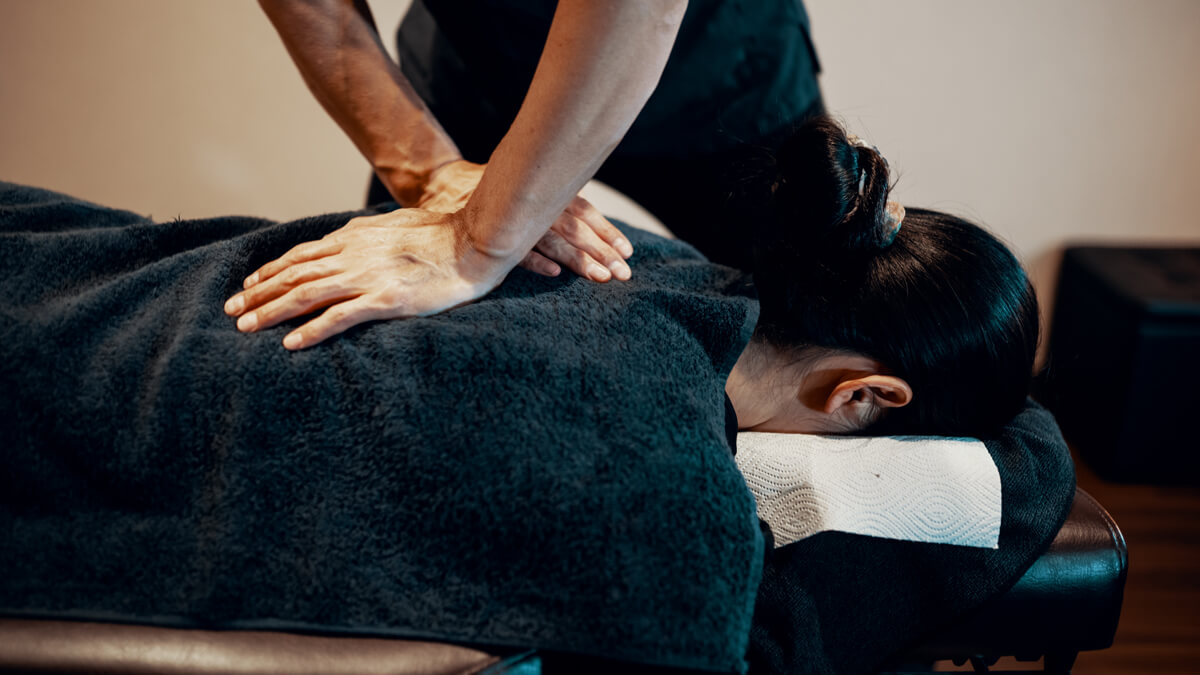
We screen for scoliosis, assess how your spine and muscles are moving, and help manage related pain, stiffness and mobility with gentle chiropractic care and exercise. We do not claim to straighten curves; we support you alongside specialist care and refer promptly when a curve needs it.
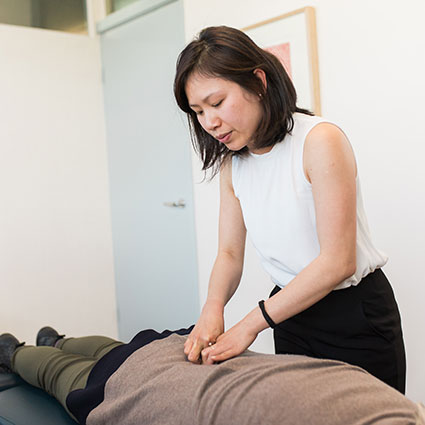
Our role with scoliosis is a genuinely useful but clearly bounded one, and we think being upfront about it matters. We can screen for scoliosis, which is valuable for catching curves early, particularly in growing teenagers or where a family member has raised a concern. Using a careful physical assessment, including the forward-bend test and looking at symmetry and movement, we can identify a likely curve and judge whether it warrants specialist imaging and review.
Where scoliosis is causing musculoskeletal symptoms, the muscular aches, stiffness and fatigue that can come from a spine loading unevenly, we can help manage those, and this is where our chiropractic care and soft-tissue work fit in. Gentle, appropriate treatment can ease discomfort, support better movement and comfort, and, combined with exercise to keep the surrounding muscles strong and supple, help you feel and function better. What we are treating here is the symptoms and the muscular side, not the curve itself.
We are careful never to blur that line. We do not claim to straighten a scoliotic spine or reduce the size of a curve, because that would be dishonest, and we work alongside your specialists rather than in place of them. If our screening or your symptoms suggest a curve that needs specialist assessment, or if a known curve appears to be changing, we refer you on without delay. Honest, joined-up care, with everyone doing their proper part, is exactly what scoliosis deserves.
There is real value, too, in simply having somewhere sensible to bring your questions. Scoliosis can generate a lot of worry, especially for parents, and a calm, honest conversation that explains what your curve is, what it is likely to do, and what the actual evidence says about managing it is often a relief in itself. We are happy to be that steady, straight-talking point of contact, helping you understand the condition and navigate the system rather than leaving you to piece it together from alarming corners of the internet.
When Specialist Referral Is the Right Call
We refer to a specialist when a curve is moderate or severe, when it appears to be progressing, when it is found in a still-growing teenager, or when there are concerning symptoms such as significant pain or nerve involvement. Prompt referral ensures the right expertise at the right time.
Because we are clear about the limits of our role, recognising when scoliosis needs specialist input is a central part of how we look after it. For a mild, stable, symptom-free curve in an adult, careful monitoring and symptom management may be all that is needed. But there are clear situations where the right and responsible step is to bring specialists in, and we do so promptly rather than hanging on to a problem that has outgrown our remit.
We would refer for specialist assessment when a curve appears moderate or severe, when there are signs it may be progressing, and particularly when scoliosis is identified in a child or teenager who is still growing, since this is the group where curves are most likely to change and where timely specialist management, including bracing decisions, makes the biggest difference. We would also refer where there is significant pain that is not settling, or any suggestion of nerve involvement such as numbness, weakness or symptoms travelling into the limbs.
Referral is not us stepping back from your care so much as making sure the right people are involved at the right time, and we are glad to stay part of the picture in our supporting role alongside them. The combination of specialist oversight for the curve itself and our help with the muscular symptoms, mobility and staying active often works well together. Getting scoliosis assessed and, where needed, connected to the right specialists early is genuinely worthwhile, and it is one of the most useful things a good screening can do.
Book a Scoliosis Screening for Yourself or Your Teen
Whether you are a parent who has noticed something, an adult with unexplained back symptoms, or simply want peace of mind, a careful scoliosis screening is a worthwhile first step. We will assess honestly and connect you with specialists if your curve needs it. Book online, or give the clinic a call on (02) 6288 6711.
1/43 Brierly St, Weston ACT 2611 · careful scoliosis screening and support