
Deep Tissue Massage in Canberra
Deep tissue massage is for the tension that lives in the deeper layers and never quite lets go. Within our massage therapy in Canberra menu, deep tissue is the firm, slow, controlled option built to work through chronic tightness, delivered by qualified therapists who read what your body is telling them rather than simply leaning on it and hoping. Firm does not have to mean painful, and here it genuinely never does, because the depth of every session is yours to set and adjust from the first minute to the last.
Note your preferred pressure at booking · (02) 6288 6711

What Is Deep Tissue Massage?
Deep tissue massage uses firm, sustained pressure and slow strokes to reach the deeper layers of muscle and connective tissue. It targets chronic tightness and long-held tension that lighter massage cannot reach, working gradually so the muscle releases rather than braces. Depth is built slowly and always within your comfort.
Deep tissue is exactly what the name suggests: massage that works below the surface. Where a lighter treatment glides over the top layers, deep tissue uses slower, firmer, more deliberate pressure to reach the muscle and connective tissue underneath, the deeper layers where long-standing tension tends to settle in, take root and quietly stay for months or years. The pace is the key: the pressure builds gradually, giving the muscle time to soften and let the therapist in, rather than being forced.
That gradual, patient approach is what separates skilled deep tissue work from simply pressing hard. A good therapist works with your tissue, feeling for the point where a muscle is ready to release and easing into it, rather than fighting resistance with brute force. The result is firm and thorough without being an ordeal, and it reaches tension that lighter styles genuinely cannot. It is the treatment to book when you carry your stress in your muscles and a gentle rub simply does not touch the sides.
The techniques themselves are varied, though they share that slow, firm character. A therapist might use forearms and elbows as well as hands to sustain deep pressure without straining, work slowly along the length of a tight muscle, hold steady pressure on a stubborn knot until it yields, or combine deep strokes with gentle movement of the limb. What they will not do is rush, because depth reached quickly is depth reached by force, and force is what makes muscles brace. Patience is the whole craft. It is also, incidentally, why a good deep tissue session cannot really be rushed into a fifteen-minute slot; reaching the deeper layers safely takes time, which is why these treatments are booked as proper sixty or ninety minute appointments rather than a quick once-over.
All three of our therapists are qualified to deliver this work properly, and being based inside a chiropractic clinic keeps that approach properly clinical rather than casual. Deep tissue done well is a genuine skill, reading tissue, judging pace, knowing when a muscle is ready to release and when to back off, and it is a world away from a machine chair or an untrained heavy-handed rub. That skill is what you are booking, and it is what makes the difference between firm work that helps and hard work that hurts.
Deep Tissue vs Remedial Massage: What Is the Difference?
The difference is purpose. Deep tissue describes the pressure, firm work into deep, chronic tension. Remedial describes the approach, assessment and targeted treatment of a specific problem. A remedial session may use deep tissue technique, so they overlap; the label reflects whether you want depth or a diagnosis-led treatment.
| Aspect | Deep tissue | Remedial |
|---|---|---|
| Describes | The pressure and depth of the work | The assessment-led, problem-solving approach |
| Best for | Broad, deep, long-held tension | A specific complaint you want assessed and treated |
| Assessment | Lighter; focused on where you hold tension | Central; movement and symptoms guide the session |
| Health rebate | Via a remedial booking where clinically delivered | Yes, as clinically delivered remedial treatment |
| Overlap | High. A remedial session for tight muscles often uses deep tissue technique throughout. | |
The honest short version is that these are not rival treatments so much as two ways of describing the same hour. If your goal is depth, book deep tissue and the therapist will work firmly into the areas you hold tension. If your goal is to solve a specific problem, book remedial massage and the session will lead with assessment. In practice they blend constantly; plenty of deep tissue sessions are remedial in everything but name, and plenty of remedial sessions are firm and deep.
Where the distinction has real consequences is the health rebate, which attaches to clinically delivered remedial treatment. So if claiming through your fund matters to you, booking under the remedial banner is usually the practical choice, and your therapist can still work as deeply as you want within it. Beyond that, do not agonise over the label; tell the therapist you want firm, deep work and that is exactly what you will get. And if a knot proves genuinely stubborn, remember that Colleen also offers dry needling, which can reach a trigger point that even firm thumbs cannot, so a deep tissue session with her can add needling when the muscle warrants it. It is one more reason the depth available here goes beyond what a standalone studio can offer.
If you genuinely cannot decide, a simple rule helps: book remedial if you want the problem worked out, book deep tissue if you already know you just want depth. Either way you are seeing the same qualified therapists in the same rooms, and either way you can steer the pressure and focus on the day. The booking label sets the starting assumption; the conversation at the start of the session sets everything else, and a good therapist adapts to what your body actually needs once their hands are on it.
Who Benefits Most From Deep Tissue Work?
Deep tissue suits some bodies and goals far better than others, and it is worth knowing whether you are one of them before you book. The people who get the most from it tend to share a pattern: long-held tension, a preference for firm pressure, and a gentle rub that never seems to help.
- You always ask for more pressure. If every massage ends with you wishing they had gone harder, deep tissue is finally the style built for you.
- You carry chronic, long-standing tightness. Tension that has been there for months or years, rather than a fresh strain, responds to the patient depth this style provides.
- Desk work has locked up your neck and shoulders. The classic screen posture settles deep into the upper back, and deep tissue reaches it where lighter work skims over.
- You train or work physically. Heavy, repetitive loading builds dense, tight muscle that firm work helps keep supple.
- Relaxation massage leaves you unsatisfied. If a light, flowing treatment feels pleasant but pointless for your body, this is the other end of the spectrum.
Equally, deep tissue is not for everyone or every situation. Acute injuries, very sensitive conditions, some medical situations and simple personal preference may all point to a lighter approach, and a good therapist will steer you there without hesitation. Firm is a tool, not a virtue.
If you are unsure which camp you fall into, that is a perfectly good reason to book and simply talk it through at the start. A skilled therapist can tell a great deal from how your tissue responds in the first few minutes, and will happily recommend more or less depth than you expected once they feel what is going on. There is no obligation to commit to a punishing session just because you booked deep tissue, and no judgement in discovering that a lighter approach suits you better on the day.
Does Deep Tissue Massage Hurt?
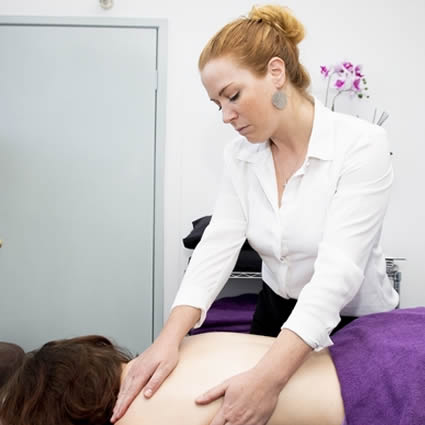
It should not. Deep tissue can feel intense, a firm, working pressure sometimes described as a good hurt, but sharp or unbearable pain is not the goal and means the pressure is too much. Effective work happens at the edge of comfort, not past it, and you set that edge with your therapist throughout.
There is a stubborn myth that deep tissue should be agony, that a massage only works if you are gritting your teeth and bruised the next day. It is wrong, and it leads people to endure treatments that actually make things worse. The truth is that a muscle pushed past its tolerance braces and tightens defensively, which is the exact opposite of what deep tissue is trying to achieve. Pain is not the mechanism; controlled pressure that the tissue accepts and releases into is. Understanding that one fact changes how you experience deep tissue entirely, from something to be survived into something to be guided.
What good deep tissue does feel like is intense in a satisfying way, a firm, deep, working sensation, sometimes on a tender knot a therapist might call a good hurt, that eases as the muscle releases. That is different from sharp, breath-catching pain, which is always a signal to ease off and never something to push through. The best therapists work right at that productive edge and no further, and they only know where it is because you tell them. Which is the whole point of the next section.
It is worth adding that tolerance for pressure varies enormously between people and even between areas of the same body, and none of that variation is a measure of toughness. A dense, heavily trained shoulder might take firm work happily while a tender neck on the same person wants far less; a first-timer might need to build up over several visits while a seasoned deep tissue regular starts firm from the outset. All of it is normal, all of it is fine, and the therapist simply meets you where your body is on the day.
Deep Tissue Massage for Back Pain and Chronic Tension
The lower back and the upper back-and-shoulders are where deep tissue does its most valued work, because they are where modern life deposits its tension most reliably. A lower back tight from sitting, lifting or years of accumulated load often carries dense, guarded muscle that firmer, patient work can genuinely ease, and the relief can be considerable.
Deep tissue massage for back pain works on the muscular side of the problem: the tight, overworked muscles around the spine that both cause discomfort and get recruited to protect it. Easing that muscular tension often makes a real difference to how a back feels and moves, particularly the chronic, grumbling tightness that builds over time rather than an acute injury; our full back pain treatment guide sets out how we approach the wider picture. Our guide to deep tissue benefits and aftercare goes further into what to expect and how to get the most from a session.
That said, honesty matters here. Back pain has many possible sources, and not all of them are muscular; some involve joints, nerves or structures that massage should not be the first or only answer for. Working inside a chiropractic clinic means that if your back trouble looks like more than tight muscle, a second professional opinion is available immediately, and your therapist can flag a joint or nerve component for chiropractic review. For genuinely muscular back tension, though, deep tissue is one of the most satisfying treatments there is.
The upper back and shoulders deserve their own mention, because they are where the office-bound half of Canberra carries its working week. Hours at a screen settle tension deep between the shoulder blades and up into the neck, and it tends to be the kind of dense, long-established tightness that lighter massage simply cannot reach. Deep tissue is often the first thing that genuinely shifts it, and paired with a little honest advice about the workstation behind it, the relief can last rather than fading by Monday. Cyclists and rowers, who hold demanding positions for long stretches, tend to land in the same territory, and firm work through the upper back and shoulders is a reliable friend to anyone whose posture or sport keeps that region loaded.
Aftercare: What to Do Following Firm Massage
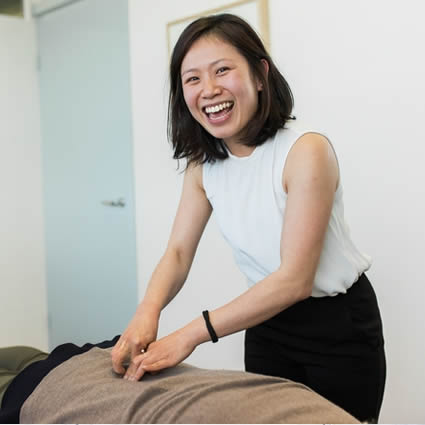
After firm work, expect to feel loose but possibly a little tender for a day, similar to after exercise. Drink plenty of water, keep moving gently, and avoid heavy strain that day. Any soreness settles on its own; anything sharp or worsening is worth a mention. A warm shower helps, and rest lets the release hold.
Deep tissue asks more of your muscles than a light massage, so it is normal to feel its effects for a little while afterwards. Most people leave looser and moving more freely, and some notice a mild, dull tenderness in the treated areas for up to a day, much like the pleasant ache after a good workout. It is a sign the muscles were genuinely worked, not a sign of any harm, and it fades on its own within a day or so as the tissue settles into its new, looser state.
A few simple things help it along. Drink water through the rest of the day, keep moving gently rather than collapsing rigidly on the couch, and skip the heavy lifting or hard training session until tomorrow. A warm shower or bath at the end of the day eases any lingering tightness nicely, and gentle stretching of the treated area, if your therapist suggests it, helps too. What you are aiming to avoid is immediately re-loading the muscles you just released, which would undo some of the work; a quiet evening lets the release bed in. And as always, ordinary post-massage tenderness is one thing, but anything sharp, spreading or genuinely painful is worth a phone call rather than a wait.
How your body responds also guides how often to return. If a firm session leaves you feeling great for a fortnight and then the old tightness creeps back, a regular monthly or fortnightly rhythm may keep you comfortably ahead of it. If it resolves a specific bout of tightness completely, you may need nothing more until the next one builds. Your therapist will suggest a sensible interval based on how your muscles behave, and there is no prepaid block to buy your way into a fair rate; the honest aim is simply to match the frequency to what your muscles genuinely need, no more.
Pressure Is Always Yours to Control
You are in charge of the pressure, from start to finish. Tell us your preference when booking and speak up any time during the session, because more or less pressure is always the right call if it suits your body better. A good therapist wants that feedback; it is how deep tissue stays effective rather than just hard.
Everything on this page comes back to a single principle: the right pressure is the one your body responds to, and only you can feel where that is. So we build the whole experience around your control of it. When you book, you can note your preferred pressure, firm, very firm, or somewhere in between, so your therapist starts in the right zone. During the session, you are encouraged to speak up the moment you want more or less, and adjusting is completely normal, never an interruption or a failure.
This matters because the myth of enduring pain in silence genuinely gets in the way of good treatment. A muscle worked past its tolerance fights back; a muscle worked at the right depth releases. Only your feedback tells the therapist which is happening, so a quiet "a bit less there" or "you can go harder on that spot" is not a complaint, it is exactly the information that makes the session work. The therapists here would far rather you spoke up ten times than gritted through a treatment that was not serving you.
And if you are new to deep tissue and unsure how firm you can take, just say so; a good therapist will start moderate, build gradually, and find your comfortable working depth together with you. There is no test to pass, no threshold to reach, and absolutely no pressure to prove anything to anyone. Book firm work, control the pressure, and let it do exactly as much as your body wants, no more and no less. That single principle, your comfort setting the depth, is what turns firm massage from something to be endured into something genuinely worth looking forward to, and it is how every deep tissue session at this clinic is run.
Book Deep Tissue Massage; Note Your Preferred Pressure
Tell us how firm you like it and we will start in the right zone, adjusting as we go. Booking is quick online, or call (02) 6288 6711 to chat about therapists and pressure before you decide anything.
1/43 Brierly St, Weston ACT 2611 · Saturday mornings available