
Gentle Chiropractic for Seniors in Canberra
Older joints deserve a lighter touch, and gentle chiropractic can help you stay mobile, steady and independent. Among our chiropractic services, care for seniors leans heavily on the low-force instrument, careful screening and a focus on the things that matter most later in life: comfortable movement, good balance and staying on your own two feet. With DVA patients welcome and free parking directly at the door, it is care deliberately built to be as easy to attend as it is gentle to receive.
Have a DVA card? Mention it when booking · (02) 6288 6711

Why Gentle Techniques Matter for Older Spines
Older spines and joints change: bone density can decrease, joints stiffen, and tissues become less forgiving of force. Gentle, low-force techniques respect those changes, achieving the goals of care without the firmer manual adjusting that suits younger bodies. For most older patients, gentler is not just kinder, it is more appropriate.
Bodies change as the decades pass, and good care changes with them. Bone density often decreases, cartilage thins, joints lose some of their easy range, and the tissues around them become less tolerant of sudden force. None of this means an older spine cannot be cared for; it means the care must be matched to the body, and the firm, decisive manual adjusting that suits a strong thirty-year-old is frequently the wrong tool for an eighty-year-old.
This is precisely where a practice that has spent more than fifty years caring for an ageing community has an advantage. We have treated a great many older Canberrans, we understand what their joints will and will not tolerate, and we default to the gentlest effective approach as a matter of course rather than as a special request. The goal for an older patient is the same as for anyone, comfortable, better movement, but the route there is quieter, slower and considerably more careful, and that suits both the body and the temperament of most of the seniors we see.
It is worth naming what gentle care is honestly for, because clarity serves older patients better than salesmanship. We treat the musculoskeletal aches and stiffness of later life, the sore lower back, the stiff neck, the hip or shoulder that has lost its easy range, and we aim to keep you moving more comfortably. We make no claims about curing arthritis, reversing ageing or preventing the conditions of later life; those would be dishonest, and our regulator rightly forbids them. What we offer is comfortable movement and careful, appropriate hands, and for a great many older patients that is exactly what they were looking for.
How Activator Low-Force Adjusting Works for Seniors
The Activator instrument delivers a light, precisely calibrated impulse to a single joint, with no twisting and no forceful movement. That makes it ideal for older patients: it restores joint motion gently, the force is dialled to suit fragile tissue, and there is none of the positioning or pressure that firmer techniques require.
Of everything we offer older patients, low-force Activator adjusting is the technique that makes the biggest difference, and it is one of the main reasons older patients travel to us specifically. The instrument delivers a quick, light, precisely aimed impulse to one joint at a time. There is no twisting of the neck or back, no wind-up, no cracking, and no need to move a stiff or sore body into demanding positions on the table. For a frame that no longer welcomes force, that gentleness is not a minor detail; it is what makes chiropractic possible at all.
The consistency matters as much as the gentleness. Because the instrument sets the force rather than a practitioner's hands, the treatment is the same measured, appropriate amount every visit, calibrated to your body specifically. Many older patients who had given up on chiropractic years ago, assuming they were too fragile for it, find that the instrument reopens the door entirely. As one of just two Canberra clinics offering the technique, we see exactly those patients, sent in by a friend who was equally surprised to find gentle care an option again.
The experience itself reassures people quickly. There is nothing dramatic to brace for: you rest comfortably, usually on your side or sitting, the practitioner locates the joints needing attention, and each receives a light tap from the instrument. Most older patients describe it as a gentle click rather than anything forceful, and the appointment is typically calm and unhurried. For someone who feared being cranked or twisted, that first gentle session is often a genuine relief, and it is why so many of our senior patients become long-term regulars.

Mobility, Balance and Staying Independent
For older patients, the point of care is rarely just easing an ache; it is protecting the things that keep you independent. Comfortable movement, steady balance and confidence on your feet are what let you keep doing the ordinary daily things on your own, and those are the goals we build care around.
Mobility
Stiff joints make everything harder, from getting out of a chair to reaching a top shelf. Gentle care aims to keep the spine and major joints moving comfortably, and our wider mobility support guide covers how we approach stiffness that has crept in over the years.
Balance and confidence
Moving well and feeling steady are closely linked. When your spine and hips move more freely and comfortably, ordinary movement feels more assured, and that confidence is itself part of staying safe and active on your feet.
Independence
Behind every mobility goal is the real one: continuing to do your own shopping, gardening, driving and living without depending on others. Keeping you comfortable and moving is, in the end, about keeping you independent for as long as possible.
We are careful not to overpromise here. Chiropractic does not stop ageing, and we make no claims about preventing falls or curing anything. What gentle care can genuinely offer is more comfortable movement and, for many, the confidence that comes with it, which is a worthwhile and honest goal in its own right, and one we are content to be judged on.
The independence point is the one that matters most to families, and rightly so. When an older person can keep managing their own shopping, gardening, driving and daily routine comfortably, everything about later life is easier and more dignified. Gentle care that keeps you moving well is a small but real contributor to that, alongside your GP, any exercise you do, and the ordinary business of staying active. We see our part as modest and honest: keep you comfortable and moving, and let that support the independent life you want to keep living.
Screening First: Osteoporosis and Medication Checks
Before any care, we screen carefully. We ask about bone health and osteoporosis, review your medications, and take a full history, because these factors shape what care is safe and appropriate. Where anything raises a concern, we adjust our approach or coordinate with your GP before proceeding.
For older patients, the screening at the start is not a formality, it is the most important part of the visit. We ask specifically about bone health and any osteoporosis diagnosis, because reduced bone density changes what forces are safe and firmly points us towards the gentle instrument. We review your medications in detail, and here the practice has an unusual advantage: Dr Teoh is also a qualified pharmacist, so the interactions and cautions that come with the longer medication lists of later life are genuinely understood rather than glossed over.
A full history rounds it out: previous surgery, joint replacements, cardiovascular conditions, diabetes, and anything else in your medical background, all of which shape what care is safe and appropriate and where extra caution is warranted. Where any of it raises a flag, we change our approach accordingly or speak with your GP before starting, and occasionally the honest conclusion is that gentle care should wait or is not appropriate at all. That careful front end is exactly what lets us then treat confidently, and it is why older patients and their families tend to feel safe here.
Communication with your other health professionals is part of that safety. Where you have a GP managing your bone health, a specialist looking after a joint replacement, or a complex medication regime, we are glad to keep them informed and to work within whatever cautions they have set. Chiropractic for an older patient works best as one careful, well-bounded part of a wider healthcare picture, never as a freelance operator ignoring the rest of it, and adult children helping to manage a parent's care can take comfort from that joined-up, cautious approach.
Chiropractic or Physio for Older Adults?
Both help, and they overlap. Chiropractic tends to focus on restoring comfortable joint movement with hands-on and instrument care; physiotherapy often emphasises structured exercise and rehabilitation programs. Many older adults benefit from both, and we will happily say when physio, or a combination, would serve you better than chiropractic alone.
Older adults searching for physio for elderly care are usually really asking a sensible question: who is the right person to help me move better and hurt less? The honest answer is that chiropractic and physiotherapy overlap considerably, and neither is universally "better". Chiropractic leans towards restoring comfortable joint movement through gentle hands-on and instrument techniques; physiotherapy often leans towards structured exercise programs and staged rehabilitation, particularly after surgery or injury. Both are legitimate, valuable and evidence-supported, and many older people quite reasonably draw on both at different times depending on what their body needs that year.
Our promise is simply to be honest about which suits you. If your situation calls for a progressive strengthening program or post-operative rehabilitation, we will say that a physiotherapist is better placed, and we are glad to work alongside one. If comfortable joint movement and gentle regular care are what you need, that is our strength. The two are not rivals, and we have no interest in claiming a patient who would be better served elsewhere. On the question of the exercise and group classes many seniors ask about, we can point you toward suitable local options, though structured senior exercise classes themselves are run by others rather than by us. Staying active between visits genuinely matters, and any gentle movement you can keep up, walking, water exercise, a class that suits your level, supports the comfortable movement our care aims for. We will happily encourage whatever activity fits your body and coordinate around it.
One more honest note on the comparison: cost and access sometimes decide it as much as clinical fit. For eligible DVA patients, chiropractic care may be covered under your entitlement, which can make regular gentle care genuinely affordable, and that is covered in detail just below. For everyone else, our fees are transparent and HICAPS rebates apply where your cover includes chiropractic. We would always rather you chose the care that suits your body and your budget than the one a clinic pushed hardest, and we will give you a straight comparison whenever you ask for one.
DVA Patients: How Your Care Is Covered
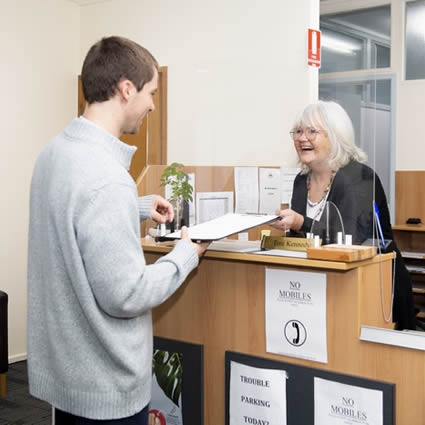
Department of Veterans' Affairs patients are warmly welcome. With a valid referral from your GP, eligible DVA patients can access chiropractic care with costs covered under your entitlement. Bring your DVA card, mention it when booking, and the front desk will handle the paperwork side for you.
We are proud to look after Canberra's veterans, and our DVA chiropractic care is a genuine part of what this practice does. If you hold a valid DVA card and your GP has provided the appropriate referral, eligible chiropractic care can be covered under your entitlement, which removes cost as a barrier to keeping comfortable and mobile. The specifics of eligibility and referral come through your GP and the Department of Veterans' Affairs, but the practical side at our end is simple.
Just bring your DVA card and mention it when you book, and the front desk will take care of the administration so you do not have to. Our full fees and rebates page covers how DVA, HICAPS and standard fees all work if you would like the detail in advance. And because our care for veterans uses the same gentle, low-force approach described throughout this page, it suits older veterans particularly well; the technique and the entitlement fit together naturally, and the whole arrangement is designed to remove obstacles rather than create them.
Getting Here: Parking at the Door
Free two-hour parking sits directly opposite our entrance at 1/43 Brierly St, Weston, so there is no long walk and no ticket machine. The clinic is a short, easy drive from across Canberra's south, and if stairs are a concern for you, mention it when booking and we will talk you through the easiest way in and make sure your visit is comfortable from the moment you arrive.
For an older patient, the practical business of getting to an appointment can be as much of a barrier as anything clinical, so we have kept it as easy as we can. The free two-hour parking is directly opposite the entrance, not a block away and not down a ramp into a paid garage, which means no long walk and no fumbling with a ticket machine. The clinic sits in the Weston Group Centre, a short and simple drive from Weston Creek, Woden, Molonglo and the wider southside, on roads that are easy rather than hectic.
The entrance is upstairs, beside the cafe, so if stairs are difficult for you, please mention it when you book. The team knows the building well and will talk you through the easiest approach, and we would always rather have that conversation in advance than have you arrive and struggle. Bringing a family member or friend to your appointment is entirely welcome too, and for many older patients that shared trip, care followed by a coffee downstairs, becomes a pleasant part of the routine rather than a chore. Everything about the visit is arranged to be gentle, from the technique on the table to the walk from the car.
Location helps here in a way that is easy to overlook. Being in the Weston Group Centre means the everyday errands and the appointment can happen in one short outing rather than two, and Cooleman Court is a level stroll away for anyone who wants to combine a visit with the shopping. For older patients who have wound down their driving, that convenience, plus the free parking for whoever brings them, quietly removes one of the real obstacles to keeping up regular care as the years go on.
Booking is kept just as simple. You can book online in under a minute, or ring the front desk and a real person will help you arrange a time, note any DVA card, and answer whatever you would like to know before you come in. Saturday mornings are available for those who prefer them or who rely on a family member's help to attend, and the team is well used to the questions older patients and their families ask. Nothing about arranging care here should feel difficult, because a barrier at the booking stage helps no one, least of all a patient who would genuinely benefit from a little gentle help to keep moving.
Book a Gentle-Care Assessment; Mention Your DVA Card if You Have One
Care built around comfort, balance and independence, delivered as gently as your body needs. Book online in under a minute, or the front desk on (02) 6288 6711 is glad to help you arrange it or answer any question.
1/43 Brierly St, Weston ACT 2611 · free two-hour parking opposite the door