
Pregnancy Chiropractic in Canberra
Pregnancy asks a great deal of a spine and pelvis in a short space of time, and gentle chiropractic can help you stay comfortable through it. As part of our chiropractic services, our pregnancy care adapts week by week, leans on low-force techniques, and is delivered by practitioners who have supported Canberra mums for decades. This page covers safety, trimester-by-trimester care, pelvic girdle pain, and exactly what to expect at your first appointment.
Mention how many weeks along when you book · (02) 6288 6711

Is Chiropractic Care Safe During Pregnancy?
For most pregnancies, gentle chiropractic care is considered safe and is widely used for pregnancy-related back and pelvic pain. Techniques are adapted for pregnancy, low-force options avoid any pressure on the abdomen, and we screen your history first. Where a pregnancy is high-risk, we coordinate with your GP or midwife before proceeding.
Safety is the sensible place to start, and the honest answer is nuanced rather than a blanket reassurance. Chiropractic care during pregnancy has a long track record for musculoskeletal complaints, the aching lower back, the pelvis that protests on stairs, the ribs that feel crowded in the third trimester, and the techniques used are modified specifically for pregnant bodies. Nothing involves lying face down late in pregnancy, nothing presses on the abdomen, and force is dialled well down from what a non-pregnant patient might receive.
The screening matters as much as the technique. Before any care, we take a proper history that includes how your pregnancy is progressing, and where anything flags as higher risk, bleeding, blood pressure concerns, a complicated obstetric history, we talk with your GP or midwife rather than pressing ahead alone. Chiropractic is one part of your maternity support, not a replacement for it, and good pregnancy care means knowing exactly where that line sits. If your situation is not straightforward, a phone call before booking lets us give you an honest answer.
It is worth naming what the evidence does and does not say, because the internet muddles it. Research supports chiropractic care for the musculoskeletal complaints of pregnancy, the back and pelvic pain that make daily life harder, and professional bodies recognise it as a reasonable option for those problems. What no honest chiropractor claims is that adjusting turns a breech baby, guarantees an easier labour or treats anything beyond the muscles and joints; those claims outrun the evidence, and you will not hear them here. We treat pregnancy discomfort, plainly and gently, and we say so in exactly those terms.
Your maternity team stays central to everything. Chiropractic sits alongside your GP, midwife or obstetrician, never in competition with them, and we are glad to communicate with them when it helps your care. Plenty of Canberra mums are referred to us by their own midwives for pregnancy back pain, which is about the strongest vote of confidence a gentle, sensible approach can get. If yours suggests chiropractic, or simply has no objection, you are on solid ground.
How We Adapt Care for Each Trimester
Your body changes profoundly across forty weeks, so the care changes with it. Positioning, pressure, technique and focus all shift as the pregnancy progresses, which is exactly why generic treatment does not suit expecting mums and pregnancy-specific care does.
Settle and support
Often the quietest trimester for the spine, but fatigue and early postural change begin. Care is gentle and unhurried, positioning is still flexible, and we establish the baseline we will adapt from as you grow. A good time to start, before discomfort builds.
The growing load
As the bump grows and your centre of gravity shifts, the lower back and pelvis take on real load. Side-lying positioning becomes standard, low-force techniques do more of the work, and this is when many mums first notice how much a comfortable spine matters.
Comfort and preparation
Room is tight, ligaments are looser, and comfort is everything. Care focuses on keeping the pelvis and lower back moving and easy, with careful positioning, gentle technique and realistic expectations as your body prepares for birth.
Throughout, the plan is led by how you feel rather than a fixed schedule. Some mums come fortnightly from early on; others start only when discomfort arrives in the second or third trimester. Both are fine, and telling us how many weeks along you are when you book lets us set the room up correctly before you arrive.
Starting earlier tends to work better than waiting for a crisis, though either is welcome. A spine and pelvis supported from the second trimester often cope with the growing load more comfortably than one that first seeks help in agony at thirty-six weeks, simply because there is more room to work gently and gradually. That said, it is genuinely never too late; mums arrive in their final weeks seeking relief, and gentle care can still ease a great deal of third-trimester discomfort. The best time to start is whenever the discomfort, or the wish to get ahead of it, brings you in.
Frequency is guided entirely by how you are feeling and how your pregnancy is progressing. Some mums are comfortable with an occasional visit; others, particularly those with significant pelvic pain, find a steadier fortnightly rhythm keeps them functional. None of it is prepaid or locked in, and the plan flexes as your body and your weeks change, which is exactly how care for something as dynamic as pregnancy should work.
Pelvic Girdle Pain in Pregnancy: How We Help
Pelvic girdle pain is discomfort around the pelvis, often felt at the front, the back, or deep in the hips and worsened by walking, stairs or turning in bed. Gentle chiropractic care aims to improve pelvic joint movement and ease the surrounding muscles, alongside practical advice on movement and daily positions.
If you have felt a grinding, catching ache low in the pelvis that makes rolling over in bed a genuine event, you have met pelvic girdle pain, and you are far from alone; it is one of the most common and most under-discussed complaints of pregnancy. The pregnancy hormone relaxin loosens the ligaments that normally hold the pelvic joints steady, and as the load increases those joints can move unevenly and become irritated.
Our approach is gentle and practical. Careful, low-force work aims to restore more even movement across the pelvic joints, soft tissue treatment eases the muscles that have been overworking to compensate, and we send you home with specific advice: how to get in and out of the car, how to sleep with a pillow between the knees, which daily movements to modify. Our detailed pelvic girdle pain guide covers the self-management side in full, and it is worth reading whether or not you become a patient.
What we cannot do is promise to fix pelvic girdle pain, and we would be wary of anyone who did. Relaxin keeps the ligaments loose until well after birth, so the underlying looseness is a feature of pregnancy itself, not something adjusting can override. What gentle care can genuinely offer is better, more even movement across irritated joints, relief for the muscles fighting to stabilise them, and the practical strategies that keep the pain from flaring through an ordinary day. For many mums that is the difference between dreading the stairs and managing them, and that is a difference worth having.
The self-help side deserves emphasis because you spend far more hours managing the pain than we do treating it. Keeping the knees together getting in and out of the car, avoiding standing on one leg to dress, a pillow between the knees at night, smaller steps rather than long strides, sitting to put on shoes: these unglamorous adjustments often help as much as any treatment, and we coach them at every visit rather than assuming you already know.

Positioning, Pillows and Comfort During Treatment
As pregnancy progresses, we treat you side-lying with supportive pillows rather than face down, so there is never any pressure on your abdomen. Positioning is adjusted to your comfort at every visit, and pregnancy support cushions let us work on your spine and pelvis while you stay genuinely comfortable throughout.
The practical experience of pregnancy care surprises a lot of first-timers, who arrive braced for the awkward face-down position they remember from a pre-pregnancy massage and find something far gentler. From the second trimester on, treatment happens side-lying, cradled by pillows and pregnancy support cushions that take the load off your bump and let your spine and pelvis be worked on without any compression where it matters.
This is not pampering; it is what makes the treatment possible and effective. A mum who is uncomfortable or anxious on the table tenses exactly the muscles the care is trying to ease, so comfortable positioning is doing clinical work, not just being kind. We check in as we go, rearrange the pillows as often as needed, and never ask you to hold a position that does not feel right. Small niceties, warmth, unhurried pace, a practitioner who has done this many times, add up to a treatment you can actually relax into.
The details are worked out with you, not imposed. Some mums want a bolster under the top knee, others need the bump fully cradled, and preferences change as the weeks pass; we simply adjust until you say it feels right, and we re-check as the pregnancy advances because what was comfortable at twenty weeks may not be at thirty-four. Nothing about the setup is fixed, and your comfort genuinely leads it.
For mums who have had a difficult experience with body-based treatment before, whether a rough massage or an unpleasant adjustment elsewhere, this gentleness can be quietly reassuring. There is no expectation to endure discomfort as proof that something is working, because in pregnancy care it very much is not. Ease is the goal and the method at once, and if anything ever feels wrong, one word stops it immediately.
Why Low-Force Activator Adjusting Suits Pregnancy
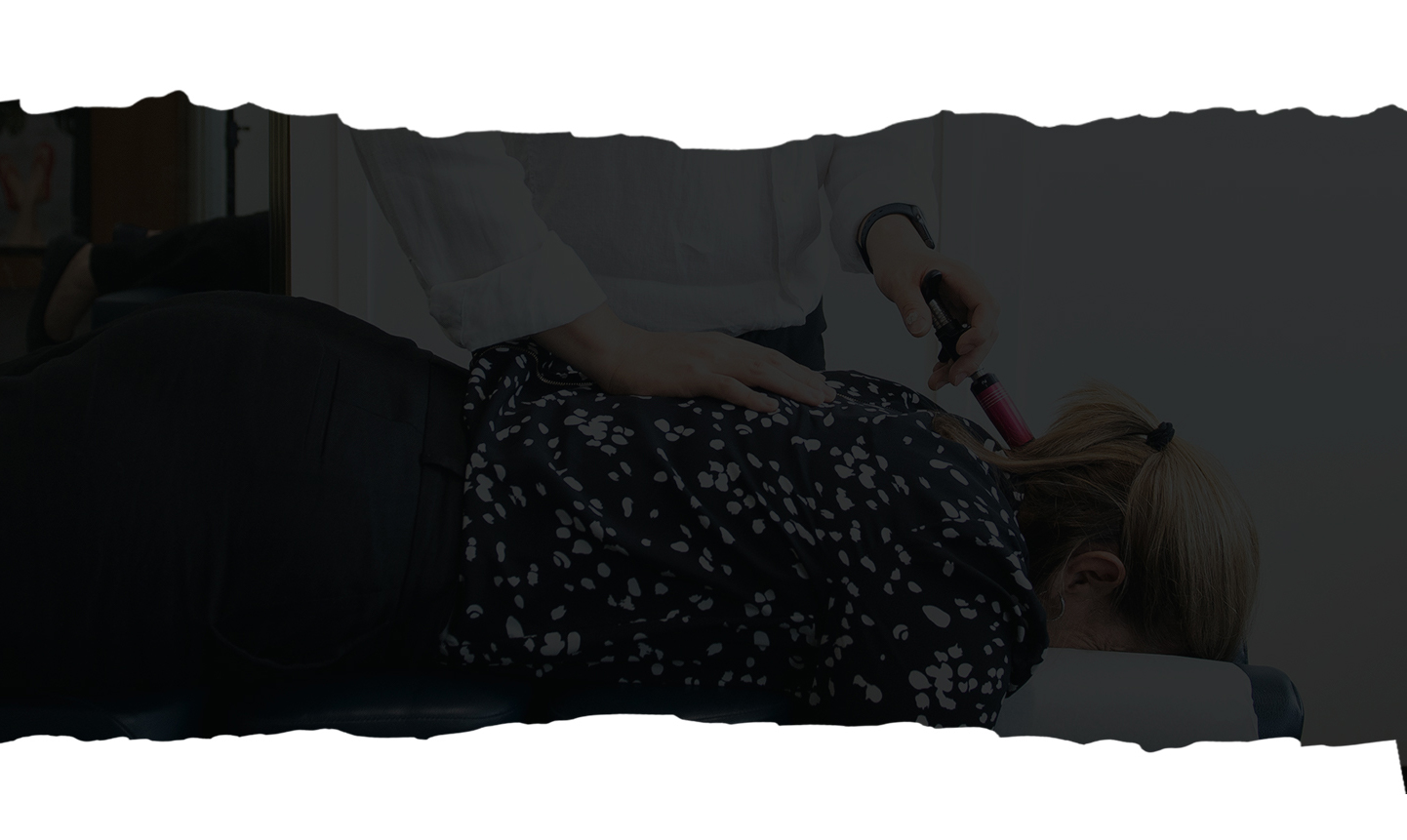
Low-force instrument adjusting delivers a small, precise impulse with no twisting, no abdominal pressure and minimal repositioning, which suits a pregnant body ideally. As one of only two Canberra clinics offering it, we can keep adjusting gentle and comfortable from early pregnancy right through to your due date.
The gentle Activator adjusting we offer could almost have been designed for pregnancy. There is no twisting of the spine, no forceful movement, no need to shift you into demanding positions; the instrument delivers its measured impulse while you rest comfortably on your side. For a body already carrying extra load and looser ligaments, that gentleness is not a nice-to-have, it is the whole point.
It also removes the barrier that stops some mums seeking care at all. If the idea of being adjusted while pregnant makes you nervous, the instrument answers that worry directly: nothing dramatic happens, and most mums describe it as a series of light taps. Being one of only a couple of Canberra practices offering the technique means expecting mums travel to us specifically for it, and it is the technique the majority of our pregnancy patients choose without being asked.
None of this rules out gentle hands-on techniques where they suit you; some mums are perfectly comfortable with light manual mobilisation and prefer it. The point is choice, and a genuine one, because the clinic actually has both the instrument and the experience to use it well. Your preference is recorded and honoured at every visit, and switching your preference at any point in the pregnancy is entirely your call, no eyebrow raised.
Partners are welcome in the room, and we quietly encourage it, because watching a pregnancy adjustment is the fastest cure for a partner's worry about it. What looks, from the outside, like nothing much dramatic happening is precisely the reassurance a nervous support person needs, and it turns them from an anxious bystander into someone who understands what their partner is receiving.
Combining Pregnancy Chiropractic With Pregnancy Massage
Pregnancy chiropractic and pregnancy massage work well together and share one patient file. Chiropractic keeps the pelvic and spinal joints moving; pregnancy massage eases the tired, overworked muscles of the lower back, hips and shoulders. Coordinated on the same file, the two support a more comfortable pregnancy than either alone.
Muscles and joints share the load of pregnancy, so it makes sense to care for both. Where chiropractic focuses on keeping the pelvis and spine moving evenly, pregnancy massage works on the muscles that have been quietly compensating for months: the lower back doing overtime, the hips carrying the new load, the shoulders and neck that tense as posture shifts. Both are delivered with pregnancy-safe positioning and pressure, and both live under one roof.
Because it is all one file, the two treatments are genuinely coordinated rather than duplicated. Your chiropractor and massage therapist can compare notes, time the sessions sensibly across your fortnight, and make sure the care builds rather than overlaps. Many mums settle into a rhythm that alternates the two, and the shared record means you never repeat your history or wonder whether one practitioner knows what the other did. It is the kind of joined-up care that is genuinely hard to arrange across two separate clinics.
Practical convenience matters more than usual when you are pregnant, and one location handles it. Free parking sits directly opposite the door, so there is no long walk with an aching pelvis; the Saturday hours mean appointments need not eat into a working week that is already tiring; and being able to see chiropractor and massage therapist in the same building on the same day saves the kind of logistics that feel harder with every passing week. Small things, but pregnancy is a season when small things count.
This coordination continues after birth, too. The same practice offers postnatal chiropractic and postnatal massage, so the relationship you build during pregnancy carries straight through to recovery, with practitioners who already know your history. Many mums simply continue their care past the birth without starting over anywhere, which is exactly the smooth handover a new parent has no spare energy to arrange for themselves.
What to Expect at Your First Pregnancy Appointment
Your first visit is an unhurried assessment: a conversation about your pregnancy and symptoms, a gentle physical examination adapted for pregnancy, and a clear explanation of whether and how we can help. Any care that day is gentle and optional, and you leave with a plan and honest expectations, not pressure.
Allow around forty-five minutes and wear something comfortable. The visit opens with a proper conversation: how far along you are, how the pregnancy is going, where and when it hurts, and what you are hoping care can do. This is also where we screen for anything that means we should speak with your GP or midwife first, so please mention any complications or concerns openly; it helps us look after you safely.
The examination is gentle and pregnancy-appropriate, and your chiropractor will explain what they find in plain language before suggesting anything. If gentle care is appropriate, it may begin that day; if a further check or a conversation with your maternity team is wiser, you will hear that instead. Either way you leave understanding your situation, with realistic expectations rather than promises. Sciatic-type pain is common in pregnancy and worth flagging; our guide to sciatica during pregnancy explains how we approach it. Bring your questions, bring your partner if you like, and know that mentioning your weeks along at booking lets us have the right room and pillows ready for you.
A few practical notes smooth the first visit further. Wear or bring clothing you can move comfortably in; a supportive top and stretchy pants are ideal. Have your GP or midwife details handy in case we need to touch base with them. And do not worry about needing to know the right words for your symptoms, describing where and when it hurts in plain language is exactly what we need, and working out the rest is our job, not yours.
Above all, arrive knowing there is no pressure to commit to anything. If after the assessment gentle care looks likely to help, we will say so and offer a sensible plan; if it does not, or if your maternity team should weigh in first, we will say that just as plainly. An honest first appointment is worth having either way, and for a great many Canberra mums it is the start of a far more comfortable pregnancy.
Book Pregnancy-Specific Care Online
Mention how many weeks along you are when you book, so the room and pillows are ready before you arrive. Online booking is quick for new and existing mums alike, and the friendly team on (02) 6288 6711 is glad to talk through anything this page left open.
1/43 Brierly St, Weston ACT 2611 · free parking directly opposite