
Treatments at Weston Creek Chiropractic Centre
Some problems need more than adjusting or standard massage, which is why Weston Creek Chiropractic Centre offers three adjunct treatments: dry needling, cupping and myofascial release. Each targets tissue the everyday techniques cannot quite reach, each is delivered by the practitioner who specialises in it, and each earns its place in a care plan on clinical grounds rather than as an add-on at the counter.
Wondering which treatment fits? Call (02) 6288 6711
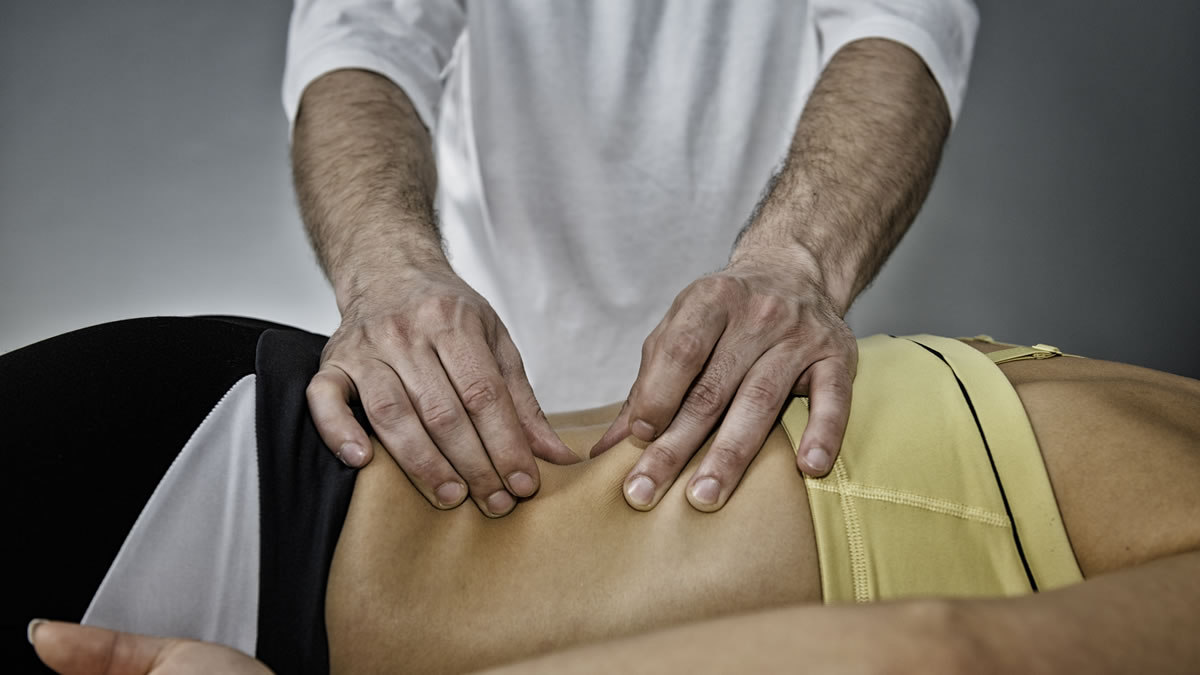
Treatments That Support Your Recovery
We keep this list deliberately short. Rather than offering every therapy with a name, the practice carries three treatments that have proven their worth across decades of patient care, and each is performed only by the practitioner trained and experienced in it. That focus matters: when your plan calls for needling or myofascial work, you are booked with the person who does it every week, not whoever happens to be free.
The word "adjunct" is doing honest work in that sentence, too. None of these treatments is pitched as a standalone miracle; each exists to solve a specific problem the core services occasionally hit, the trigger point thumbs cannot reach, the congested region that wants lifting rather than pressing, the fascial restriction that outlasts ordinary strokes. Used that way, at the right moment in a plan, they earn their keep. Used as a default for everything, they would just be theatre, and you will not find them used that way here.
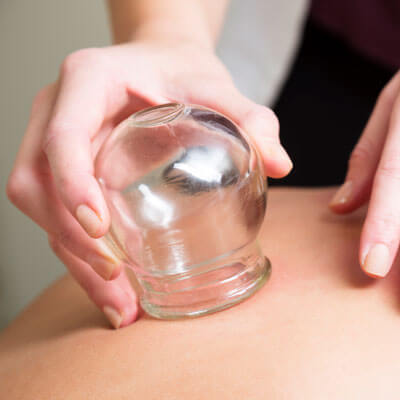
Cupping
Within massage sessionsControlled suction lifts and decompresses restricted tissue, drawing blood flow through areas that have been tight for months. The circular marks fade in days and the sensation is closer to a firm stretch than anything sharp. Often woven into a remedial session where lifting tissue serves better than pressing it. Learn how cupping therapy works and who it suits.
Explore cupping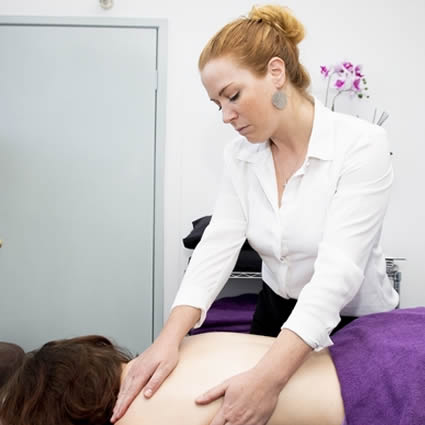
Myofascial Release
Darlene Bergener onlySlow, sustained pressure through the fascia, the connective wrapping around every muscle, for restrictions that regular massage strokes slide straight over. Darlene is the only practitioner at the clinic offering it, and her sessions suit long-standing stiffness that has outlasted other approaches. The myofascial release page explains the technique in depth.
Explore myofascial release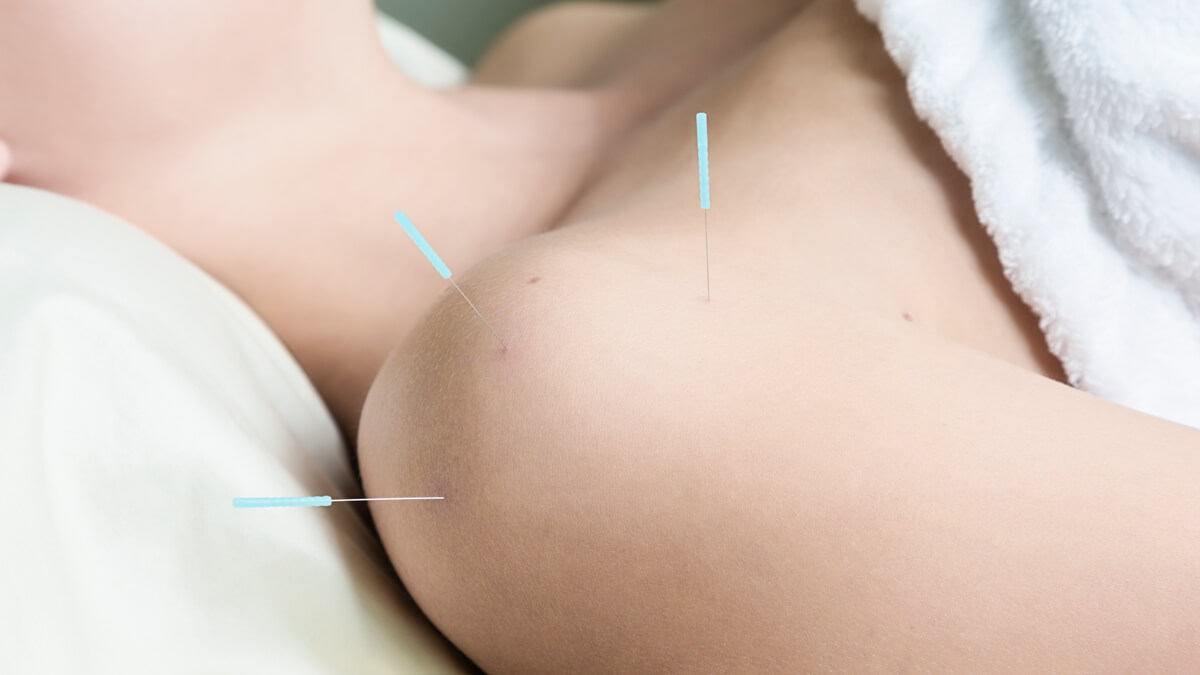
Dry Needling
Colleen Gould onlyFine filament needles deactivate trigger points, the stubborn knots that refer pain across a shoulder or down an arm and resist thumbs entirely. At this clinic dry needling is offered exclusively by massage therapist Colleen Gould, so it slots naturally into her remedial sessions when hands-on work meets its limit.
Explore dry needlingPilates is not a service we offer in-house, and we would rather send you to people who teach it every day than run a token class badly. When patients want a structured movement program alongside their care, we happily point them to Elysium, the Pilates studio near our clinic, and our practitioners can suggest what to tell their instructor about your body so the program respects whatever we are treating. Visit the Elysium studio website for classes and bookings.
Which Treatment Helps Which Problem?
As a rule of thumb: dry needling suits pinpoint trigger points that refer pain, cupping suits broad areas of tight, congested tissue, and myofascial release suits long-standing stiffness and restriction that regular massage has not shifted. Your practitioner confirms the match at assessment.
| What you notice | Usual starting point | Why it fits |
|---|---|---|
| A knot that refers pain elsewhere | Dry needling | Needles reach and deactivate the trigger point directly, deeper than sustained thumb pressure manages |
| A whole region tight and heavy | Cupping | Suction lifts and decompresses broad tissue rather than working knot by knot |
| Stiffness that survives every massage | Myofascial release | Slow fascial loading reaches the connective layer ordinary strokes glide over |
| Tension plus restricted joints | Treatment plus chiropractic | Muscle and joint work are sequenced together on one shared file |
| General soreness, nothing specific | Remedial massage first | Assessment there decides whether any adjunct treatment earns a place at all |
Treat the table as a conversation starter rather than a diagnosis. Bodies rarely present one problem at a time, and a session often blends approaches: ten minutes of needling inside a remedial hour, or cupping to open a region before deeper hands-on work. What you will not be sold is a treatment for its own sake; if nothing on this page will genuinely move your problem along, you will be told exactly that.
Nervous about needles? Say so and nobody will blink. Needle-shy patients simply take the other road: cupping and myofascial work cover much of the same territory by different means, and hands-on remedial technique remains the backbone of every muscular plan. The treatments serve you, not the other way around, and declining one never changes the quality of the rest of your care.
Can Treatments Be Combined With Chiropractic or Massage?
Yes, and they usually are. All three treatments are designed to run alongside chiropractic or massage rather than replace them: needling and cupping typically happen within a massage session, and myofascial release is often sequenced around adjusting on the same shared file.
The practical mechanics are simple because everything happens under one roof. Colleen can move from remedial strokes to needles and back inside a single appointment when a trigger point demands it. Darlene can dedicate a session to fascial work between your chiropractic reviews, with your chiropractor reading her notes before your next adjustment. Nothing requires a second clinic, a referral letter or retelling your story to a stranger.
Timing is the part patients cannot see, and it is where the shared file earns its keep. Releasing tissue before an adjustment can mean less force is needed; needling too close to a big training day is usually postponed; cupping marks are scheduled away from beach weekends on request. These are small decisions, but they are made deliberately, by practitioners who talk to each other in a corridor rather than through fax machines.
How a treatment actually enters your plan
There is a small ritual to it, and it never happens at the payment terminal. Your practitioner notices something specific during assessment or treatment, names it, and explains why one of these three tools would reach it better than the current approach. You hear what the treatment involves, what it tends to feel like and any marks or after-effects to expect, and then you decide. If you agree, it is scheduled with the right practitioner and reviewed like everything else in your plan: kept while it earns its place, dropped the moment it stops.
Ask at Your Next Visit Which Treatment Fits Your Care Plan
Your practitioner already knows your file, so raising needling, cupping or fascial work takes moments and costs nothing to discuss. New to the clinic? Start with a first appointment and the assessment will show whether any of the three belongs in your plan. Treatment questions are welcome on (02) 6288 6711 any time the desk is open.
1/43 Brierly St, Weston ACT 2611 · free 2 hour parking opposite